News Summary
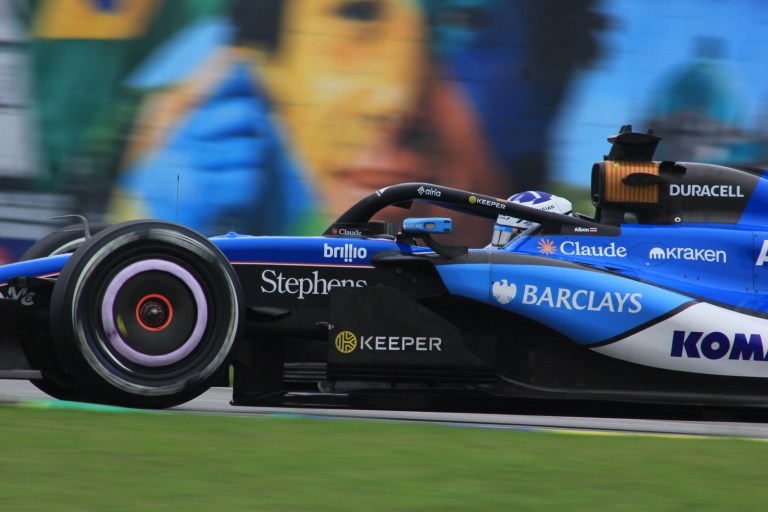
- Max Verstappen set a 1:11.622 on soft tyres to beat Andrea Kimi Antonelli by 0.025s. Lando Norris finished third.
- Lewis Hamilton reported a vibration and returned to the pits. He went back out, then came straight in again when smoke appeared from the rear of his Ferrari.
- George Russell and Charles Leclerc completed the top five. Racing Bulls put both cars in the top eight with Arvid Lindblad seventh and Liam Lawson eighth.
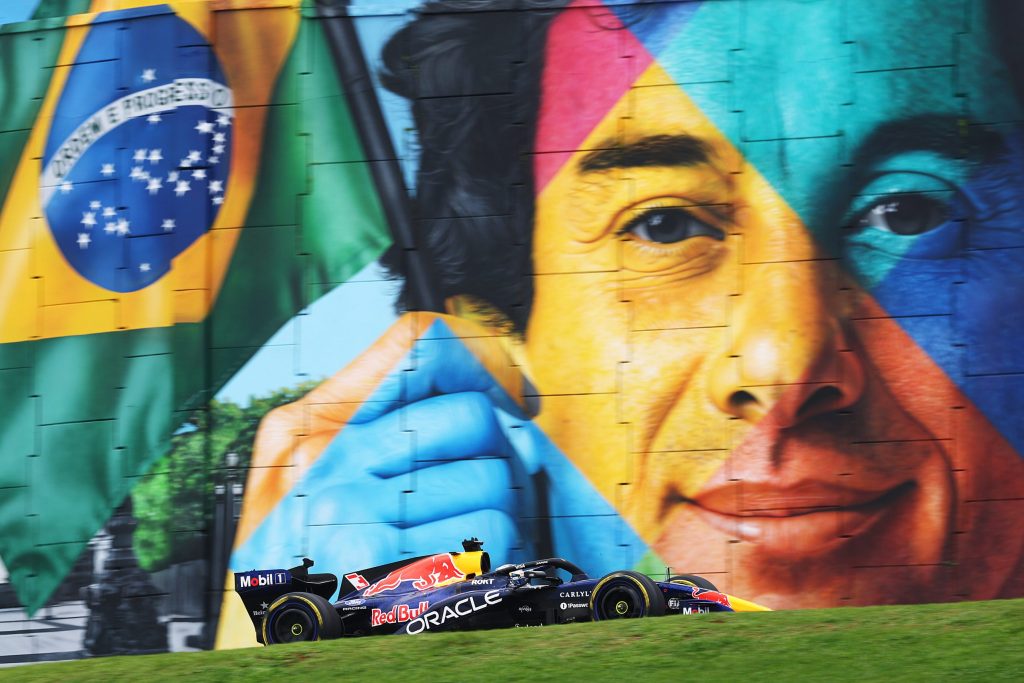
Max Verstappen beat Andrea Kimi Antonelli by just 0.025s in final practice for the São Paulo Grand Prix. The Red Bull driver set a 1:11.622 after switching to soft tyres, with Lando Norris third for McLaren.
That made Verstappen the third driver to lead a practice session at Interlagos this weekend. Norris topped FP1 and Antonelli led FP2. Antonelli’s 1:10.763 from Friday afternoon remained the fastest lap of the weekend heading into qualifying.
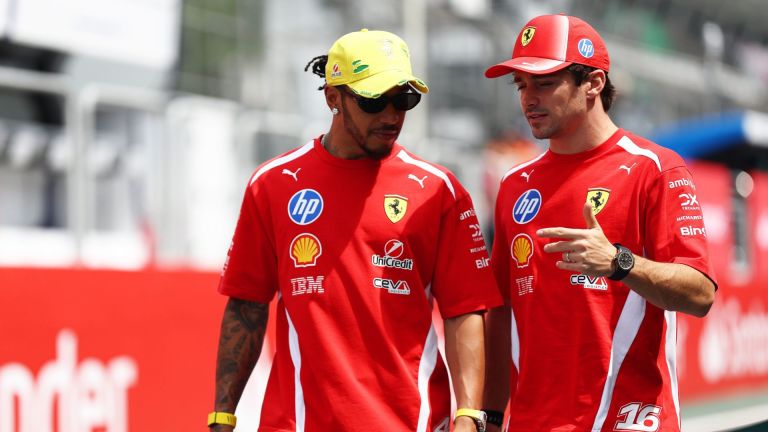
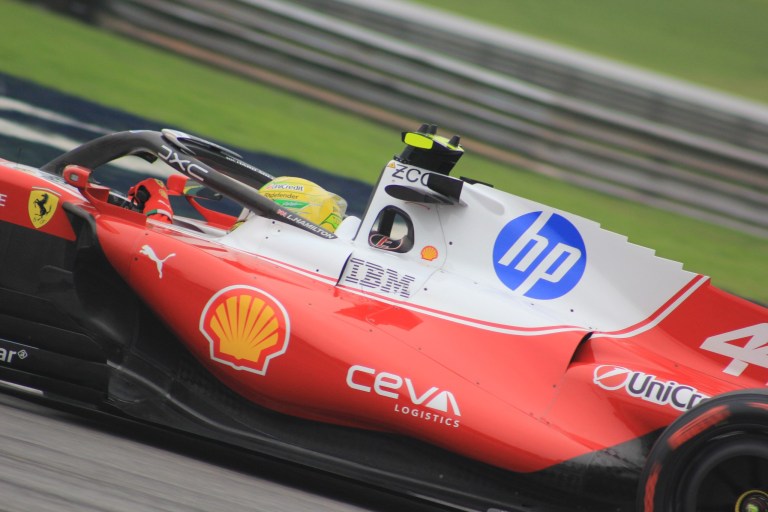
Ferrari’s final hour went in two different directions. Charles Leclerc spent time at the top on medium tyres and finished fifth. Lewis Hamilton lost running to a vibration and later returned to the garage with smoke coming from the rear of his car. The session ran without a stoppage.
Verstappen beats Antonelli in the late soft-tyre runs
Nico Hülkenberg was among the first out after missing both Friday sessions. Freddie Slater had driven his Audi in FP1 and stopped on track with a problem, and Hülkenberg’s car stayed in the garage throughout FP2.
The field began on medium tyres. Lindblad briefly led before Norris set a 1:13.064, while Turn 1 continued to catch drivers out. Leclerc abandoned an early lap after getting into trouble at the first part of the Senna S, then returned to the top with a 1:12.439.
Verstappen lowered the benchmark to 1:12.284, but Antonelli responded with a 1:12.214 and then found another 0.005s. The lead changed again once the soft-tyre runs began with around 20 minutes remaining.
George Russell went first among the frontrunners and set a 1:11.806. Norris moved ahead before Antonelli recorded a 1:11.647. Verstappen then found the final 0.025s to take first. The order at the front held through the closing runs.
Russell finished fourth, ahead of Leclerc and Oscar Piastri. Lindblad and Lawson put both Racing Bulls ahead of the second Red Bull of Isack Hadjar, with Gabriel Bortoleto completing the top ten.
Hamilton loses qualifying preparation after smoke appears
Ferrari had already introduced a fifth internal combustion engine for Hamilton ahead of Saturday’s running. The team called him back to the garage after a vibration in the first half of FP3, then sent him out again. When smoke appeared from the rear of the car, he returned immediately and got out.
The interruption cost Hamilton track time just as the field was preparing for its soft-tyre runs. The cause of the smoke had yet to be confirmed. For Ferrari, the immediate question was how much preparation it could recover before qualifying with both cars already facing grid drops for their engine changes.
Verstappen’s practice pace gives Red Bull a chance to fight for the fastest qualifying time, although he and Sergio Pérez are due to start Sunday’s race at the back after exceeding their allocations on three components each. Their qualifying results still determine their order relative to one another. Russell will also serve a five-place penalty for Friday’s engine change.
São Paulo Grand Prix qualifying starts at 15:00 local time, 18:00 GMT and 13:00 EST on Saturday.
GRANDE PRÊMIO is following every session of the São Paulo Grand Prix in Formula 1 live from Interlagos.
FAQ
Who was fastest in São Paulo GP FP3?
Max Verstappen led with a 1:11.622, beating Andrea Kimi Antonelli by 0.025s. Lando Norris was third.
What happened to Lewis Hamilton in FP3?
Hamilton returned to the pits after reporting a vibration. He went back out, then returned to the garage when smoke appeared from the rear of his Ferrari.
Does Verstappen’s FP3 result change his grid penalty?
Practice does not set the grid. Verstappen and Sergio Pérez are due to start at the back, with qualifying determining their order relative to each other.