News Summary
- George Russell says the 2026 F1 cars have changed the competitive balance between several team-mates
- The Mercedes driver highlighted Verstappen, Piastri and Leclerc as examples of unexpected shifts this season
- Russell compares adapting to the new generation with a tennis player moving from hard courts to clay
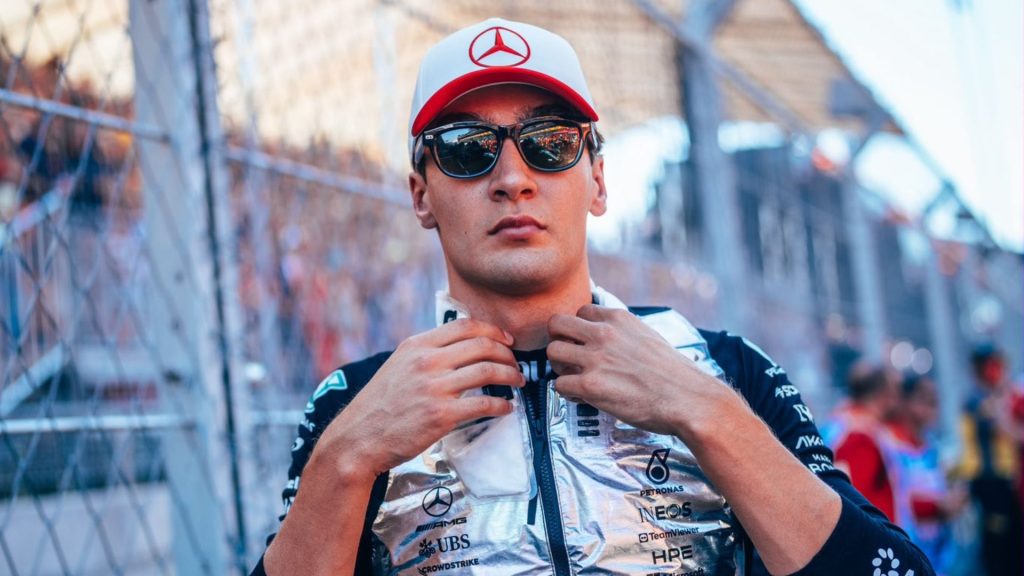
George Russell believes Formula 1’s new generation of cars has done more than reset the technical order. It has also changed the balance of power between drivers sharing the same garage.
Russell has experienced that first-hand.
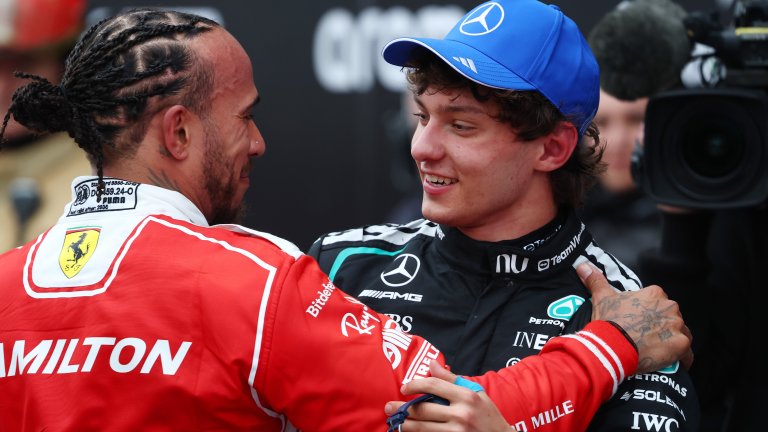
After comfortably establishing himself as Mercedes’ reference during Kimi Antonelli’s rookie season, the Briton has found himself on the opposite side of the equation in 2026. Antonelli has won eight of the opening 14 Grands Prix and leads Russell by 81 points following victory in Madrid.
But Russell does not believe Mercedes is an isolated case.
“I think this season has been strange,” he told Mundo Deportivo.
The 28-year-old pointed first to McLaren.
“If you look at Piastri, last year he was close to winning the championship. But this season he’s way behind Norris,” Russell said.
He then turned to Ferrari, where Lewis Hamilton has moved ahead of Charles Leclerc after the Monegasque had generally held the upper hand against his team-mates in recent seasons.
And even Max Verstappen, Russell argues, provides evidence of the same phenomenon.
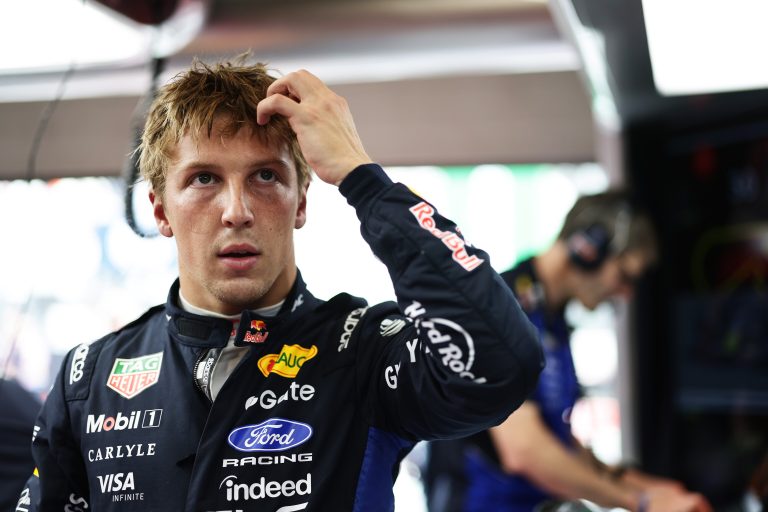
“Even Verstappen, compared to Hadjar and Lawson, hasn’t managed to have his usual advantage,” he said, highlighting how closely Liam Lawson ran the four-time world champion at Zandvoort and how competitive Isack Hadjar has been against him.

Russell compares F1’s change to switching tennis surfaces
Russell’s argument is not that the 2026 regulations have suddenly made established drivers slower.
Instead, he believes the new cars reward a different set of skills and require drivers to rethink techniques that had become instinctive under the previous regulations.
“This car is different, that’s clear. It’s not an excuse. It’s reality, and it means you have to make changes,” he said.
Russell compared the transition to a tennis player moving between surfaces.
Last year’s cars, in his analogy, were like playing on a hard court. The 2026 generation is more like moving onto clay: the fundamentals remain the same, but extracting maximum performance requires different techniques.
That distinction is particularly relevant to Russell.
He has previously admitted that his natural driving style was exceptionally well suited to the previous generation of F1 machinery. Earlier this season, he described adapting to the Mercedes W17 as being like a golfer changing his swing — forcing himself to consciously alter habits that had previously come naturally.
The challenge is particularly acute because the 2026 cars combine different aerodynamic characteristics with far greater electrical deployment and energy-management demands.
Verstappen has raised similar questions
Russell is not alone in questioning how much the new regulations have changed the driver’s role.
Verstappen recently used the performances of Yuki Tsunoda and Liam Lawson to question the behaviour of the current F1 cars, arguing that drivers are receiving less precise feedback while simultaneously managing braking, throttle application and electrical energy.
The Red Bull driver called some of the patterns he was seeing “not natural”.
Russell’s comments approach the issue from a different direction but point towards a similar conclusion: the 2026 regulations have altered which driving characteristics are rewarded.
That could help explain some of the unusual team-mate comparisons appearing across the grid.
Piastri challenged Norris for the 2025 championship but has struggled to reproduce that level this season. Leclerc, previously Ferrari’s benchmark, now trails Hamilton. Verstappen remains Red Bull’s leading driver but, as Russell noted, has not always produced the enormous margins over team-mates seen in previous seasons.
At Mercedes, the reversal has been even more dramatic.
Antonelli has turned Mercedes hierarchy upside down
Russell entered 2026 as Mercedes’ established leader and an obvious championship candidate.
Fourteen races later, Antonelli has eight victories to Russell’s two and holds a commanding championship advantage.
The Italian’s latest victory in Madrid extended the gap to 81 points, leaving Russell admitting that he is no longer realistically fighting Antonelli for the championship.
Russell nevertheless rejects the idea that his greater experience with the previous cars is automatically responsible for the difference.
His argument is more nuanced: every driver has been forced to adapt, but the scale of that adjustment depends on how naturally the new machinery fits the techniques each had developed before 2026.
That makes this season not merely a competition between teams developing unfamiliar cars, but between drivers learning how much of their old approach they need to abandon.
GRANDE PRÊMIO follows the technical and competitive evolution of the new regulations throughout the season, with complete coverage in our Formula 1 section.
For Russell, the lesson from Verstappen, Leclerc and Piastri is that he is far from the only driver discovering that what worked before 2026 does not necessarily work now.
FAQ
Why does George Russell think the 2026 F1 cars changed team-mate battles?
Russell believes the new cars require different driving techniques and energy-management skills, meaning drivers who were particularly comfortable with the previous generation have had to change established habits.
What did Russell say about Max Verstappen?
Russell said Verstappen has not consistently enjoyed his traditional performance advantage over Red Bull team-mates in 2026, citing Liam Lawson at Zandvoort and Isack Hadjar as examples.
Why is Russell struggling against Kimi Antonelli in 2026?
Russell says his driving style was naturally suited to the previous generation of F1 cars and that adapting to the 2026 machinery has required significant changes. Antonelli currently leads him by 81 points in the championship.