News Summary
- Horner claims some F1 teams spend $500m–$600m annually, despite the championship’s $215m cost cap.
- Driver salaries, senior executive pay, travel and marketing are among the expenses excluded from the main limit.
- Horner wants the rules to cover more spending, while acknowledging that the cost cap has made Formula 1 teams financially stronger.
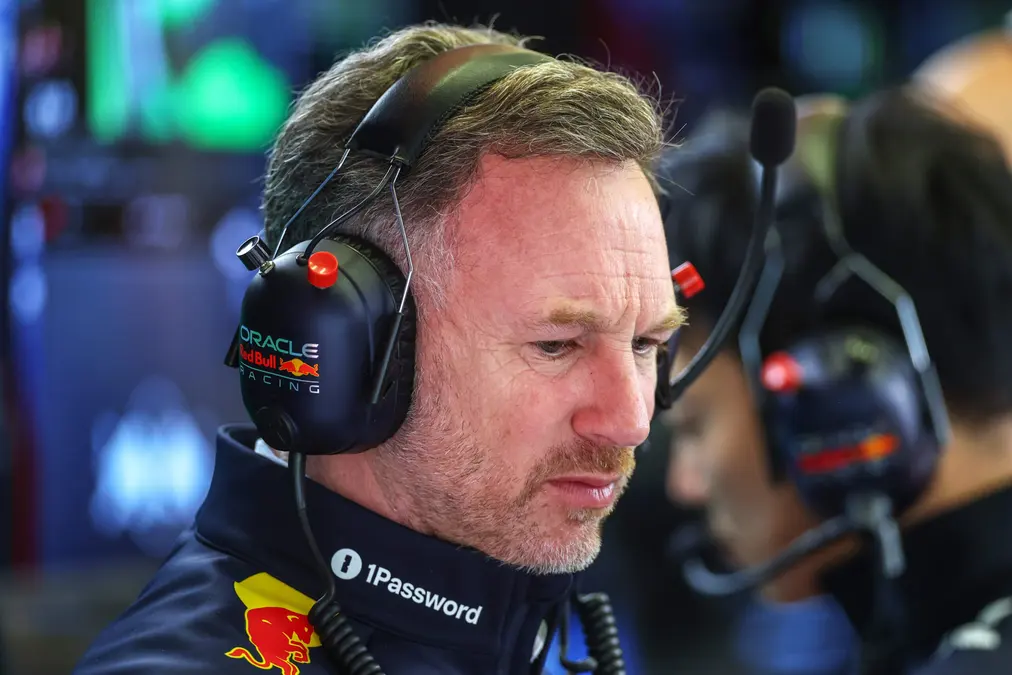
Christian Horner has called for Formula 1 to reconsider its budget cap after claiming that some teams continue spending between $500 million and $600 million annually, despite the championship operating under a $215 million limit for regulated expenses in 2026.
The former Red Bull team principal argued that the current system has improved the financial health of Formula 1 organisations but still allows substantial expenditure outside the main cost cap. Speaking to Autosport, Horner suggested that the regulations should cover a broader range of activities rather than simply increasing the permitted spending on car development.
The comments come as Formula 1 teams debate whether the financial regulations introduced in 2021 have achieved their original objective of creating a more competitive championship.
Horner questions F1’s $215m budget cap
Formula 1 introduced its cost cap in 2021, initially limiting teams to $145 million in regulated spending.
The ceiling has subsequently been adjusted to account for changes in regulations and inflation, reaching $215 million for the 2026 season.
However, the figure does not represent the total amount that a Formula 1 organisation is permitted to spend.
Driver salaries, the remuneration of the three highest-paid non-driver employees, marketing activities and certain travel expenses remain outside the principal cost cap. Power-unit manufacturers also operate under a separate financial framework.
Horner believes the exclusions allow the largest organisations to maintain substantially higher overall spending.
“What I see now is that you’ve got a budget cap of just over $200m, but teams are spending $500 or $600m,” he told Autosport.
The Briton argued that the distinction between regulated and excluded spending has become increasingly important as teams expand their commercial operations and driver contracts.
“More needs to be included within the cap,” he said.
Horner also suggested that the separate financial regulations governing power-unit development could provide a useful model for a more comprehensive approach.
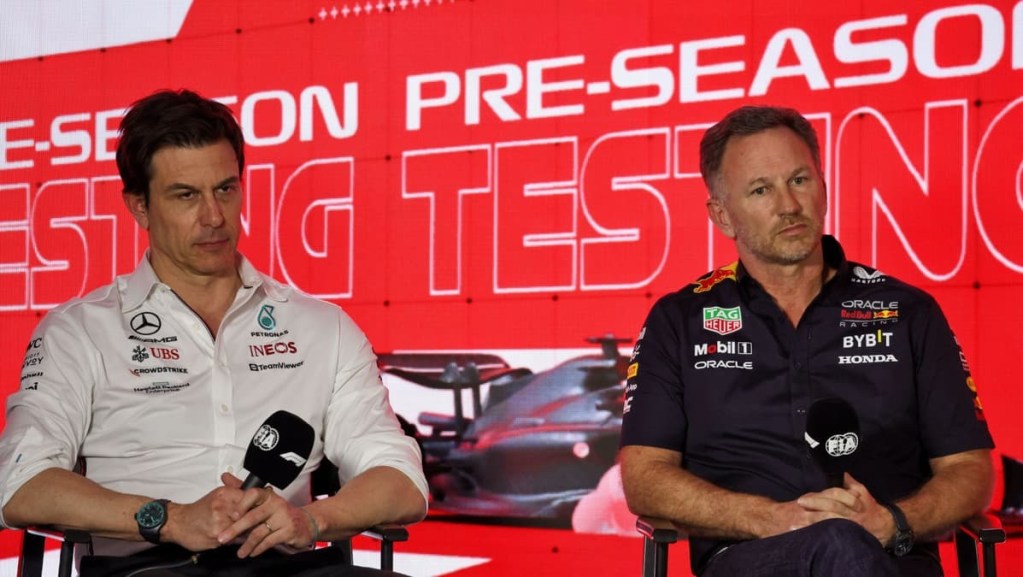
Horner compares F1 spending to squeezing a balloon
The former Red Bull boss believes that Formula 1 teams will continue finding ways to spend available resources, even when individual categories of expenditure are restricted.
He compared the financial regulations to a balloon, arguing that pressure applied in one area simply moves expenditure elsewhere.
“Formula 1 teams will spend as much money as they have,” Horner said.
His argument is that limiting one category of spending does not necessarily reduce an organisation’s overall financial commitments if other activities remain exempt.
Driver contracts provide one example. The salaries paid to drivers are not included in the main cost cap, allowing teams to negotiate substantial agreements without affecting their permitted spending on car development.
Horner suggested that the value of those contracts has increased as Formula 1’s commercial position has improved.
However, his comments should not be interpreted as evidence that every team spends $600 million. The figure is an estimate of the scale of expenditure within the championship rather than a verified financial total for each constructor.
Red Bull’s previous cost-cap breach remains part of debate
Horner’s criticism carries particular significance because Red Bull was previously penalised for breaching Formula 1’s financial regulations.
The team exceeded the 2021 cost cap and subsequently accepted a settlement with the FIA, resulting in a $7 million fine and a 10% reduction in aerodynamic testing allowances.
The penalty became one of the most controversial applications of the financial rules during their early years.
Horner argued that the regulations have evolved substantially since that period, with several areas of interpretation becoming clearer.
He suggested that some of the issues that contributed to Red Bull’s original breach would now be treated differently under the revised framework.
The comments do not overturn the FIA’s original finding or remove the penalty imposed on Red Bull. They reflect Horner’s assessment of how the regulations have developed since their introduction.
Horner and Vowles identify different problems with F1 spending rules
Horner’s comments follow criticism from Williams team principal James Vowles, who recently argued that the cost cap has created a two-tier Formula 1 championship.
As GRANDE PRÊMIO reported following Vowles’ remarks, the Williams boss believes teams with modern facilities and established infrastructure enjoy an advantage over organisations that still need to invest heavily in their technical capabilities.
Vowles pointed to the increasing concentration of championship points among the leading teams, arguing that the financial regulations have not necessarily reduced the competitive gap.
He proposed allowing additional spending based on championship performance, creating opportunities for smaller teams to invest in facilities and development.
Horner approaches the problem from a different perspective.
Rather than concentrating exclusively on the disadvantage faced by teams rebuilding their infrastructure, he believes Formula 1 should reconsider the range of expenses included within the cap.
Both acknowledge that the financial regulations have improved the economic stability of Formula 1, but question whether the current structure provides the most appropriate balance between spending control and competition.
Horner credits cost cap with transforming F1 team values
Despite his criticism, Horner acknowledged that the cost cap has contributed to a substantial improvement in the financial position of Formula 1 teams.
Before the introduction of the regulations, several organisations depended heavily on shareholder funding and struggled to operate profitably.
The restrictions on development spending, combined with Formula 1’s commercial growth, have helped increase the value of team ownership.
Horner pointed out that even the smallest teams now command valuations measured in billions of dollars.
He also highlighted how organisations such as Haas and Williams have become more attractive commercial assets.
The former Red Bull boss suggested that Formula 1 has moved from a championship in which teams were often financial liabilities to one in which ownership represents a valuable investment.
The debate over the cost cap is expected to continue as teams evaluate the financial impact of the new 2026 regulations and prepare for the next stages of technical development.