Key Takeaways (TL;DR):
- Wolff Criticizes Current Engines: Mercedes Team Principal Toto Wolff described the sound of the current power units on the starting grid as resembling a “fire alarm” and threw his support behind a V8 return.
- Support for Ben Sulayem’s Proposal: Wolff is actively collaborating with FIA President Mohammed Ben Sulayem on a potential V8 engine framework targeting an 80:20 combustion-to-electric ratio producing roughly 1,000 horsepower.
- Ferrari Vetoes Immediate 50 kW Power Bump: Plans to adjust the current engine output ratio to 60:40 ahead of 2028 were scaled back after Ferrari blocked an initial 50 kW increase proposal for 2027, capping next year’s increase at 20 kW.
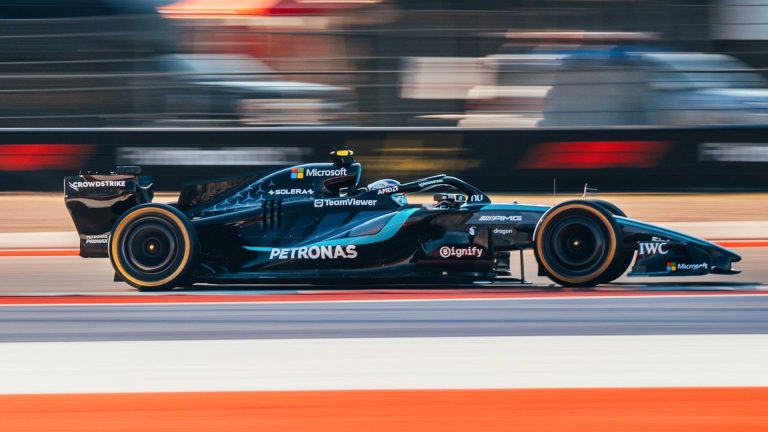
Mercedes Team Principal Toto Wolff criticized the acoustic profile of the current hybrid power units, comparing their sound on the starting grid to a “fire alarm,” while endorsing plans to reintroduce V8 engines in the sport’s next regulatory cycle.
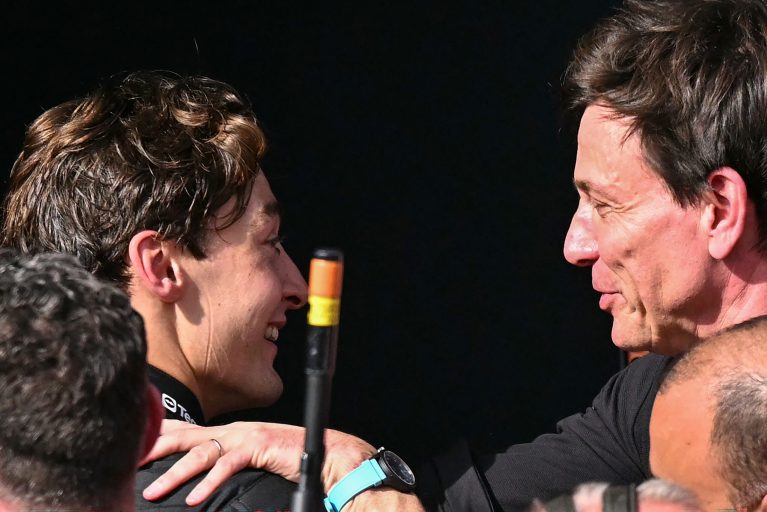
Speaking in an exclusive interview with RacingNews365, Wolff confirmed he is consulting directly with FIA President Mohammed Ben Sulayem, F1 CEO Stefano Domenicali, and fellow engine manufacturers regarding the future direction of Formula 1’s engine regulations. The proposed shift would end the current turbo-hybrid era in favor of simpler, higher-revving internal combustion architecture paired with a reduced electrical component.
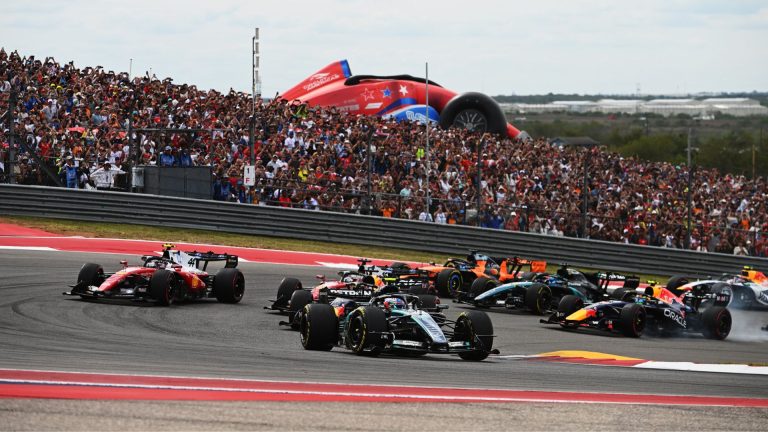
“These engines at the moment are so complex, and we’re starting to get our heads around it because they’ve changed the racing,” Wolff stated. “Some like the Sundays and the racing because there are a lot of overtakes, others don’t like it, but the drivers who are most adaptable win. However, I can’t stand the cars revving on the grid before the start for 10 seconds; it sounds like a fire alarm.”

Proposed Technical Specifications for the Next Engine Cycle
Looking ahead to the medium-to-long-term technical framework—projected over a three-to-four-year horizon—Wolff outlined the proposed balance between combustion and electrical power output:
- Engine Configuration: Eight-cylinder V8 internal combustion engine (ICE) prioritized for acoustic quality and simplicity.
- Power Output Balance: Approximately an 80:20 split favoring the internal combustion engine over the battery system.
- Total Target Output: Approximately 1,000 horsepower.
- Battery Role: A significantly scaled-back electrical package, similar to a modernized KERS setup, ensuring reduced weight and complexity.
“Ben Sulayem wants an eight-cylinder V8, which has a good sound, alongside a more limited battery. I think the ratio would sit around 80:20 in terms of power output between the ICE and battery, delivering 1,000 horsepower. As a purist, I like that direction,” added Wolff.
Intermediary Rules Adjustment and Ferrari Veto
Prior to any eventual V8 rollout targeted for 2030 or 2031, Formula 1 is preparing incremental power adjustments to its existing regulations. The current 50:50 power split between the ICE and electrical system is scheduled to shift toward a 60:40 split favoring thermal combustion by 2028.
Achieving this adjustment requires increasing fuel flow rates to generate higher internal combustion output, necessitating minor hardware adaptations across engine components. However, a proposed 50 kW ICE power step planned for 2027 was modified after Ferrari exercised a veto against the change.
“We would have wanted a 50-kilowatt increase in engine power for next year, but Ferrari blocked the proposal,” Wolff explained. “As a result, we will introduce a 20-kilowatt step first, followed by a 50-kilowatt increase in 2028.”
Formula 1 resumes August 21–23 with the Dutch Grand Prix at Zandvoort, representing Round 12 of the 2026 season. Full coverage of all sessions continues on GRANDE PRÊMIO.
Dutch Grand Prix Session Times
| Session | Local Time (CEST) | UTC / GMT |
| Free Practice 1 | Friday, 12:30 | 10:30 UTC |
| Sprint Qualifying | Friday, 16:30 | 14:30 UTC |
| Sprint Race | Saturday, 12:00 | 10:00 UTC |
| Qualifying | Saturday, 16:00 | 14:00 UTC |
| Grand Prix | Sunday, 15:00 | 13:00 UTC |
Frequently Asked Questions (FAQ)
Why does Toto Wolff support returning to V8 engines in Formula 1?
Toto Wolff supports returning to V8 engines to simplify current power unit complexity, reduce reliance on heavy battery architecture, and improve the acoustic experience for fans.
What is the proposed power output split for the next engine cycle?
The proposed regulation cycle targets an approximate 80:20 power output ratio between the internal combustion engine (ICE) and battery system, yielding roughly 1,000 total horsepower.
Why was the 2027 power unit adjustment modified?
A planned 50 kW internal combustion power increase for 2027 was scaled down to 20 kW after Ferrari vetoed the initial proposal, pushing the full 50 kW step back to 2028.