News Summary
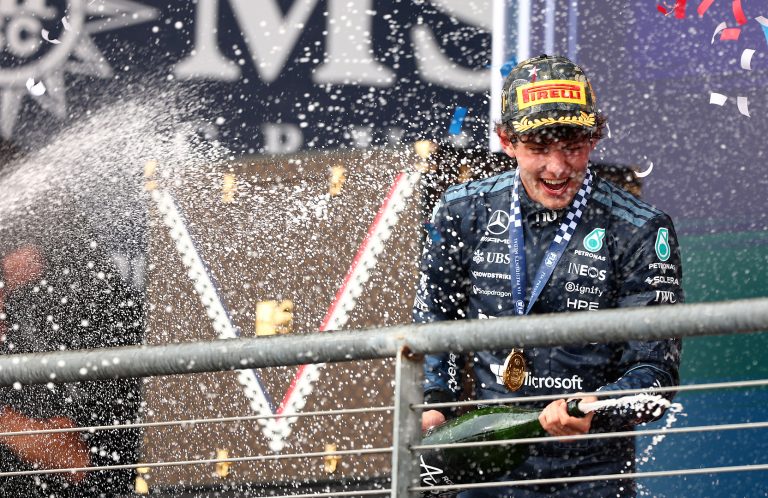
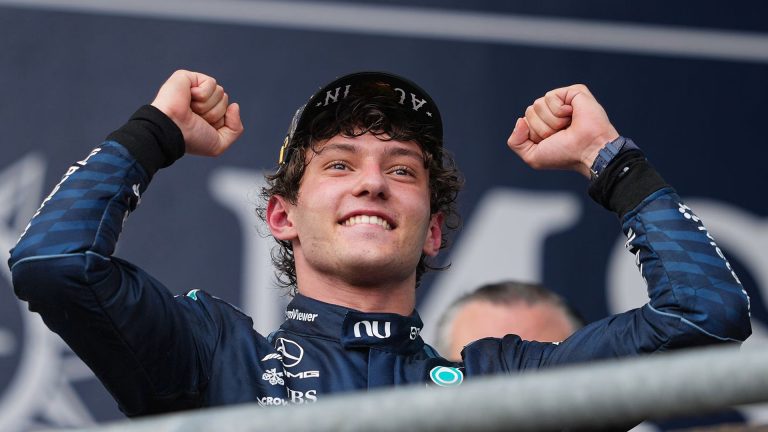
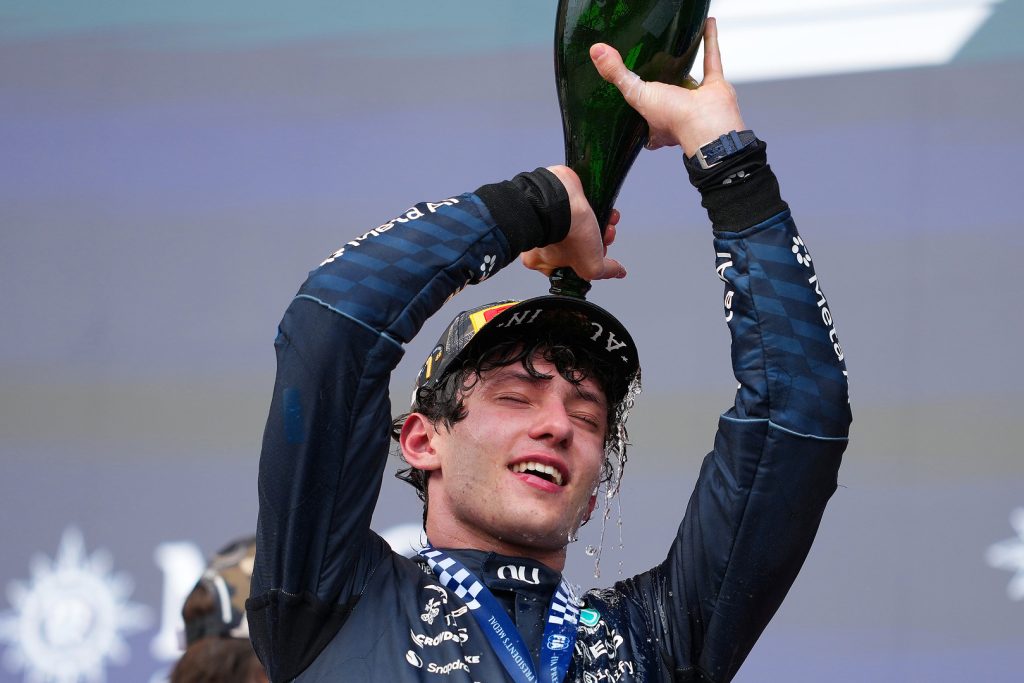
- Andrea Kimi Antonelli delivered another commanding victory at the United States Grand Prix, demonstrating why Mercedes’ increasingly narrow performance advantage has not prevented him from controlling the championship.
- Ferrari emerged from Austin with renewed confidence, while Max Verstappen admitted Red Bull chose the wrong tyres and suffered recurring power-unit problems. McLaren, meanwhile, failed to challenge the leading teams.
- Gabriel Bortoleto produced an encouraging recovery from 21st on the starting grid, reinforcing Audi’s midfield potential despite leaving Texas without championship points.
The 2026 Formula 1 United States Grand Prix reinforced Andrea Kimi Antonelli’s position as the outstanding driver of the season, but Sunday’s (October 25) race at Circuit of The Americas also revealed important developments throughout the grid. Ferrari showed that its pace was more than a practice illusion, Red Bull discovered the limits of its recent recovery, McLaren struggled to regain competitiveness and Gabriel Bortoleto delivered a determined performance after starting near the back.
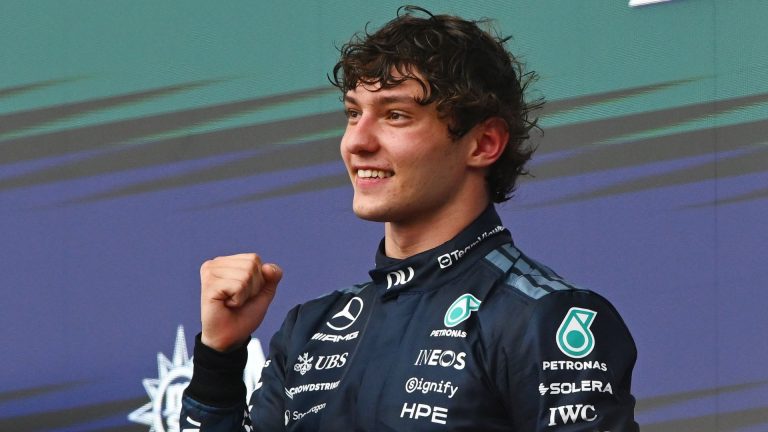
Antonelli converted pole position into his ninth victory of 2026, defeating Charles Leclerc and Max Verstappen with a one-stop strategy that Mercedes executed more effectively than its rivals. George Russell’s eighth place delayed the championship decision, but the Italian leaves Austin 123 points ahead with five races remaining. Beyond that result, GRANDE PRÊMIO identifies five important lessons from a weekend that offered clues about both the final stages of 2026 and the competitive order heading towards 2027.
Antonelli proves Mercedes does not need to dominate for him to win
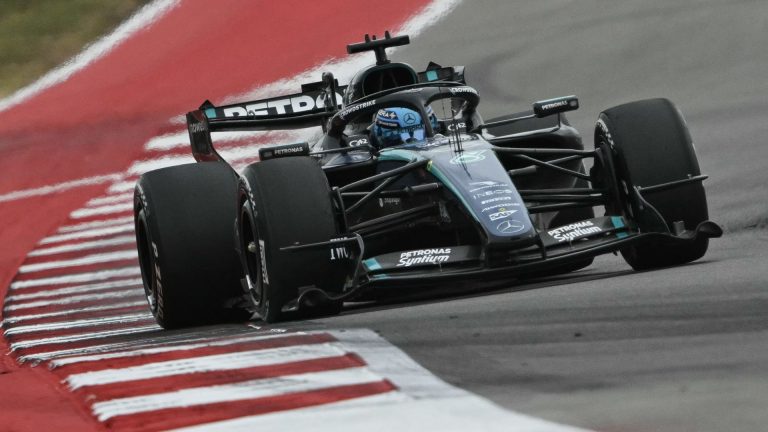
Mercedes was not the obvious favourite throughout the United States Grand Prix weekend. Ferrari led all three practice sessions, while Red Bull arrived in Austin following consecutive victories in Malaysia and Singapore. The German manufacturer struggled with balance and tyre temperatures, particularly in slower corners, raising questions about whether its latest upgrades had made the car more difficult to operate.
Yet Antonelli once again delivered when the result mattered.
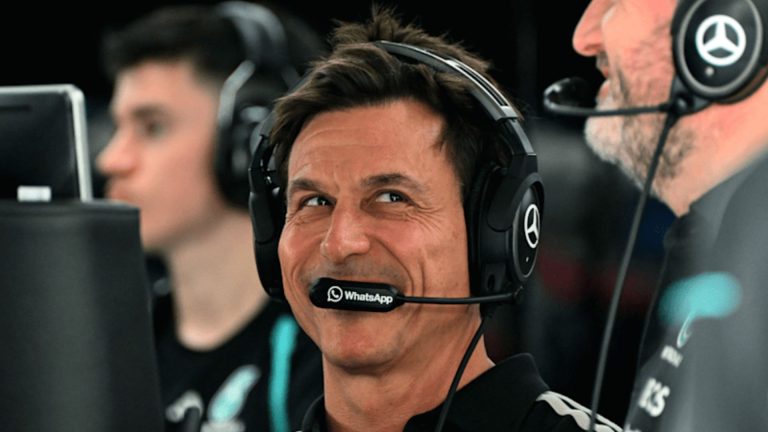
The Italian surprised his rivals by securing pole position, beating Verstappen by 0.179 seconds. His performance was particularly impressive because Mercedes had spent much of the weekend searching for the correct operating window, with even team principal Toto Wolff acknowledging that pole had exceeded expectations.
Sunday provided an even stronger demonstration of Antonelli’s development.
Starting on medium tyres while Verstappen and the Ferraris chose softs, the Mercedes driver maintained the lead into Turn 1 and immediately established a gap. He then extended his opening stint while his rivals stopped earlier, eventually switching to hard tyres on lap 25 and completing the remaining 31 laps without another stop.
The result showed that Antonelli’s advantage extends beyond qualifying speed. He can manage a race, interpret tyre behaviour and influence strategic decisions without needing an overwhelmingly superior car.
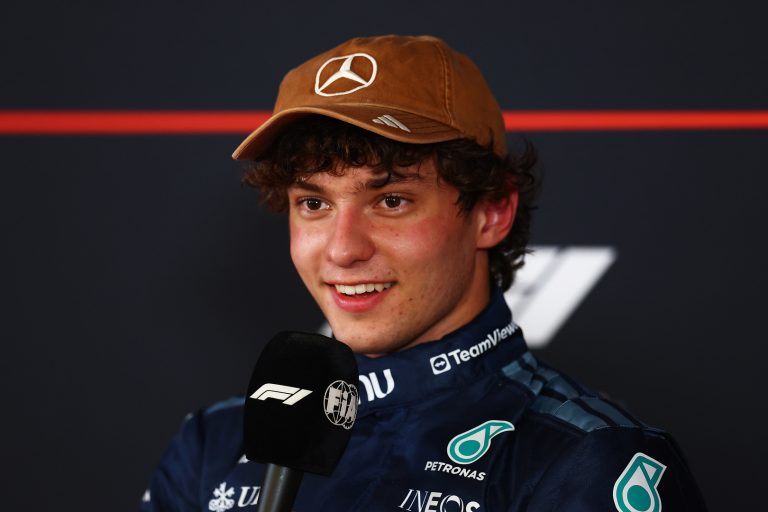
After the Grand Prix, Antonelli revealed that he had personally advocated the one-stop strategy, explaining that he was uncertain which approach would be fastest but believed the team should commit to the longer stints.
Wolff subsequently confirmed that Mercedes had calculated an advantage of approximately 8 seconds for the one-stop approach. The team resisted the temptation to react when Verstappen stopped early, trusting its simulations and the performance of the hard compound.
The contrast with Russell was striking. While Antonelli controlled the race, his teammate struggled to find pace and eventually finished eighth after receiving a five-second penalty.
That difference should not be interpreted as evidence that Russell lacks speed. The British driver has won three Grands Prix this season and remains second in the standings. But Austin illustrated how Antonelli has become Mercedes’ most reliable reference point as competition from other manufacturers has intensified.
The championship is not mathematically decided, but the Italian has established an advantage that will be extraordinarily difficult to overturn.
With 365 points, Antonelli leads Russell by 123 and Lewis Hamilton by 124. A ninth-place finish at the Mexican Grand Prix will be sufficient to secure his first World Championship, regardless of his rivals’ results.
Ferrari finally converts promising performance into a strong result
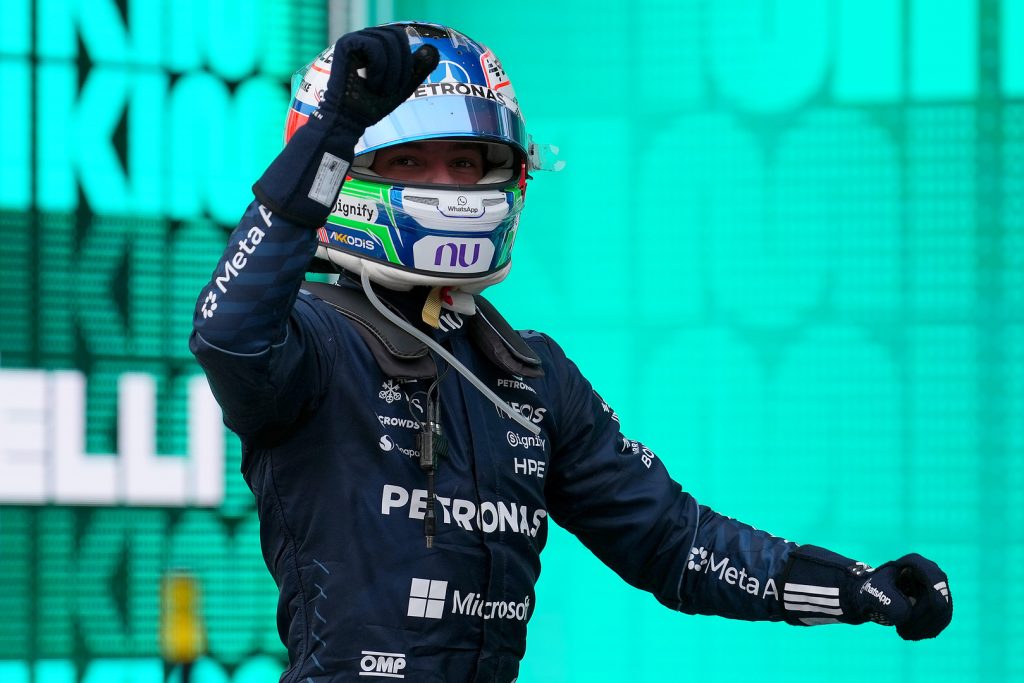
Ferrari arrived in Austin with reasons to believe it could challenge for victory. Leclerc had led both Friday sessions, while Hamilton topped final practice, giving the Italian team a clean sweep of the weekend’s free-practice results.
However, Saturday initially suggested another familiar disappointment.
Mercedes and Red Bull improved when qualifying reached Q3, leaving Leclerc fourth and Hamilton fifth. Ferrari’s inability to convert impressive practice speed into a front-row start raised questions about whether its performance would once again disappear when the competition became more intense.
Sunday offered a more encouraging answer.
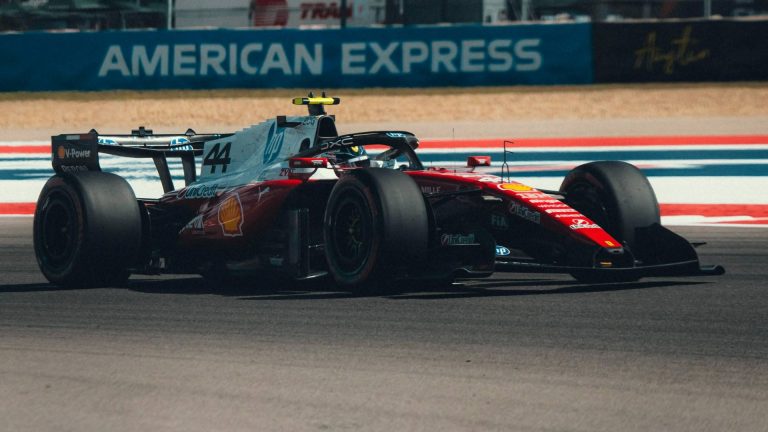
Leclerc finished second after overtaking Verstappen during the final stint, while Hamilton recovered to fourth, passing Lando Norris in the closing stages. The pair scored 30 points, one more than Mercedes, providing an important indication that Ferrari’s competitiveness extended beyond isolated qualifying laps.
Leclerc’s performance was particularly valuable because he had to recover from an imperfect strategic position. Ferrari committed its drivers to two stops, while Mercedes completed the race with one, but the Monegasque still extracted enough performance from his final set of hard tyres to defeat Verstappen.
The result also demonstrated how Ferrari could remain competitive when its rivals encountered difficulties.
Red Bull struggled with tyre choices and power-unit behaviour, while Hamilton’s own race was compromised by a setup that produced severe understeer during the first two stints.
The seven-time World Champion explained that he struggled to rotate the car through several of Austin’s slower corners, losing substantial time before finding a better balance during the final stint.
That assessment is important because Ferrari’s result was achieved despite both drivers encountering difficulties.
Second and fourth represented progress, but the Scuderia still left Austin believing that more had been possible.
The question heading into Mexico is whether Ferrari can reproduce this competitiveness without needing to recover from qualifying or setup problems.
Leclerc’s podium moved him to 233 points, only three behind Verstappen, while Hamilton’s fourth place reduced his deficit to Russell to just one point.
Although neither Ferrari driver is in a realistic position to challenge Antonelli for the championship, their performance could shape the battle for the remaining places and provide valuable momentum ahead of 2027.
Red Bull’s recovery is real, but Austin exposes weaknesses Verstappen cannot hide
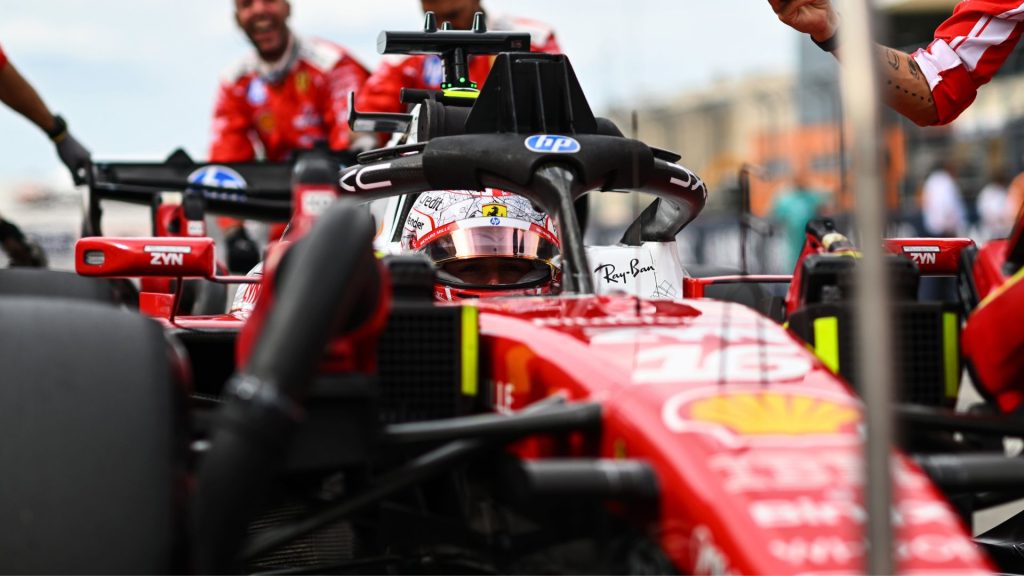
Red Bull’s resurgence has been one of the major developments of the second half of 2026. Verstappen’s victories in Malaysia and Singapore suggested the team had found a more competitive technical direction, while Isack Hadjar’s qualifying performance in Austin reinforced the impression that the improvement was not limited to one driver.
Verstappen started second at Circuit of The Americas, with Hadjar third. Red Bull therefore had two cars in strong positions to challenge Mercedes, particularly given the team’s encouraging long-run pace.
However, the race exposed several weaknesses.
Verstappen struggled for traction at the start, temporarily losing second place to Leclerc. Although he recovered the position, the Dutchman was unable to match Antonelli’s opening pace.
The problems intensified as the race progressed.
Red Bull’s decision to begin on soft tyres and stop early effectively committed Verstappen to a two-stop strategy. The team subsequently discovered that its compounds were not performing as expected, while technical problems made the car difficult to drive consistently.
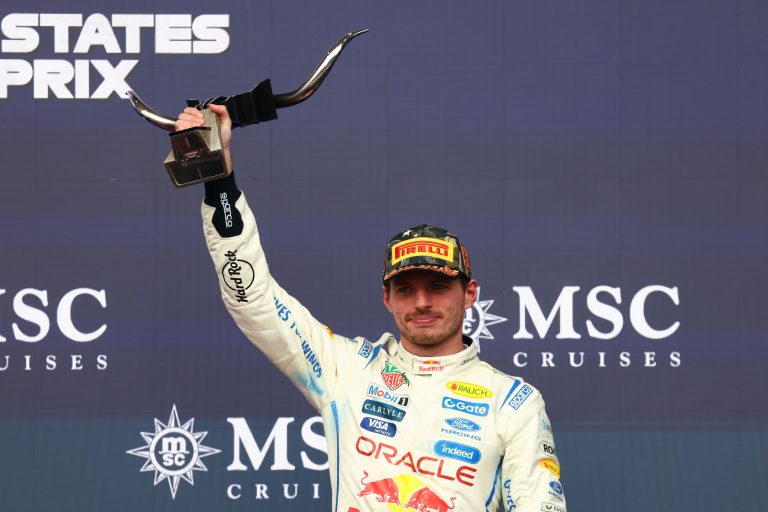
After finishing third, Verstappen admitted Red Bull had selected the wrong tyres and used them in the wrong order.
The Dutchman also revealed that inconsistent engine braking and gearshifts had affected his driving throughout the weekend, with the car behaving differently from corner to corner.
Those symptoms made it harder to establish a consistent rhythm, particularly on a circuit that combines heavy braking zones with rapid changes of direction.
Verstappen believed Red Bull could have finished second with a better strategy, but he did not attempt to claim that victory had been lost through mistakes alone.
He acknowledged that Antonelli was simply too fast to beat in Austin.
The assessment places Red Bull’s recovery in perspective.
The team has undoubtedly become more competitive, and Verstappen remains capable of winning races when the car operates within its preferred window. Hadjar’s sixth-place finish also provided valuable championship points and confirmed his ability to contribute to the team’s results.
But Austin showed that Red Bull still has weaknesses in race execution, tyre management and power-unit consistency.
For 2027, those weaknesses matter as much as the outright speed the team has recovered. A genuine championship challenge will require a package that is competitive across different circuits and conditions, rather than one dependent on the ideal strategic circumstances.

McLaren’s decline leaves Norris and Piastri chasing rather than fighting
McLaren’s difficult Austin weekend continued a concerning trend during the final part of the championship.
Earlier in 2026, the team had demonstrated enough competitiveness to challenge Mercedes and win Grands Prix. Lando Norris in particular appeared capable of exploiting opportunities when the W17 encountered difficulties.
But that position has become increasingly difficult to maintain as Red Bull and Ferrari have improved.
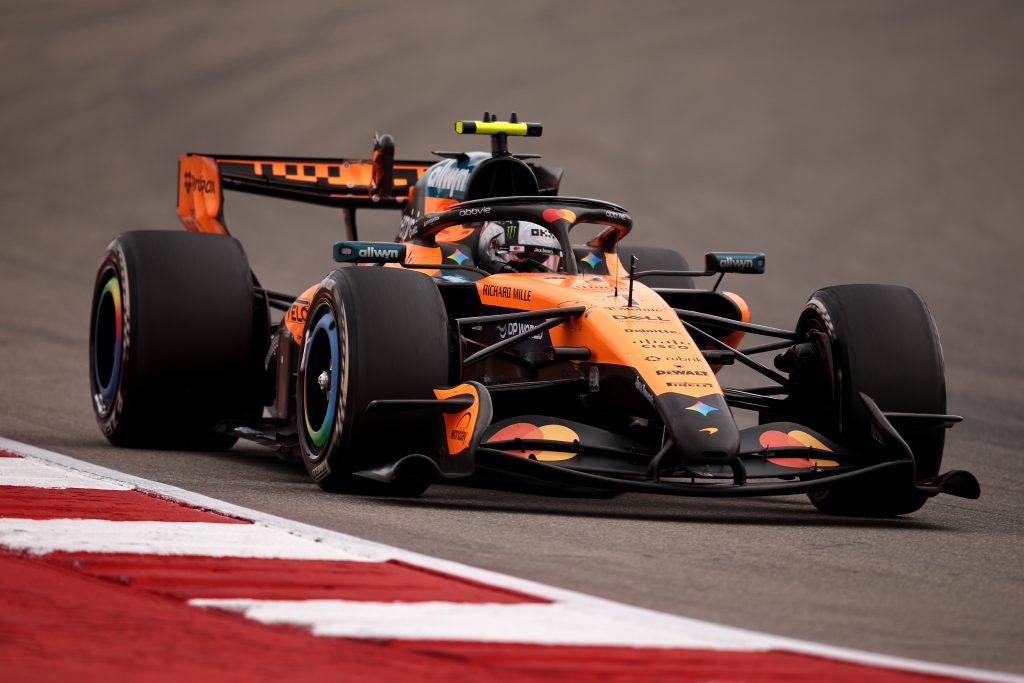
Saturday’s qualifying session was particularly disappointing. Norris lost his fastest Q3 lap for exceeding track limits and dropped to eighth, immediately behind teammate Oscar Piastri.
The Australian qualified seventh, leaving both McLaren drivers behind the Mercedes, Red Bull and Ferrari cars.
Sunday produced a similar picture.
Norris finished fifth and Piastri seventh, collecting 16 points between them but failing to mount a serious challenge for the podium.
Norris was unable to defend fourth against Hamilton during the closing stages, while Piastri remained behind the leading group.
The problem is not simply one of qualifying performance or individual mistakes.
McLaren appears increasingly unable to maintain the pace required to challenge the three leading teams over an entire weekend. Its performance fluctuates between sessions, and its drivers have struggled to convert occasional flashes of speed into sustained competitive results.
The team’s development programme also faces greater scrutiny.
Mercedes has maintained enough performance to win despite a narrower operating window, while Ferrari and Red Bull have made visible progress. McLaren, by contrast, has not consistently responded to those improvements.
The result is an increasingly difficult battle in the Constructors’ Championship.
McLaren leaves Austin level with Red Bull on 355 points, while Ferrari has established a substantial advantage over both.
That makes the final five races particularly important. Even if McLaren cannot realistically challenge Mercedes, its ability to remain ahead of Red Bull will provide a measure of how effectively it has responded to the changing competitive order.
For Norris and Piastri, the objective is now to recover the consistency that allowed McLaren to compete for victories earlier in the year.
Austin offered little evidence that the solution has already been found.
Bortoleto turns punishment into recovery, but Audi still lacks the final step
Gabriel Bortoleto entered the United States Grand Prix knowing that his weekend would be defined by damage limitation.
Audi had chosen to replace several power-unit components, resulting in an accumulated 80-place grid penalty. The Brazilian had shown enough pace to compete in the midfield during qualifying, but the technical changes meant he would start near the back regardless of his performance.
Lance Stroll’s subsequent pit-lane sanction promoted Bortoleto to 21st on the final grid, leaving him with a substantial recovery task.
The Brazilian responded with an encouraging race.
Bortoleto recovered through the midfield and finished outside the points, demonstrating competitive pace despite starting from the rear of the field.
His performance was particularly important because Audi had sacrificed grid position to introduce a fresh power unit. That decision reduced his immediate chances of scoring but was intended to improve the car’s technical situation for the remaining rounds.
The German manufacturer therefore had two different objectives in Austin: extracting the maximum possible result and gathering useful information from its updated power-unit package.
Bortoleto’s ability to gain positions provided encouragement, even though the result did not end his points drought.
The comparison with teammate Nico Hülkenberg is also relevant.
Hülkenberg finished 11th, just outside the points, demonstrating that Audi had enough pace to compete with the leading midfield teams under the right circumstances.
The result suggests that Audi’s principal challenge is not a complete absence of speed, but converting competitive moments into championship points more consistently.
That distinction is important for a manufacturer still building its Formula 1 programme.
Bortoleto has experienced a difficult season, including setbacks caused by reliability, penalties and occasions when promising qualifying performances failed to translate into race results.
Yet Austin showed that the Brazilian remains capable of making progress even when the circumstances are unfavourable.
The recovery also provides a useful contrast with Alpine and Racing Bulls.
Pierre Gasly secured the final point in tenth, while Liam Lawson finished ninth for Racing Bulls, again demonstrating the narrow margins separating the midfield teams.
Lawson had benefited from Racing Bulls’ decision to preserve fresh tyres rather than send him out for a Q3 lap, and his ninth-place finish gave the team another useful result.
Audi, meanwhile, left Austin without scoring, despite both drivers demonstrating enough competitiveness to finish close to the points.
That is the next step Bortoleto and the team must take: turning recovery drives and isolated flashes of pace into tangible championship progress.
The Mexican Grand Prix offers another opportunity, with Audi hoping that the power-unit replacements completed in Austin will help reduce the technical compromises affecting the final part of the season.
GRANDE PRÊMIO is following the aftermath of the United States Grand Prix and the build-up to the Mexican Grand Prix, with race analysis, driver reactions, championship updates and full coverage in its Formula 1 section.
FAQ
What were the biggest lessons from the 2026 United States Grand Prix?
Andrea Kimi Antonelli demonstrated his ability to win despite growing competition from Ferrari and Red Bull, Ferrari converted its strong pace into a double top-four finish, Red Bull encountered strategic and technical problems, McLaren struggled and Gabriel Bortoleto recovered from near the back of the grid.
Why was Andrea Kimi Antonelli so dominant in Austin?
Antonelli secured pole position, maintained the lead at the start and completed an effective one-stop strategy using medium and hard tyres. Mercedes’ approach proved more efficient than the two-stop strategies used by its principal rivals.
Did Gabriel Bortoleto score points at the United States Grand Prix?
No. Bortoleto recovered multiple positions after starting 21st following power-unit penalties, but finished outside the top ten. Audi teammate Nico Hülkenberg also narrowly missed the points in 11th.