News Summary
- Fernando Alonso expressed interest in joining Verstappen at Red Bull for 2025, according to Horner’s forthcoming memoir.
- Helmut Marko reportedly communicated opposition from Verstappen’s management, while a separate approach involving Charles Leclerc also failed.
- Horner says he had reservations about promoting Liam Lawson and later discussed a possible 2026 move with Carlos Sainz.
Christian Horner has revealed that Fernando Alonso wanted to join Red Bull as Max Verstappen’s teammate for the 2025 Formula 1 season, but the possibility was rejected after Helmut Marko communicated objections reportedly coming from the Dutchman’s management.
The former Red Bull team principal made the revelation in extracts from his forthcoming autobiography, Drive: A Memoir of Speed, due for release on October 22. The passages were published by Dutch outlet NU and subsequently reported by Motorsport.com.
According to Horner, the search for a replacement for Sergio Pérez had begun as the Mexican’s performances deteriorated during 2024. Alonso emerged as an unexpected candidate, despite being an established two-time world champion and already competing for Aston Martin.
The conversation reportedly took place during the Japanese Grand Prix weekend at Suzuka, where Alonso personally expressed his interest in joining Verstappen the following year. Horner claims the idea was subsequently rejected following an intervention from Marko.
Alonso wanted to race alongside Verstappen, Horner claims
Horner explained that Pérez’s declining results prompted him to consider more experienced alternatives rather than automatically promoting another driver from Red Bull’s development programme.
During the 2024 Japanese Grand Prix, Alonso allegedly approached the team principal about the possibility of sharing the garage with Verstappen in 2025.
Horner wrote that Alonso had expressed a strong desire to race alongside the Dutchman, but the proposal quickly encountered opposition.
According to the former team principal, Marko subsequently informed him that Verstappen’s management was unhappy with the idea.
The distinction is significant: Horner did not claim that Verstappen personally rejected Alonso. His account attributes the resistance to the driver’s management, as communicated by Marko, without identifying which individual objected or whether Verstappen had been consulted.
Neither Alonso nor Verstappen’s representatives have independently confirmed Horner’s account of the discussions.
The possibility would have created one of Formula 1’s most experienced and high-profile driver combinations, bringing together a two-time world champion and the driver who had dominated the previous four championship campaigns.
However, Red Bull ultimately pursued a different direction, promoting Liam Lawson from Racing Bulls to replace Pérez for the beginning of 2025.
Leclerc was also considered before Red Bull rejected the idea
Alonso was not the only established driver Horner considered.
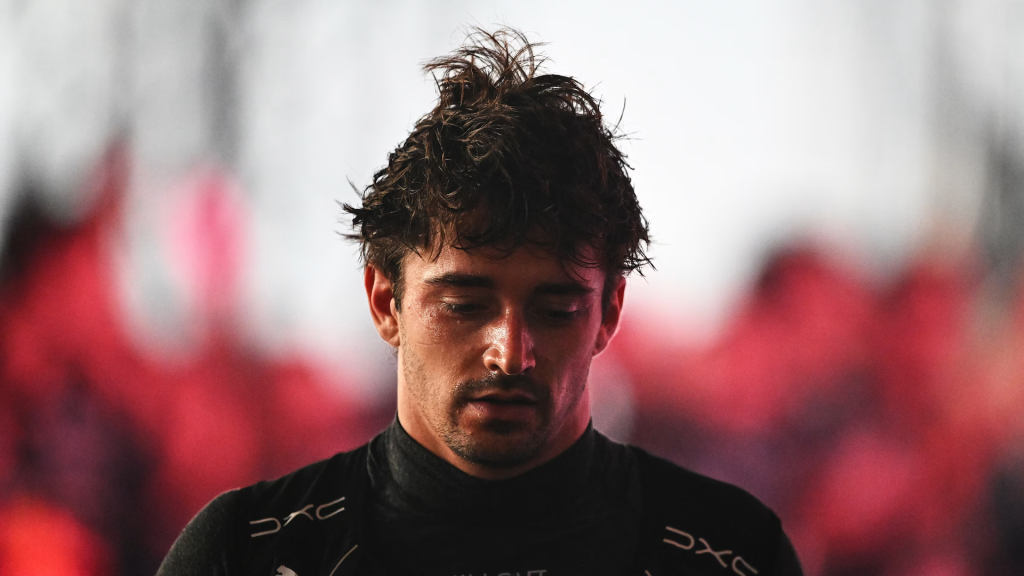
The former Red Bull boss also revealed that he had spoken with Charles Leclerc’s representative during the 2023 Qatar Grand Prix, identifying the Ferrari driver as a potential solution if Pérez’s performance continued to decline.
Horner admired Leclerc’s qualifying speed, determination and attitude towards Ferrari, even during difficult periods.
He believed the Monegasque could provide the level of competitiveness Red Bull needed from its second driver, particularly when Verstappen was carrying much of the team’s championship challenge.
However, that possibility also failed to progress.
According to Horner, Marko subsequently instructed him to abandon the idea of recruiting Leclerc, just as he had done with Alonso.
The former team principal insisted that he did not believe the instruction came from Verstappen himself, although he did not identify who ultimately opposed the move.
The account raises questions about how Red Bull evaluated potential teammates for Verstappen during a period when the team’s second seat was becoming increasingly difficult to fill.
It also offers another perspective on the internal relationships that shaped Red Bull’s driver decisions during Horner’s final years in charge.
Horner admits he was uncomfortable promoting Lawson
The eventual decision was to promote Lawson, who had made only 11 Formula 1 grand prix starts before receiving the Red Bull opportunity.
Horner has now acknowledged that he considered the move premature, arguing that the New Zealander lacked the experience required to handle the demands of the senior team.
His concerns were subsequently reflected in Lawson’s difficult start to 2025, when Red Bull returned him to Racing Bulls after only two grands prix.
The decision became one of the most controversial driver changes of the season and highlighted the pressure associated with racing alongside Verstappen.
Lawson has since rebuilt his reputation. In 2026, he has delivered 61% of Racing Bulls’ Constructors’ Championship points, while also scoring 14 points during a temporary return to Red Bull as a substitute for the injured Isack Hadjar.
His recent results have strengthened his case for another season with the Faenza-based team, as Racing Bulls weighs retaining Lawson and Arvid Lindblad for 2027.
The contrast between Horner’s assessment of Lawson’s readiness in 2025 and the driver’s subsequent improvement adds another dimension to Red Bull’s decision-making history.
Sainz met Horner shortly before his Red Bull dismissal
Horner also disclosed that Carlos Sainz visited his home ahead of the 2025 British Grand Prix to discuss a possible move to Red Bull for the 2026 season.
The Spaniard had already joined Williams after leaving Ferrari, but Horner regarded him as an experienced driver who could contribute immediately to the team.
Sainz had previously competed for Toro Rosso alongside Verstappen in 2015, before their careers followed different paths.
According to Horner, the conversation took place on the Thursday before Silverstone, only days before he was removed from his position as Red Bull team principal.
The meeting therefore never developed into a completed agreement.
Horner’s dismissal in July 2025 ended his two-decade tenure leading Red Bull Racing, with Laurent Mekies taking over responsibility for the team.
The former team principal has since discussed the circumstances of his departure and his continuing connection to Red Bull’s technical projects. He recently revealed that executive Oliver Mintzlaff contacted him after Verstappen secured the team’s first victory with its own power unit.
As Horner explained in his latest comments about Red Bull’s engine breakthrough, Mintzlaff thanked him for his contribution to the programme established before his dismissal.
Horner’s revelations reopen questions about Red Bull’s internal politics
The revelations come as Horner’s forthcoming autobiography brings renewed attention to the internal relationships that shaped Red Bull during the final years of his leadership.
His account suggests that decisions about Verstappen’s teammates involved more than simply evaluating sporting performance, with Marko and the driver’s management reportedly influencing the options available to the team principal.
However, the claims remain Horner’s retrospective version of events. The extracts do not establish that Verstappen personally blocked Alonso or Leclerc, nor do they independently confirm the precise role of his representatives in the decisions.
The Dutchman has recently spoken about the atmosphere at Red Bull following Horner’s departure, saying he prefers the calmer environment that has developed within Formula 1.
In his comments about the less stressful atmosphere since Horner left Red Bull, Verstappen emphasised that his priority remains winning races rather than becoming involved in speculation about the former team principal’s future.