News Summary
- René Arnoux believes Ferrari’s previous strategy mistakes help explain why Hamilton took matters into his own hands during the Singapore Grand Prix.
- The former Ferrari driver says the team makes more mistakes than its rivals despite having a competitive car in 2026.
- Arnoux also praises Kimi Antonelli’s maturity at Mercedes and considers Max Verstappen the strongest driver on the grid.
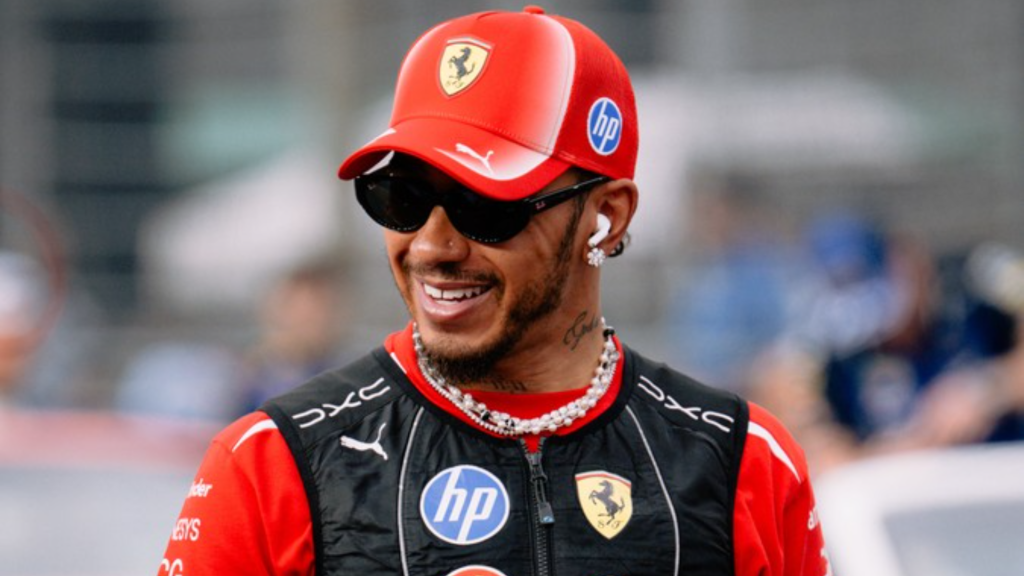
René Arnoux has launched a sharp criticism of Ferrari’s repeated strategic mistakes in the 2026 Formula 1 season, arguing that Lewis Hamilton’s decision to ignore the team’s instructions during the Singapore Grand Prix must be understood in the context of earlier failures by the Maranello outfit.
The former Ferrari driver, who won three grands prix for the Scuderia in 1983, offered a markedly different interpretation from Martin Brundle and Jean Alesi, both of whom criticised Hamilton for refusing to follow the pit wall’s strategy at Marina Bay.
Speaking to La Gazzetta dello Sport, Arnoux argued that Ferrari’s mistakes at Silverstone and the Hungaroring had contributed to Hamilton’s decision to take control of his own race. Although the seven-time world champion subsequently apologised, the Frenchman believes the underlying problem lies in the team’s inability to consistently convert a competitive car into strong results.
His criticism comes as Ferrari sits second in the Constructors’ Championship with 444 points, 134 behind Mercedes, despite continuing to face questions over its race management and the relationship between its drivers and strategists.
Arnoux blames Ferrari’s previous mistakes for Hamilton’s decision
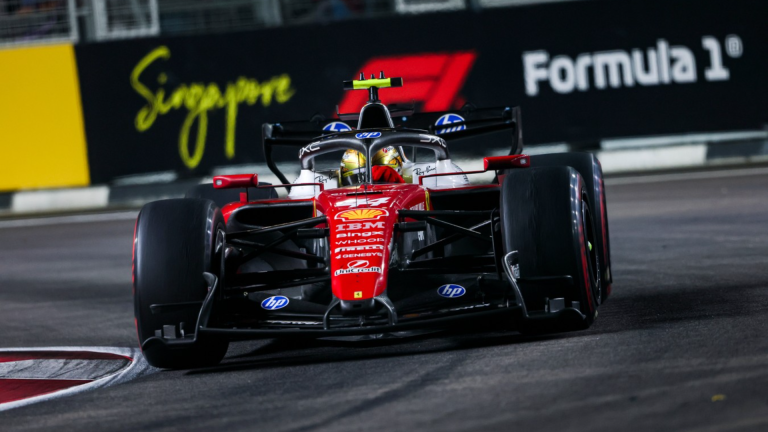
Hamilton’s Singapore Grand Prix unravelled when he elected to remain on track during a Virtual Safety Car rather than follow Ferrari’s instruction to make another pit stop. Charles Leclerc followed the team’s call and eventually finished second, while Hamilton struggled with tyre degradation and dropped to sixth.
The decision drew criticism because Ferrari believed both cars could have finished on the podium. Hamilton accepted responsibility after the race, acknowledging that his gamble had cost the team valuable points.
Arnoux, however, believes the episode cannot be separated from the decisions Ferrari made earlier in the championship.
“The team made mistakes at Silverstone and in Hungary,” Arnoux told La Gazzetta dello Sport, explaining why Hamilton may have preferred to make the decision himself in Singapore.
The Frenchman acknowledged that the gamble failed and that Hamilton subsequently apologised, but he directed his strongest criticism towards Ferrari’s broader record.
“At Maranello, they make far more mistakes than other teams,” Arnoux said, adding that Ferrari has a good car this season but has lost numerous points through strategy.
His assessment presents a different perspective on the Singapore controversy. Rather than treating Hamilton’s decision solely as an act of disobedience, Arnoux sees it as a possible consequence of the driver’s previous experiences with the pit wall.
That interpretation does not remove Hamilton’s responsibility for the result, but it raises a broader question about the level of confidence between Ferrari’s drivers and its strategists.
Brundle and Alesi take a different view of Hamilton’s gamble
Arnoux’s defence contrasts sharply with the assessment offered by Martin Brundle, who questioned why Hamilton attempted to manage Ferrari’s strategy from the cockpit.
In his post-race column for Sky Sports F1, Brundle described Hamilton’s refusal to stop again as bizarre and argued that managing a modern Formula 1 car while simultaneously making strategic decisions was an unrealistic approach.
As GRANDE PRÊMIO reported, Brundle sharply criticised Hamilton’s Singapore strategy decision, particularly after the Briton lost positions despite having an opportunity to change tyres under the Virtual Safety Car.
Former Ferrari driver Jean Alesi also questioned Hamilton’s decision. Writing for Corriere della Sera, Alesi suggested that the incident reflected tensions that had been building over several months, with the seven-time world champion repeatedly expressing frustration over Ferrari’s decisions.
Alesi considered the disagreement predictable given the history of complaints, although he acknowledged that Ferrari’s SF-26 had demonstrated encouraging performance at Marina Bay.
The disagreement between Arnoux, Brundle and Alesi highlights two different interpretations of Ferrari’s problems: whether the team is failing to exercise sufficient strategic authority or whether repeated mistakes have weakened the drivers’ confidence in that authority.
Ferrari’s competitive car has not prevented costly errors
Ferrari’s 2026 campaign has produced a substantial improvement over the previous season, but Arnoux believes its strategic execution remains a weakness.
Leclerc and Hamilton have demonstrated competitive pace at several circuits, with the Scuderia returning to second place in the Constructors’ Championship. However, decisions involving tyre selection, pit-stop timing and the management of its two drivers have repeatedly generated controversy.
At Sepang, Hamilton questioned Ferrari’s preferred tyre strategy in changing conditions before recovering to finish third. Earlier disagreements at Zandvoort and Monza also raised questions about how the team balances individual driver ambitions against its championship objectives.
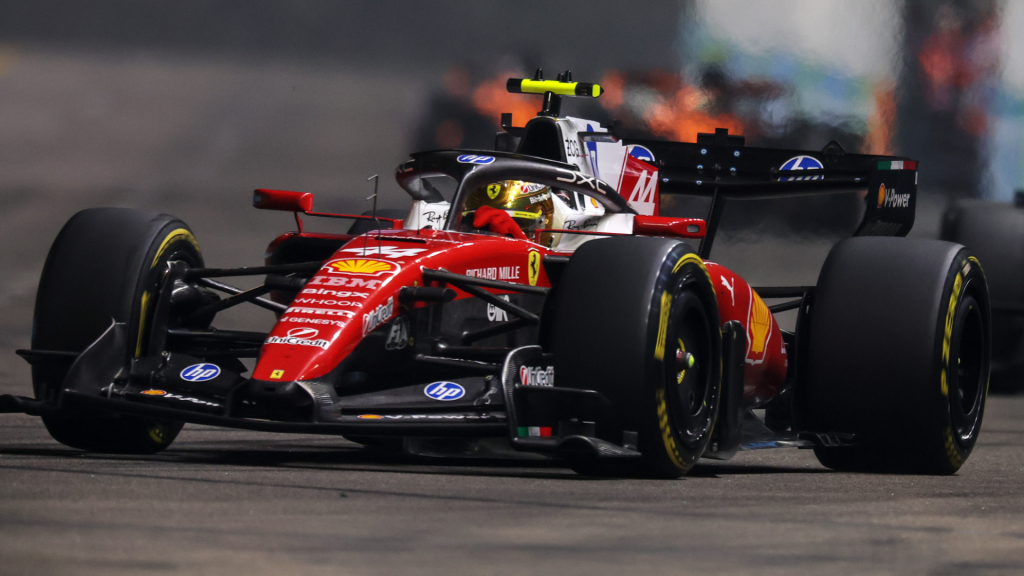
Singapore provided another example of that tension. Ferrari had the pace to place both cars on the podium, but Hamilton’s decision to extend his stint ultimately prevented the team from maximising its result.
The incident has intensified scrutiny of team principal Frédéric Vasseur, who has faced criticism despite Ferrari’s improved championship position.
Arnoux’s comments add weight to the debate over whether Ferrari’s recurring difficulties are primarily technical or operational. His central criticism is that the team already has a competitive car but continues to surrender opportunities through its own decisions.
The broader issue has also been examined in GRANDE PRÊMIO’s report on Ferrari’s growing problems of trust between Hamilton, Leclerc and the pit wall.
Arnoux praises Antonelli and calls Russell Mercedes’ second driver
The former Ferrari driver also offered a strong assessment of Kimi Antonelli’s performances, arguing that the Italian has demonstrated the qualities required to become a Formula 1 world champion.
Antonelli leads the 2026 championship with 340 points after 17 rounds, having established a 102-point advantage over Mercedes team-mate George Russell.
Arnoux praised the 20-year-old’s maturity and ability to avoid unnecessary risks during the closing stages of the season, particularly as Mercedes has lost some of its earlier performance advantage.
He highlighted Antonelli’s combination of talent, intelligence and consistency, noting that the Italian has continued producing strong results even when the W17 has not been the fastest car.
The Frenchman was especially emphatic when discussing the internal hierarchy at Mercedes.
“He’s now the undisputed leader of Mercedes,” Arnoux said of Antonelli, while describing Russell as having effectively become the team’s second driver.
Arnoux also credited team principal Toto Wolff for supporting Antonelli throughout his development, from karting to Formula 1.
In his view, the Italian has learned from the difficulties of his rookie season and improved considerably in a short period.
Antonelli will have his first mathematical opportunity to secure the 2026 championship at the United States Grand Prix, although the required combination of results remains difficult.
The championship scenarios for Antonelli to win the title in Austin show what the Mercedes driver needs to achieve.

Verstappen remains the benchmark despite Antonelli’s title lead
Arnoux also addressed the possibility of a championship battle between Antonelli and Verstappen in 2027.
Although the Italian is approaching his first world title, the former Ferrari driver believes Verstappen remains the strongest competitor in Formula 1.
“For me, the Dutchman is still the best driver in the world,” Arnoux said, while expressing enthusiasm about the possibility of a direct championship fight between the two next season.
He pointed to Red Bull’s development during 2026, contrasting its recovery with Mercedes’ more difficult second half of the campaign.
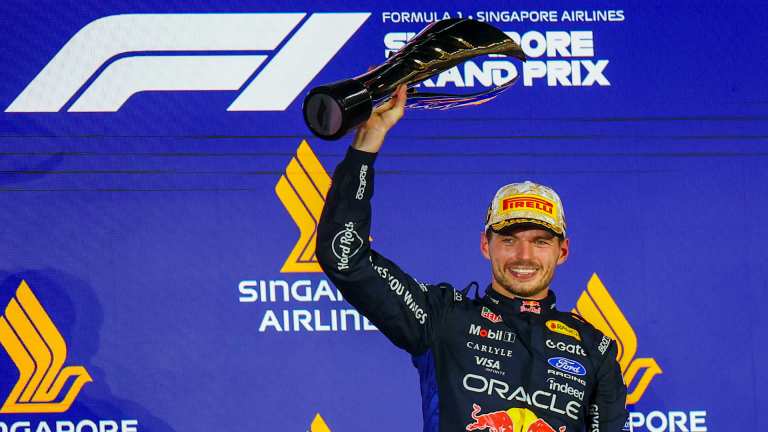
Verstappen has won the last two grands prix, in Malaysia and Singapore, bringing Red Bull back into contention for victories after a difficult opening phase of the season.
Arnoux believes the Dutchman could still finish second in the Drivers’ Championship, a result that would provide momentum heading into 2027.
The recent recovery is explored in GRANDE PRÊMIO’s analysis of how Red Bull is laying the foundations for Verstappen to challenge Antonelli in 2027.
Ferrari, meanwhile, will return to action at the United States Grand Prix on October 23–25, where Hamilton and Leclerc will attempt to build on the pace demonstrated in Singapore.
The complete Austin schedule and international start times are available on GRANDE PRÊMIO.