News Summary
- Verstappen admitted the Red Bull RB22 was sometimes frightening to drive during the opening months of 2026.
- Improvements introduced from the Azerbaijan Grand Prix made the car more balanced and predictable.
- The four-time champion now wants more victories and podiums after winning consecutive Grands Prix in Malaysia and Singapore.
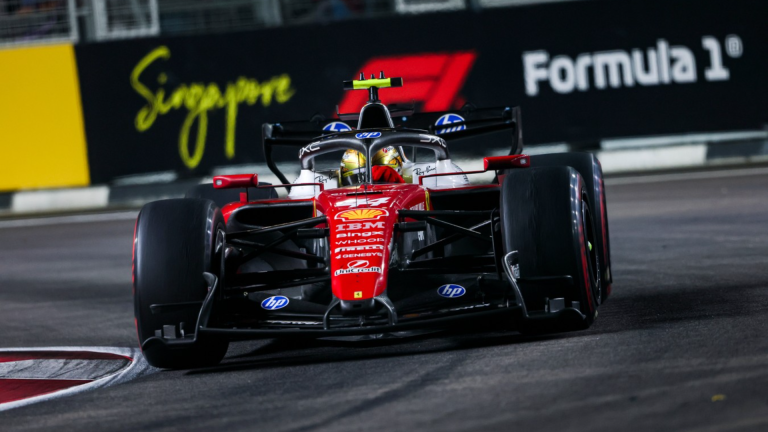
Max Verstappen has admitted that Red Bull’s 2026 Formula 1 car was sometimes “scary to drive” during the opening months of the season, revealing just how difficult the RB22 had become before a series of upgrades transformed its competitiveness.
The four-time world champion endured a frustrating first half of the campaign as Red Bull struggled with an unpredictable chassis, inconsistent handling and the challenges of adapting to Formula 1’s new technical regulations. However, the team’s development programme began producing significant improvements from the Azerbaijan Grand Prix onwards, culminating in consecutive victories at Sepang and Singapore.
Speaking during the post-race press conference at Marina Bay, Verstappen explained that the transformation had fundamentally changed his experience behind the wheel.
“I think the car definitely felt a lot nicer from Baku onwards. It’s just been a lot more balanced,” Verstappen said.
The Dutchman then acknowledged the severity of the problems he had encountered earlier in the championship.
“When you can compete a bit further up front without having too many issues with the car compared to the beginning of the year, where it was actually sometimes a bit scary to drive, yeah, that makes it a lot nicer,” he explained.
The admission offered a revealing perspective on Red Bull’s recovery. While the team’s recent victories have demonstrated its improved performance, Verstappen’s comments indicated that the biggest change was not simply additional speed, but a car that finally behaved predictably enough for him to attack with confidence.

Verstappen reveals how Red Bull transformed the RB22
Red Bull’s early-season difficulties were not limited to a lack of outright pace. The RB22 struggled with balance changes, rear-end instability and inconsistent responses during braking and corner entry, leaving Verstappen unable to trust the car in some situations.
The problems were particularly evident during the European phase of the championship. At Monza, Verstappen described the car as being “made out of paper” after another frustrating qualifying session, while Red Bull acknowledged that some of its recurring mechanical limitations could not be fully resolved during the current season.
As GRANDE PRÊMIO reported after the Italian Grand Prix, the four-time champion had been forced to compete with an unresolved rear-end problem that compromised the car over bumps, kerbs and slower corners.
The turning point came at Baku, where Red Bull introduced a substantial aerodynamic package designed to improve the RB22’s balance and airflow consistency.
The changes included revisions to the floor, diffuser and sidepod areas, addressing some of the weaknesses that had made the car particularly difficult to drive.
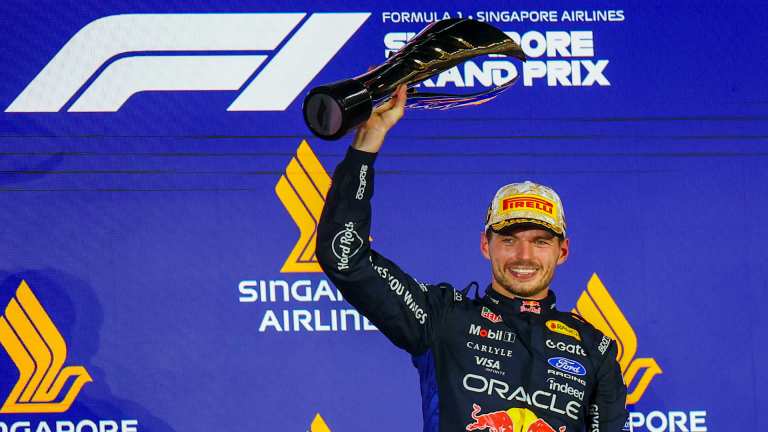
Verstappen finished second in Azerbaijan before winning the Bahrain Grand Prix at Sepang and the Singapore Grand Prix at Marina Bay.
The consecutive victories were particularly significant because the circuits demanded different aerodynamic and mechanical characteristics.
GRANDE PRÊMIO had already examined whether the Sepang victory represented a genuine Red Bull recovery rather than a result produced by favourable circuit conditions. Singapore provided further evidence that the improvements were working across different track layouts.
Following his Marina Bay victory, Verstappen said Red Bull had finally delivered the behaviour he had been requesting.
“It’s just been more driveable and more predictable. That’s what I wanted and needed from the car to find that last step to fight up front,” he explained.
Red Bull still has weaknesses to solve before 2027
Despite the dramatic turnaround, Verstappen warned that Red Bull had not completely eliminated the problems that affected its season.
The 2026 regulations introduced major changes to both chassis design and power-unit operation, forcing teams to adapt their development programmes while learning how to maximise electrical energy deployment.
For Red Bull, the challenge was particularly demanding because the team was also introducing its first power unit developed through Red Bull Powertrains in partnership with Ford.
Verstappen explained that the difficulties experienced earlier in the season had provided valuable information for the team’s engineers.
“From race one to now, I think we’ve gained a lot of experience,” he said, adding that Red Bull had corrected several weaknesses while continuing to learn about the new generation of cars.
The Dutchman stressed that the development process was not complete and that lessons learned during the final races of 2026 would also influence the team’s preparations for next season.
That assessment reinforces the importance of Red Bull’s recent recovery as a foundation for a potential 2027 championship challenge.
Although Verstappen has returned to winning form, his difficult opening months have left him a long way behind Mercedes driver Kimi Antonelli in the Drivers’ Championship.
After Singapore, Antonelli leads the standings with 340 points, while Verstappen has 221, a deficit of 119 points with six Grands Prix remaining.
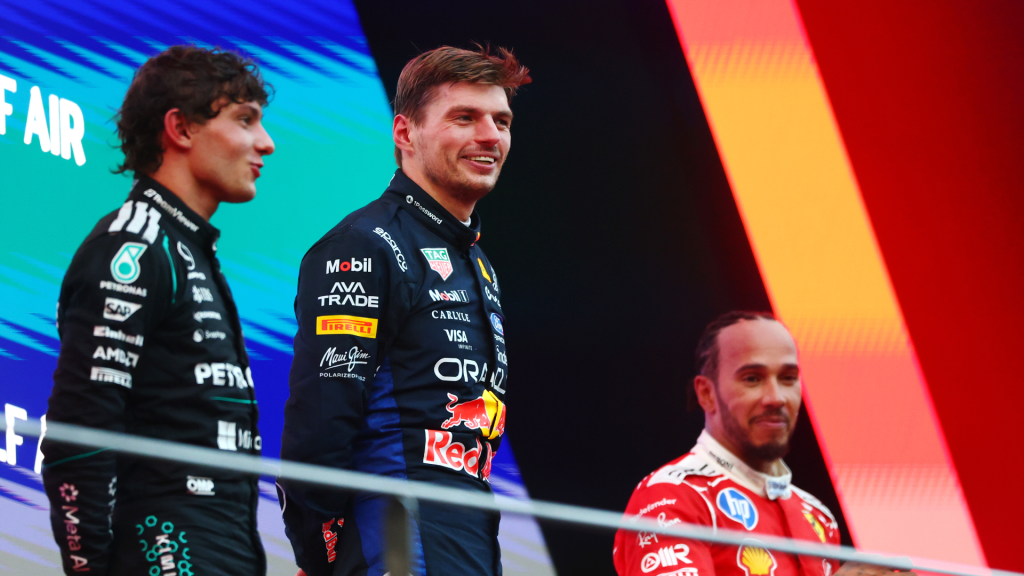
Verstappen shifts focus from championship to enjoying F1 again
The improvement in Red Bull’s performance has also changed Verstappen’s objectives for the remainder of the campaign.
Rather than concentrating on an increasingly unlikely title challenge, the four-time champion wants to take advantage of the RB22’s newfound competitiveness and enjoy racing again.
During the Singapore press conference, Verstappen acknowledged that the championship situation allowed him to approach the remaining events without the same pressure he had experienced during previous title fights.
“We’re not in a championship fight,” he said, explaining that his priority was to enjoy the final races while attempting to collect more podium finishes and victories.
The approach reflects a significant change from the frustrations of the opening months, when Red Bull’s technical problems repeatedly prevented him from extracting consistent performance.
Verstappen also refused to guarantee that the team would be competitive at every remaining circuit, despite the success achieved in Malaysia and Singapore.
Austin presents a different challenge, particularly because of its uneven surface, while the subsequent Mexican Grand Prix will place additional demands on power-unit cooling and energy management at high altitude.
Red Bull’s recent progress has nevertheless given Verstappen greater confidence in the car and a clearer direction for the final stages of the season.
Formula 1 returns at the United States Grand Prix on October 23–25, where Verstappen will attempt to claim a third consecutive Grand Prix victory. GRANDE PRÊMIO will provide complete coverage of the weekend through its Formula 1 section.