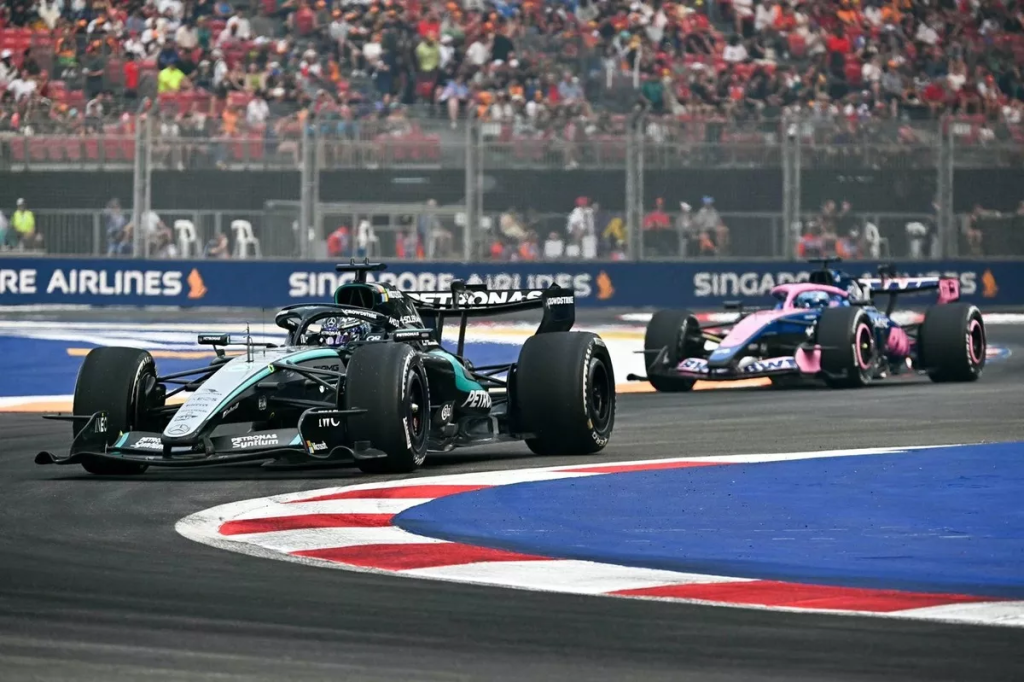
News Summary
- Toto Wolff says Mercedes’ updated W17 appears more difficult to drive, while the previous specification offers greater stability and grip.
- George Russell topped Singapore FP1 with the older package, setting a 1:32.274, while Kimi Antonelli finished seventh with the upgrade.
- Mercedes wants to combine the strongest characteristics of both configurations and use the findings to guide its development direction for 2027.
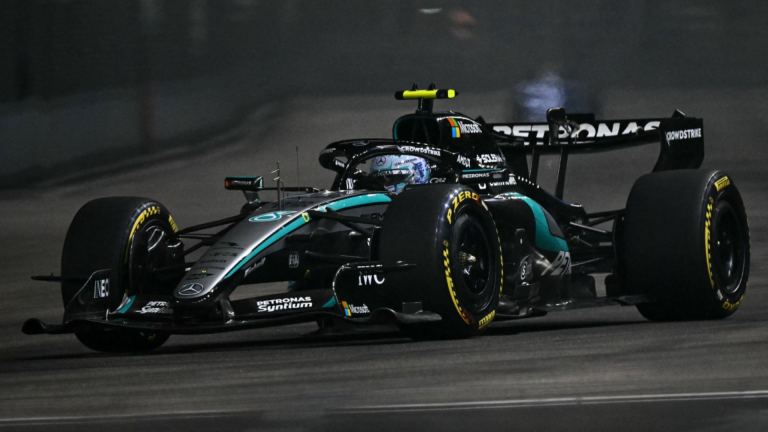
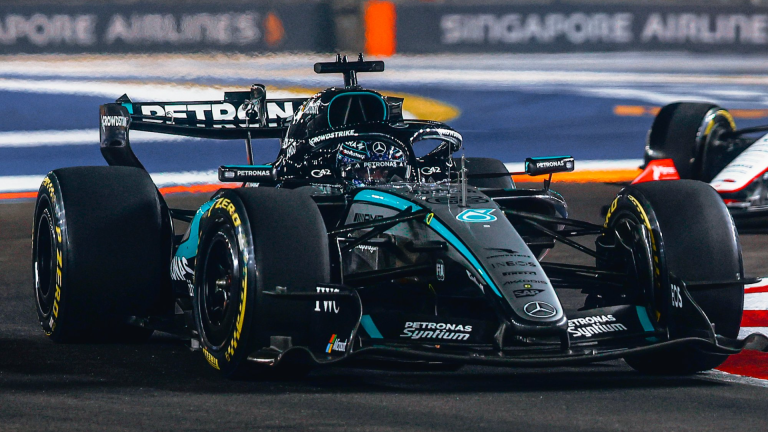
Toto Wolff has acknowledged that Mercedes’ upgraded W17 appears more difficult to drive than its previous specification, after George Russell topped the only free-practice session of the Singapore GP using the older aerodynamic package.
Russell set a 1:32.274 at Marina Bay, finishing 0.198s ahead of Charles Leclerc, while championship leader Kimi Antonelli placed seventh with the update introduced at Sepang. The result provided Mercedes with its first track comparison between the two specifications following an unexpectedly difficult Malaysian weekend.
However, Wolff warned that the difference in lap times does not necessarily establish which package is faster. Mercedes believes the newer specification has positive characteristics but has not yet found the best way to combine them.
Wolff identifies a problem with the upgraded W17
Mercedes arrived in Malaysia with a substantial aerodynamic update intended to improve the W17’s performance. The package included revisions to the floor, sidepods and rear bodywork, but the team struggled to establish whether it had delivered the expected gains.
Wolff explained that the unusual characteristics of Sepang made the results difficult to interpret.
“The complication is that we brought a major upgrade to Sepang, but it’s a very complicated circuit and somewhat unusual in terms of the temperatures we encountered on Friday and Saturday. Because the asphalt is quite porous, we didn’t know whether the upgrade wasn’t working as we expected or whether that was a consequence of the track conditions,” Wolff explained.
Mercedes therefore decided to run two different aerodynamic configurations in Singapore, with Russell reverting to the previous specification and Antonelli retaining the latest package.
The comparison is intended to establish which components work best, rather than simply determine which driver records the fastest lap.
“We carried out that exercise in FP1 and there is a pattern, but the most important thing is to understand exactly what works and what doesn’t work in the old and new specifications. Then we need to find a way to take the best from each and determine which development direction will allow us to extract the ideal lap time,” Wolff said.

Old Mercedes offers more stability and grip
The first data collected at Marina Bay has revealed a difference in how the two versions of the W17 behave.
According to Wolff, the updated car appears more demanding to drive, while the previous specification provides a more stable platform.
“There is a similar pattern: the new car seems a little more complicated to drive. That doesn’t necessarily mean it’s slower, because there are positive aspects to it, but perhaps we still haven’t found a way to combine everything and get the package right,” Wolff explained.
“The old car is a little more stable and has more grip, but we’re talking about just one free-practice session. We need more time to reach definitive conclusions.”
Russell’s performance was encouraging for Mercedes, particularly because he had already requested a comparison between the specifications before the engine failure that forced his retirement at Sepang.
As GRANDE PRÊMIO reported before the weekend, Russell returned to the configuration used during his dominant Azerbaijan GP victory, while Antonelli continued with the updated W17.
The lap times nevertheless require context. Russell completed his fastest lap on soft tyres, while Antonelli used mediums, making the 1.251s difference between them an unreliable measure of the aerodynamic packages alone.
The complete Singapore FP1 results, including all 22 drivers are available in GRANDE PRÊMIO‘s session report.
Mercedes looks towards its 2027 development direction
The comparison also has implications beyond the Singapore GP.
Mercedes invested several months developing the package introduced at Sepang, making it important to understand whether the aerodynamic direction offers advantages that can be carried into future projects.
Wolff acknowledged that running different specifications during a sprint weekend is not ideal, particularly because the team has only one practice session before competitive running begins.
However, the information gathered from Russell and Antonelli could help Mercedes identify which characteristics should be retained and which areas require further development.
“We invested several months of work in this car, following a direction we believe is advantageous. Perhaps we just need to fine-tune the package to find the right path for 2027,” Wolff said.
Mercedes will continue evaluating both specifications during the competitive sessions at Marina Bay, with Russell also facing a grid penalty for Sunday’s Grand Prix following his power-unit failure in Malaysia.
The complete Singapore GP schedule, including sprint qualifying and broadcast information is available in GRANDE PRÊMIO‘s weekend guide. GRANDE PRÊMIO follows the latest Formula 1 news throughout the Singapore GP weekend.
Singapore GP 2026: F1 schedule and start times
The 2026 Singapore GP takes place from October 9-11 at Marina Bay, featuring a sprint weekend with five Formula 1 sessions. See the start times for the United Kingdom, United States, Canada, India, Australia and New Zealand.
| Session | UK (BST) | US/Canada (ET) | India (IST) | Australia (AEDT) | New Zealand (NZDT) |
|---|---|---|---|---|---|
| Saturday, October 10 | |||||
| Sprint | 10:00 | 05:00 | 14:30 | 20:00 | 22:00 |
| Grand Prix qualifying | 14:00 | 09:00 | 18:30 | Sun 00:00 | Sun 02:00 |
| Sunday, October 11 | |||||
| Grand Prix | 13:00 | 08:00 | 17:30 | 23:00 | Mon 01:00 |
All times are local to each listed region. Australia refers to Sydney/Melbourne time (AEDT), New Zealand to Auckland/Wellington (NZDT), and ET to New York/Toronto. Dates are the same as Singapore unless otherwise indicated.
For additional details, see the complete Singapore GP schedule and how to watch. GRANDE PRÊMIO follows the latest Formula 1 news throughout the Singapore GP weekend.
F1 today: FAQ
What time is Singapore GP sprint qualifying today?
Sprint qualifying starts at 20:30 Singapore time on Friday, October 9, equivalent to 13:30 BST in the UK, 08:30 ET in the United States and Canada, and 18:00 IST in India. The session determines the starting grid for Saturday’s sprint.
Who was fastest in Singapore GP FP1?
George Russell topped FP1 with a 1:32.274, driving Mercedes’ older W17 aerodynamic specification. Charles Leclerc finished second, 0.198s behind, followed by Lando Norris in third. Kimi Antonelli was seventh with the upgraded Mercedes, while Gabriel Bortoleto finished 16th.
Why is George Russell using the old Mercedes at the Singapore GP?
Mercedes is comparing its previous W17 specification with the aerodynamic upgrade introduced at Sepang. Russell is using the older package, while championship leader Kimi Antonelli retains the new version. Russell led FP1, but differences in tyre compounds and run programmes mean the result alone does not establish which specification is faster.
What did Toto Wolff say about Mercedes’ new F1 upgrade?
Wolff said the updated W17 appears more difficult to drive, although it may still offer performance advantages. Mercedes is investigating how to combine the best characteristics of both specifications.