
The Nashville GP had all the ingredients to be one of the marquee moments of the 2026 IndyCar season. The series scheduled the green flag to align with the World Cup final in a bid to boost US television ratings, but heavy rain postponed the race to Monday (20), completely rewriting the script of a weekend that held so much promise.
Despite the circumstances, the race delivered critical answers as the championship enters its home stretch. Álex Palou expanded his lead at the top of the standings, edging closer to a fifth driver’s title. David Malukas put on a strong display by charging from dead last to a podium finish, while Josef Newgarden ended the day in frustration after missing out on a shot at the win—showing his sore loser side.
Beyond the track action, Nashville also raised questions regarding IndyCar’s strategy to capitalize on the World Cup audience, while highlighting Caio Collet’s need to translate the talent widely acknowledged in the paddock into consistent results. GRANDE PRÊMIO broke down five things we learned from Round 12 of the season.
The luck of a (five-time) champion

The combination of Álex Palou and Chip Ganassi Racing is synonymous with excellence, but good fortune often rides shotgun with the pair—and Nashville provided yet another proof. The Spaniard was called into pit lane in the middle of absolute chaos, just as the pack fighting for second place ran up on a train of backmarkers. At the exact moment he made his stop, Scott Dixon slammed into Alexander Rossi, who had checked up hard attempting to hit pit entry, triggering a caution.
Under IndyCar rules, pit lane was immediately closed. When the pits reopened and the rest of the field cycled through their stops, Palou emerged as the race leader. His pace was competitive, but the #10 car was by no means the fastest setup on the track. However, once he took command at the front, he never relinquished the lead. To top it off, Kyle Kirkwood—his closest championship rival entering the day—got caught on the wrong end of the final full-course yellow, dropping to the back of the pack and finishing down in 10th.
With the victory, Palou extended his championship lead from 59 to 83 points over his nearest contender, who is now David Malukas. With six rounds remaining on the schedule, the Spaniard took a massive step toward securing his fifth IndyCar title.
Newgarden channels Paredes and shows he is a sore loser — at least on ovals
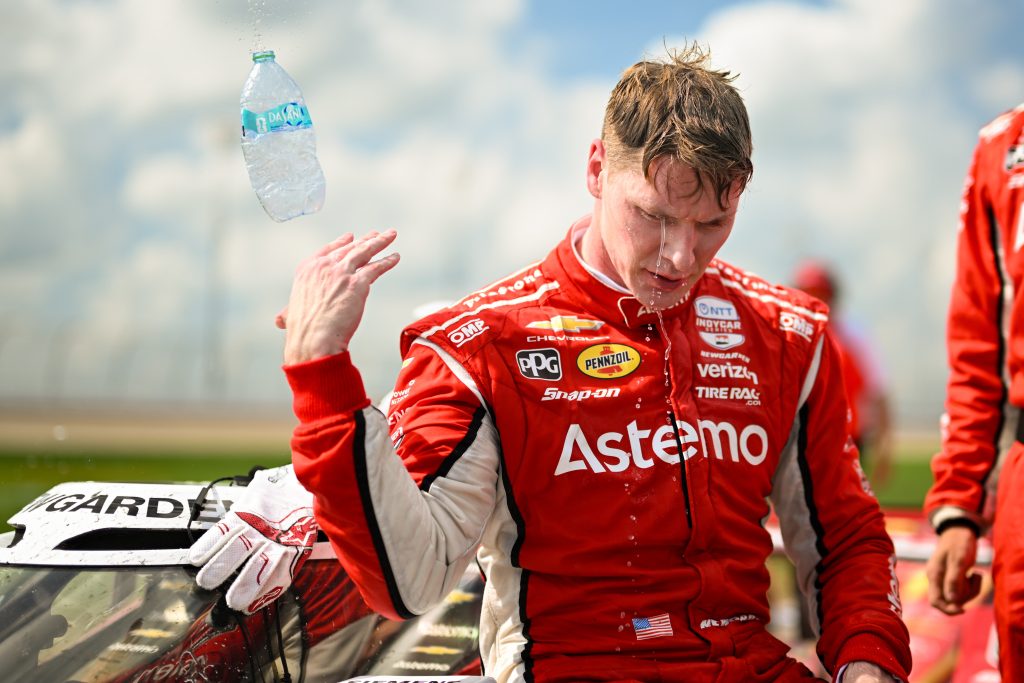
The final whistle of the World Cup produced a rather absurd scene: Leandro Paredes went after several Spanish players looking for a fight, exposing a ridiculous and extremely immature side of a sore loser. Of course, Josef Newgarden didn’t come anywhere near violence, but his little temper tantrum after climbing out of the car in Nashville followed a similar script.
Without saying much, the Team Penske #2 driver stormed away complaining that he wasn’t given a full stint at the end due to the full-course caution triggered by Dennis Hauger. But come on—doesn’t the ‘King of the Ovals’ know that these situations are an inherent part of oval racing?
Where was this Newgarden when IndyCar threw a red flag to setup a one-lap shootout restart at the 2023 Indianapolis 500—the exact opportunity he seized to claim victory?
Granted, it must be frustrating for a specialist, a two-time IndyCar champion, and a two-time Indy 500 winner to walk away defeated—especially on home turf.
Malukas impresses with a stunning recovery drive

David Malukas finishing a race on the podium is no surprise. Charging from dead last to third on the Nashville oval earns plenty of praise, but it is still not entirely unexpected when referring to a talented driver behind the wheel of a Team Penske entry. What is truly impressive is that the American suffered a heavy crash in Practice 1 and missed qualifying altogether while undergoing medical evaluations, all while his crew worked tirelessly to rebuild the car.
Malukas even flirted with the possibility of sitting out the Nashville GP entirely. The driver himself admitted he “needed to undergo proper recovery” after the shunt and highlighted the vital role played by his physical therapist, who worked intensively with him throughout the weekend.
The full scope of Malukas’ performance in Nashville is remarkable. If there were a Driver of the Day vote, the American would have claimed it by a landslide.
Collet needs to convert potential into results
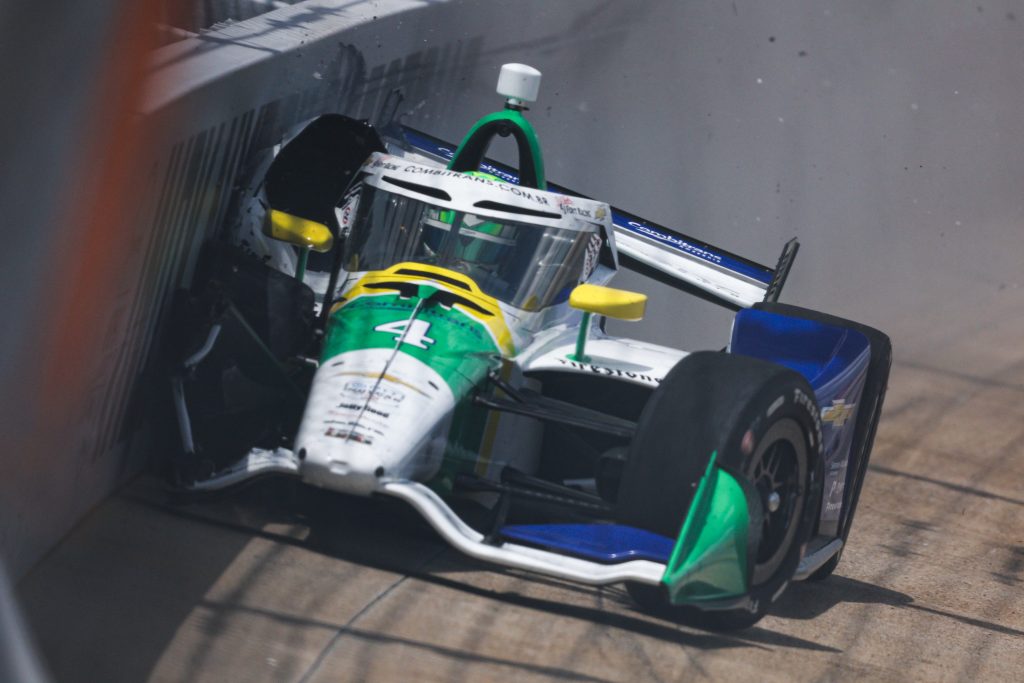
Caio Collet’s name is held in high regard across the IndyCar paddock. The Brazilian’s raw talent is widely recognized by teams, but he needs to translate that reputation into consistent results to climb out of the bottom standings and build a stronger case for securing the best possible seat in 2027.
While A.J. Foyt Racing has had its share of disappointments—whether due to machinery limitations, slow pit stops, or engine reliability issues, such as in St. Louis, which cost him a potential top-five finish—Collet has also made two costly errors that hindered his breakthrough in the series: his crash at the Indy 500 and the early incident in Nashville, where he was eliminated before getting a chance to show his pace.
It seems unlikely that Collet will be left off the IndyCar grid in 2027, but there is an urgent need for strong results over the remainder of the season. Clinching the Rookie of the Year honors would carry significant weight within the paddock and help impress team bosses who often prioritize financial backing—as appears to be the case with Mike Shank.
IndyCar goes all-in — and leaves empty-handed
IndyCar gambled big to capitalize on the World Cup final ratings and draw in new fans. It was a justifiable move, but it begs the question: was there no other way to structure this strategy?
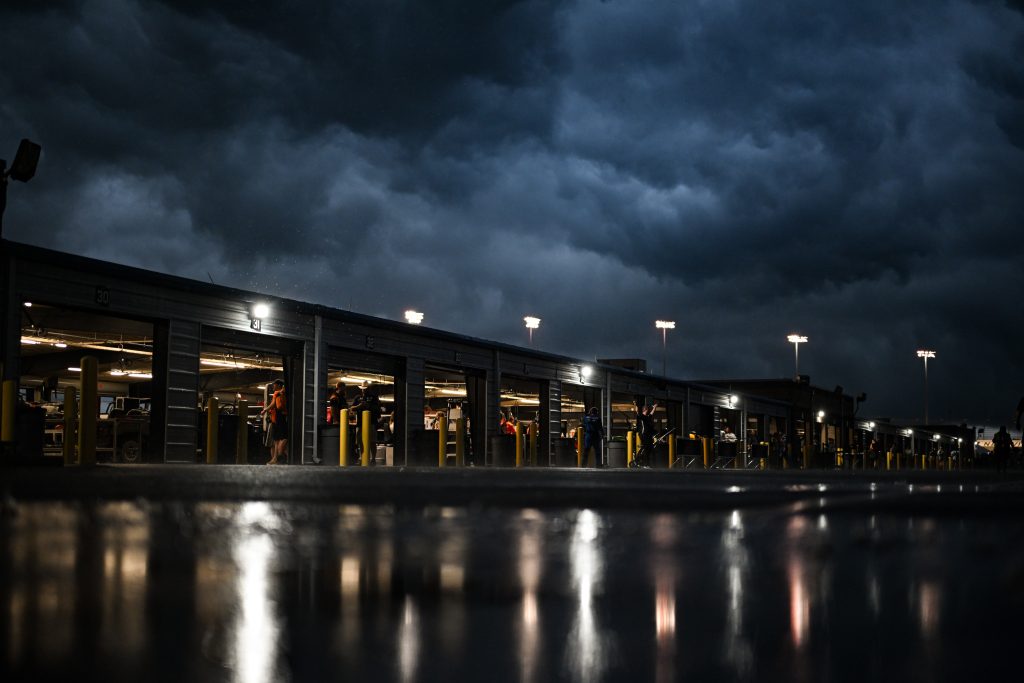
The desire to use Spain vs. Argentina as a backdrop for the Nashville GP—one of the standout races of 2025—is completely understandable. However, it was no secret that an oval race cannot run in the wet, and bad weather ultimately pushed the event to Monday (20), far removed from the massive audience that tuned in to watch Spain claim the World Cup trophy.
IndyCar’s oval spectacle is unlike anything else in motorsport, which explains the high-stakes gamble. Still, it raises the question of whether running a road course might have been a safer alternative. It is worth noting that in the United States, lightning strikes—rather than rain itself—are often the main trigger for halting outdoor sports activities.
Balancing the IndyCar schedule is far from simple. But in Nashville, the series chose an all-or-nothing approach. In the end, it walked away with nothing.
IndyCar now enters its final two off-weeks before the home stretch of the 2026 season. The series returns August 7–9 for the Grand Prix of Portland, kicking off a six-race sprint to decide the championship.