News Summary
- Barcelona moved ahead of Goiânia in IndyCar’s plans to race outside North America in 2027, benefiting from established infrastructure and lower television production costs.
- Penske Entertainment CEO Mark Miles visited Goiânia three times, but negotiations stalled during the Goiás election campaign, and the proposed event still lacks a promoter.
- IndyCar’s recommendations for improving Goiânia’s track surface were accepted, leaving a potential Brazilian race in 2028 as a more realistic possibility.
Barcelona emerged ahead of Goiânia in the race to host IndyCar’s return outside North America in 2027 after political delays, infrastructure differences and commercial considerations weakened the Brazilian bid, according to an exclusive investigation by GRANDE PRÊMIO.
The American championship had been evaluating several international destinations, including Brazil, Spain, Colombia, Japan and Australia. Goiânia initially emerged as a serious contender, with Penske Entertainment CEO Mark Miles making three visits to the Autódromo Internacional Ayrton Senna to assess the venue and meet local authorities.
However, negotiations lost momentum at a decisive stage of preparations for the 2027 calendar. Meanwhile, Barcelona offered an established international racing facility, experience hosting major events and logistical advantages that strengthened its position.
A Brazilian IndyCar race remains possible, but 2028 now appears considerably more realistic than 2027, GRANDE PRÊMIO has learned.
Elections interrupted Goiânia’s IndyCar negotiations
Goiânia’s bid initially generated optimism after IndyCar representatives began examining the possibility of returning to Brazil.
Miles visited the Brazilian circuit three times, beginning in April, to assess the track’s infrastructure and discuss the requirements for staging an international event.
However, the negotiations slowed during the period in which Goiás governor Daniel Vilela concentrated on his re-election campaign.
The political calendar coincided with a decisive phase of IndyCar’s preparations for 2027, when prospective promoters needed to advance commercial agreements and operational planning.
Vilela secured re-election in the first round, but discussions about the race had already lost momentum.
GRANDE PRÊMIO has learned that Goiânia currently has no promoter in place for an IndyCar event, an important obstacle because the organisation would need a local partner capable of financing and delivering the race.
Barcelona’s representatives, by contrast, attended the season finale at Laguna Seca to continue discussions about hosting a European round.
The difference in the pace of negotiations helped the Spanish circuit strengthen its position while the Brazilian proposal remained unresolved.

Barcelona’s infrastructure provided decisive advantages
Although Álex Palou’s popularity in Spain is an important commercial attraction, Barcelona’s existing infrastructure played a central role in the negotiations.
Taking IndyCar outside North America requires substantial investment in transporting cars, spare parts, equipment and personnel, alongside the infrastructure needed to stage and broadcast a race.
Barcelona already has permanent facilities designed for major international championships, reducing the need to construct or adapt temporary infrastructure.
The circuit’s experience hosting Formula 1 and MotoGP also provides established operational procedures, including paddock facilities, garages, media infrastructure and spectator services.
Another important advantage involves television production.
Fox Corporation acquired a 33% stake in Penske Entertainment in 2025, expanding its financial involvement in the company that owns IndyCar and Indianapolis Motor Speedway.
According to GRANDE PRÊMIO’s investigation, Fox would not need to transport its full broadcasting equipment to Barcelona, potentially saving millions of dollars in production costs.
Transporting the championship’s wider operation to Spain would still be expensive, but the circuit’s existing infrastructure offers advantages compared with venues requiring more extensive temporary preparations.
Those considerations strengthened Barcelona’s candidacy as IndyCar sought a financially viable return to international racing.
Goiânia’s asphalt problems also entered negotiations
The condition of the Autódromo Internacional Ayrton Senna’s racing surface was another issue discussed during Goiânia’s negotiations.
The circuit attracted criticism during the Brazilian MotoGP Grand Prix in March 2026, when asphalt problems became one of the event’s main operational concerns.
IndyCar subsequently examined the surface and presented recommendations intended to improve its suitability for the championship’s cars.
GRANDE PRÊMIO has learned that those recommendations were accepted, removing one potential obstacle to a future agreement.
However, accepting the recommendations does not mean the circuit has completed every necessary improvement or received final approval to host an IndyCar race.
Additional assessments would be required before a definitive agreement could be reached.
The surface issue therefore remains part of the broader preparation process rather than the sole reason Goiânia fell behind Barcelona.
The political interruption, absence of a promoter and advantages offered by the Spanish circuit were also significant factors.
Álex Palou strengthens Barcelona’s commercial appeal
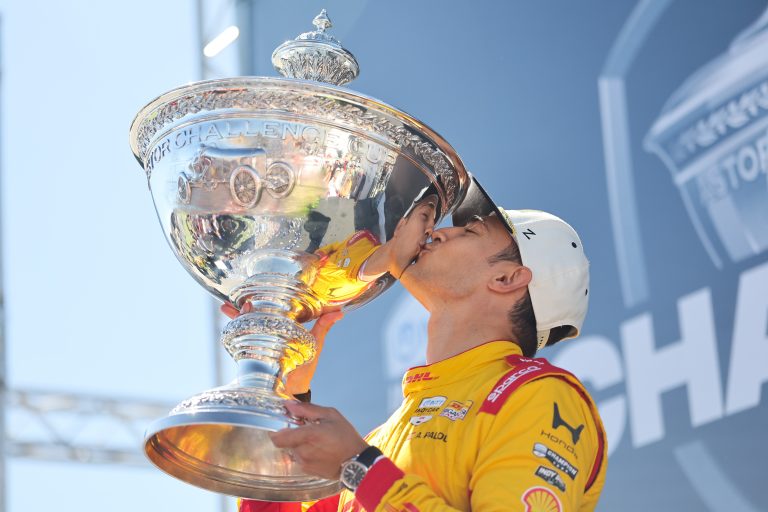
Barcelona’s position is reinforced by the presence of Álex Palou, the five-time IndyCar champion and one of the championship’s most successful drivers of the modern era.
The Spaniard has become a central figure in IndyCar’s international appeal after winning five titles in six seasons.
A race in Catalonia would give the championship an opportunity to compete in front of Palou’s home audience, creating a strong promotional platform for the event.
Circuit de Barcelona-Catalunya is located less than 30 kilometres from Sant Antoni de Vilamajor, the driver’s hometown.
The championship’s possible return to Europe also comes as the circuit adjusts its international calendar following changes to its Formula 1 agreement.
Barcelona is set to alternate Formula 1 events with Spa-Francorchamps during the coming years, opening additional opportunities for other major championships.
The Spanish venue’s established facilities, commercial prospects and connection to Palou therefore provide several complementary advantages.
Could IndyCar still return to Brazil in 2028?
Despite Barcelona’s progress, Goiânia has not been ruled out as a future IndyCar destination.
The Brazilian circuit remains a potential option if local authorities and commercial partners can establish the necessary conditions for an international event.
The acceptance of IndyCar’s recommendations concerning the racing surface is an encouraging development, although the promoter and operational arrangements remain unresolved.
According to GRANDE PRÊMIO’s investigation, an agreement for 2028 appears more viable than a race in 2027.
That assessment does not represent a confirmed date or a commitment from IndyCar.
A future agreement would still depend on negotiations, financial guarantees, infrastructure preparation and approval of the championship calendar.
Brazil last hosted IndyCar in 2013, when São Paulo staged a street race won by James Hinchcliffe.
A return would therefore end a lengthy absence from a market with a strong history in American single-seater racing.
For now, Barcelona remains the leading candidate for the championship’s international expansion, while Goiânia faces additional work before a Brazilian race can become a realistic proposition.
Barcelona vs Goiânia: Why the Spanish bid advanced
| Factor | Barcelona | Goiânia |
|---|---|---|
| Circuit infrastructure | Established international facilities | Improvements and assessments required |
| Negotiations | Representatives continued discussions at Laguna Seca | Talks stalled during election period |
| Local promoter | Existing circuit operation and commercial structure | No race promoter currently in place |
| Television production | Existing infrastructure offers substantial savings | Additional arrangements required |
| Local sporting attraction | Five-time champion Álex Palou | Brazil’s IndyCar history and fan base |
| 2027 outlook | Leading candidate | Unlikely under current circumstances |
| 2028 outlook | Potential continuation of proposed agreement | More realistic target for first race |
Comparison based on the original GRANDE PRÊMIO investigation published October 21, 2026. Neither a Goiânia race nor its proposed 2028 timing has been officially confirmed.