
News summary
- IndyCar will introduce stricter eligibility requirements for new drivers from 2027, with Indy NXT becoming the primary benchmark for readiness to compete at the top level.
- Drivers must have at least 12 Indy NXT starts, while a top-three championship finish or two wins within 24 months provides automatic “Competitively Qualified” status.
- The changes could directly affect well-funded drivers such as Josh Pierson, while IndyCar will also review the credentials of current and incoming drivers and can reassess eligibility if performance is deemed insufficient.
IndyCar will introduce new eligibility criteria and make the process for entering the series more rigorous for newcomers from 2027, with some drivers potentially being prevented from competing in the championship. Although part of the system remains subjective, the changes make clear that the organization wants competitive credentials to carry greater weight than financial backing when teams select drivers.
The new framework is not directly comparable with the FIA Super Licence, as IndyCar will not use a points-based system to determine who is automatically eligible. Instead, the series has established several thresholds designed to ensure that money alone does not determine who gets a seat — particularly as teams prepare for the transition to the IR-28, the new car scheduled to enter competition in 2028.
The details of the changes were sent to teams on Wednesday (2) by IndyCar president Doug Boles. Indy NXT will play a much more important role in the process, with a driver required to have competed in at least 12 races before eligibility can be established through the series’ primary qualification route.
Indy NXT will play a much more important role in the process. A driver must have competed in at least 12 Indy NXT races to be considered for promotion, while automatic “Competitively Qualified” status will be reserved for drivers who finish in the top three of the championship or win at least two races within a 24-month period.
The changes could have an immediate impact on the 2027 driver market. Josh Pierson, for example, has emerged as a candidate for one of Foyt’s two seats after reportedly offering the team a $25 million package for two seasons, according to Marshall Pruett of RACER.
Pierson, however, has never won in Indy NXT. He came close at Milwaukee last Sunday (30), taking pole and leading the opening 53 laps before spinning while running first and retiring. He is currently 12th in the championship with 303 points.
Under the new system, Pierson would not meet the automatic “Competitively Qualified” criteria. His case could nevertheless still be considered through IndyCar’s discretionary evaluation process.
“Our goal is straightforward: we want to make sure every driver who competes at the IndyCar level has demonstrated a high level of experience, performance and success, along with a safety record commensurate with competing at the highest level of motorsport,” Boles wrote in the letter sent to teams.
“There are many factors that create opportunities for drivers in IndyCar, including talent, team relationships, and commercial support. However, the first threshold every driver must meet is demonstrating that he or she is qualified to compete at the IndyCar level,” he added.
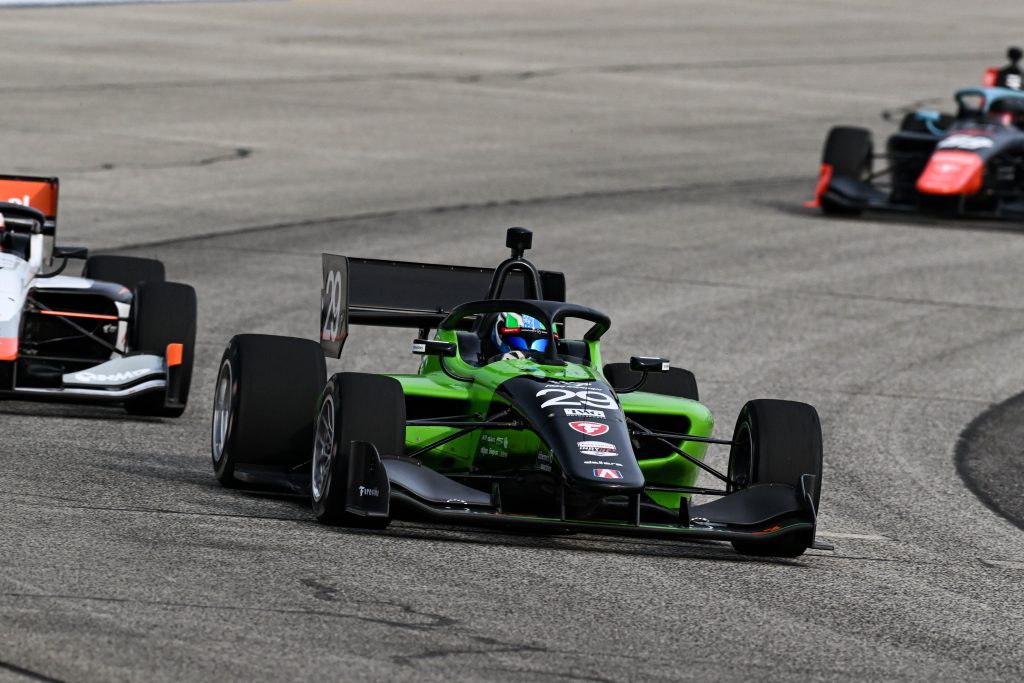
IndyCar stressed that eligibility will ultimately remain at the organization’s discretion. The new framework is therefore intended to create a clearer baseline without eliminating the possibility of drivers reaching the series through alternative routes.
“IndyCar driver eligibility remains in IndyCar’s sole discretion. To compete in the 2027 IndyCar season, and going forward, drivers who have not previously competed in the IndyCar Series will be evaluated under the following qualification process,” Boles said.
Teams will also be expected to inform IndyCar of the drivers they want to hire or put through testing. That means the eligibility status can be established early in negotiations, before a team, driver or sponsor makes significant commitments.
A separate “Evaluation Eligible” status will allow drivers to participate in an evaluation test, but successfully completing that test will not automatically result in a competition license. IndyCar can assess factors including pace, consistency, car control, racecraft, traffic management, procedural competence and communication with the team and engineers.
“This allows us to determine the driver’s status before a team, competitor, sponsor or any other party makes commitments,” Boles explained.
The organization also intends to keep drivers who are already approved under scrutiny. Eligibility can be reassessed if a competitor fails to demonstrate the level of competitiveness expected in IndyCar, meaning the new approach could affect not only newcomers but also drivers already holding seats.
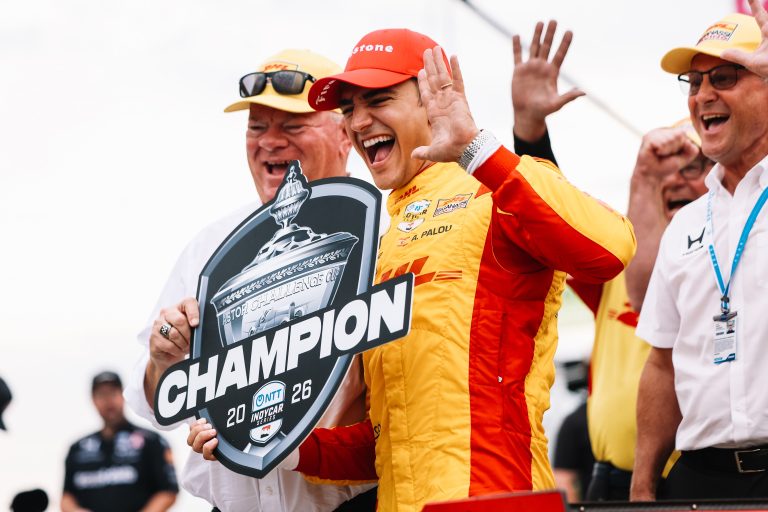
Drivers coming from outside Indy NXT will still have a route into IndyCar, but their credentials will receive a more detailed, individual review. Álex Palou is an obvious example of why IndyCar needs such flexibility: the five-time champion arrived in the series after racing in Japan’s Super Formula without winning that championship.

“We will review the driver’s complete recent racing résumé before determining whether an IndyCar Driver Evaluation will be authorized,” Boles said. “IndyCar may authorize an evaluation based on significant experience or performance in a series it determines to be equivalent to or more difficult than Indy NXT, or may determine that the driver’s experience and performance history are not yet sufficient for an evaluation in IndyCar.”
The list of potentially relevant backgrounds is broad. Boles specifically cited recent achievements in Formula 1, Formula 2, Super Formula, NASCAR, IMSA SportsCar, WEC and other professional championships that IndyCar considers equivalent to or more difficult than Indy NXT.
“We recognize that IndyCar drivers come from many different backgrounds in motorsport, with significant recent accomplishments in Formula 1, Formula 2, Super Formula, NASCAR, IMSA SportsCar, WEC or other professional championships that IndyCar determines to be equivalent to or more difficult than Indy NXT,” Boles said.
“These cases will be evaluated separately, but simply participating in a higher-level championship will not guarantee eligibility,” he added.
The changes come as IndyCar prepares for a major technical transition. Chevrolet and Honda have already committed to remain the series’ manufacturers from 2027, while the new IndyCar car is expected to begin competition in 2028.
“Ultimately, our goal is to ensure that the IndyCar grid represents the highest standard of talent, experience and competitiveness among drivers, and that all drivers who compete in IndyCar have demonstrated that they are as prepared as possible to achieve success at this level,” Boles concluded.
The 2026 IndyCar season concludes next weekend, from September 4 to 6, with the Laguna Seca Grand Prix.
FAQ
1. What is changing in IndyCar’s driver eligibility rules for 2027?
New drivers will face stricter qualification requirements, with Indy NXT becoming the primary benchmark for determining whether they are ready for IndyCar.
2. How can an Indy NXT driver become “Competitively Qualified”?
A driver must complete at least 12 Indy NXT races and then either finish in the championship’s top three or win at least two races within a 24-month period. The Indy NXT champion also receives the status.
3. Can a driver from Formula 1, Formula 2 or another major championship enter IndyCar?
Yes. IndyCar will consider drivers from other professional championships on a case-by-case basis. However, participation in a higher-level series alone will not guarantee eligibility.