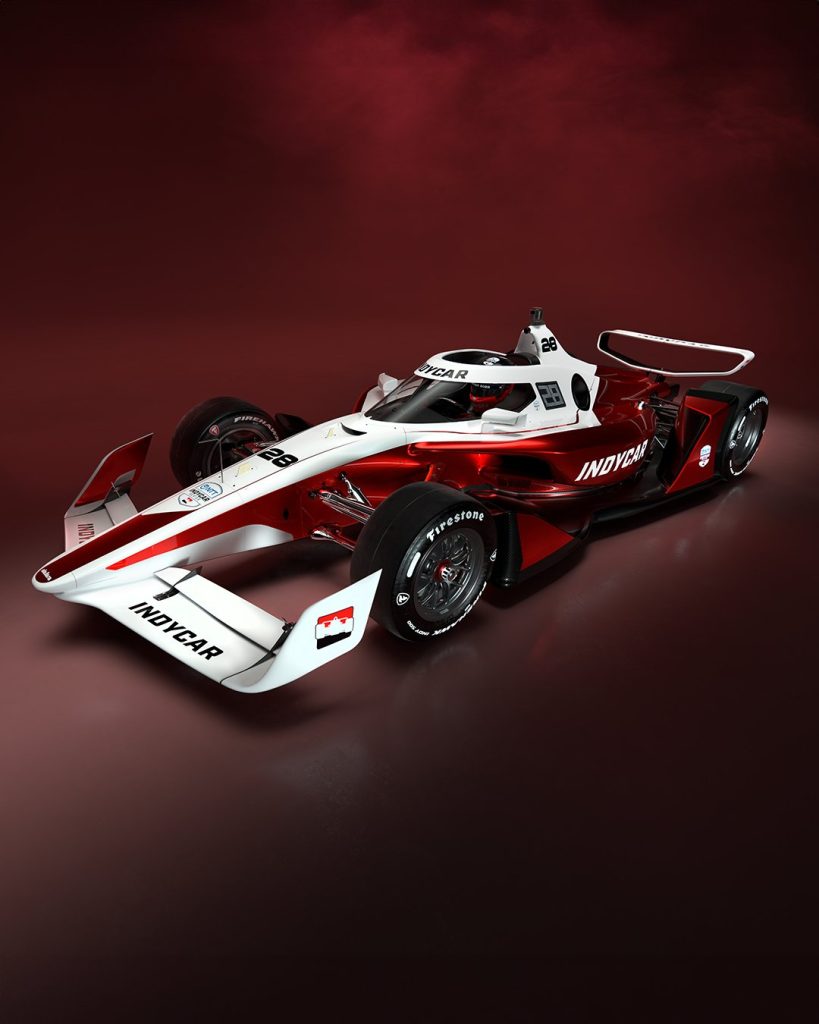
IndyCar officially revealed on Tuesday (28) the IR-28, the new car that will debut in the 2028 season. Featuring a new chassis, a redesigned look, enhanced safety, lower weight, and a 2.4-liter twin-turbo V6 hybrid engine, the expectation is that racing quality will improve even further, as the package was engineered to reduce dirty air for trailing cars. It represents the most significant shift the series has seen in years.
The IR-28 arrives to replace the DW-12 — named in tribute to Dan Wheldon, who passed away in 2011 — following the 2027 season. The new model hits the track this week for validation testing with Chevrolet and Honda engines.
“We are pleased to unveil the images of the new IndyCar chassis, which will propel our sport into an exciting new era. As you can imagine, a project of this magnitude requires incredible planning, collaboration, and execution. I’d like to thank all of our partners, including Dallara, Chevrolet, Honda, Firestone, and Shell, who worked tirelessly to create a package that will further enhance IndyCar’s already incredible competitiveness and industry-leading growth,” highlighted series president Doug Boles.
“With initial testing set to begin this week, there is still plenty of work ahead leading up to 2028, but we are well on track to deliver a new era for IndyCar — one that will feature tighter wheel-to-wheel racing, track records, competitive benchmarks, and new safety parameters. We are confident that the IR-28 is the ideal package to propel the category forward for our teams, drivers, partners, and fans,” he emphasized.
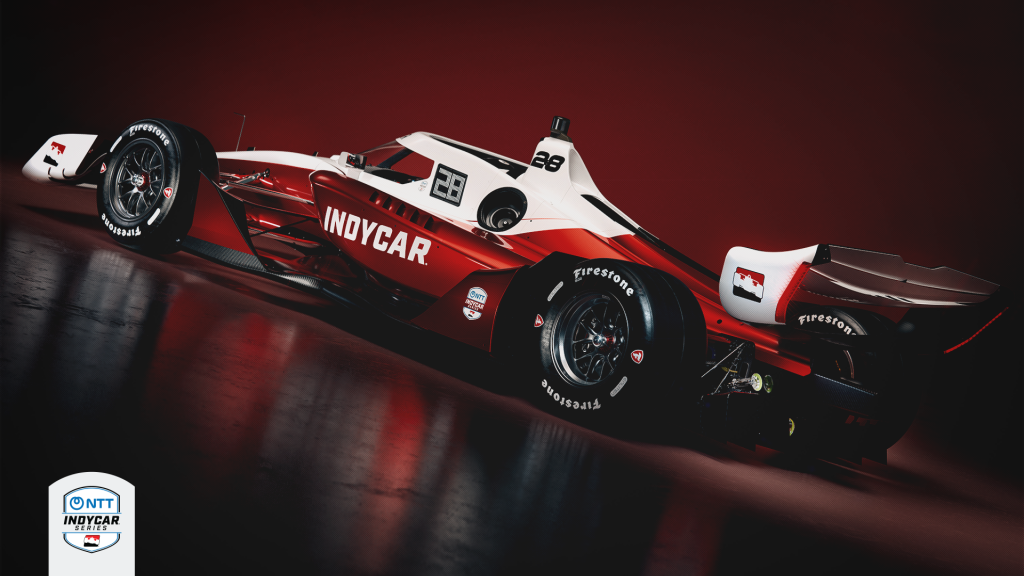
Lighter package and reduced wake turbulence
The new car will weigh approximately 100 lbs (45 kg) less than the current machine. According to IndyCar, the more favorable power-to-weight ratio is expected to enhance drivability, allowing drivers to push harder and deliver even more competitive racing and tighter side-by-side battles.
Aerodynamics also mark one of the biggest changes, specifically designed to optimize airflow from front to rear to increase overtaking opportunities. Other benefits of the 2028 design include reduced external turbulence (wake) and, for the Indianapolis Motor Speedway, a more stable front wing. Every bodywork element was designed to foster closer track action, as the new aero package will allow cars to follow more closely through corners and throughout the entire field.
IndyCar will maintain three distinct aerodynamic configurations: one for street circuits, one for permanent road courses, and another for ovals. Aero setups for short ovals and intermediate tracks utilize a combination of road course wings and underbody downforce options to suit venues like Milwaukee and Nashville, while the Indy 500 features its own rules for wings and floor downforce.

Engine updates for IndyCar in 2028
IndyCar also revealed details regarding the powertrain from 2028 onward. The package will remain hybrid, but the internal combustion engine will transition to a 2.4-liter twin-turbo V6 capable of reaching 760 hp, developed with input from Chevrolet and Honda. The promise is to deliver increased torque, power, and overall performance compared to current units.
The category will retain low-voltage hybrid technology, but with increased energy storage capacity and expanded deployment options for teams. Additionally, the assembly will be approximately 20 lbs (9 kg) lighter than the current version, thanks to a development partnership with UK-based Helix — recognized as a global leader in next-generation electric propulsion systems, serving clients across Formula 1 and Formula E.
With the hybrid system remaining mounted in the bellhousing between the internal combustion engine and the gearbox, the power unit will feature a new battery-based Energy Storage System (ESS) supplied by BOLD Technology, a firm headquartered at the Circuit de Barcelona-Catalunya with operations in Michigan, USA. The new ESS will offer approximately 14 times the storage capacity of the current unit.
The transmission will remain under the purview of Xtrac, IndyCar’s supplier since 2000, which will engineer a gearbox that is 25 lbs (11.3 kg) lighter than the existing unit.
“Everyone at Chevrolet is eagerly anticipating this next era of IndyCar and the debut of the IR-28 in 2028,” said Eric Warren, GM’s Global Vice President of Motorsports Competition. “This new car is the result of over a decade of collaboration with IndyCar, and we are confident that the new 2.4-liter twin-turbo V6 engine will deliver the performance, sound, and excitement that fans expect from Chevrolet — the same standard that has brought us 16 Manufacturers’ Championships and 13 Indianapolis 500 victories,” he added.
“For over 30 years, Honda has built its racing legacy as a foundational partner of IndyCar. We are thrilled to launch this next chapter with the IR-28, powered by our new US-built HRC V6 Hybrid powertrain. IndyCar delivers some of the finest racing on the planet, and this regulatory evolution creates fresh opportunities to elevate it — featuring a lighter car, a more powerful hybrid package, an even safer chassis, and new chassis and aero engineering challenges for our engineers and teams,” stated David Salters, President of Honda Racing Corporation USA (HRC US).
“Together, these advancements will help lead IndyCar into a new era. Honda is proud to be part of this future, backed by the long-term commitment we made to the series earlier this year. We can’t wait to see the IR-28 on track, entertaining our fans,” Salters concluded.
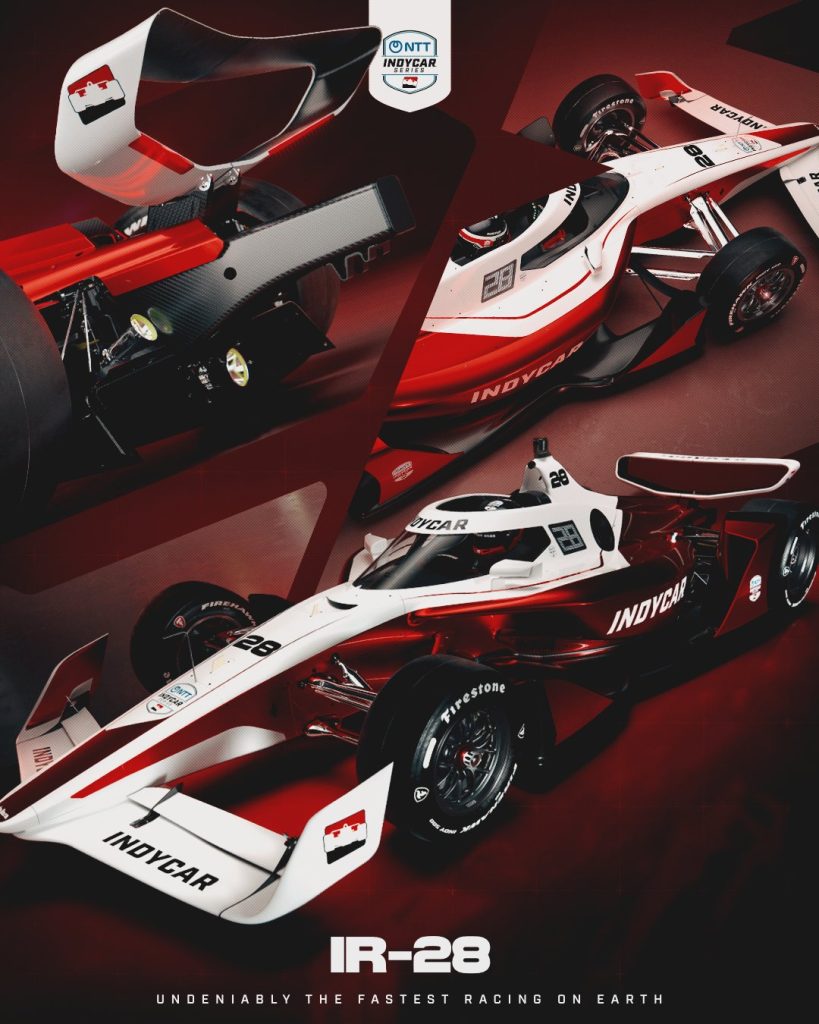
Novo carro representa passo adiante em segurança
New car represents a major step forward in safety
The IR-28 also marks an evolution in IndyCar safety standards. It will be the category’s first car designed with the aeroscreen integrated directly into the cockpit architecture — the driver protection device was introduced to the series in 2020 but had to be retrofitted onto the DW-12 chassis.
Aiming to “exceed IndyCar or FIA specifications, always defaulting to the most stringent standard,” the IR-28 will feature a stronger and more efficient side-impact structure capable of offering higher energy absorption during crashes. Furthermore, the car will feature greater stability with an inherent tendency to stay grounded, reducing the likelihood of becoming airborne during accidents.
With driver comfort in mind, internal cockpit dimensions have been expanded to accommodate a wider range of physical driver profiles, alongside enhanced internal airflow and a more efficient cooling system to optimize driver comfort and performance.
Additionally, the new machine will feature electronically adjustable anti-roll bars, providing refined adjustments and improved race performance while streamlining the cockpit through the removal of conventional manual levers and knobs, enhancing driver safety.
IndyCar now enters its final off-week before the 2026 season stretch run, returning to action August 7–9 for the Grand Prix of Portland, which kicks off a six-race dash to the championship finale.