Summary
- Verstappen wants a return to V8 engines with a smaller electrical contribution.
- His preferred weekend would feature practice and qualifying on Saturday, followed by Sunday’s race.
- He believes Sprints reveal too much about race pace and give drivers another opportunity to correct mistakes.
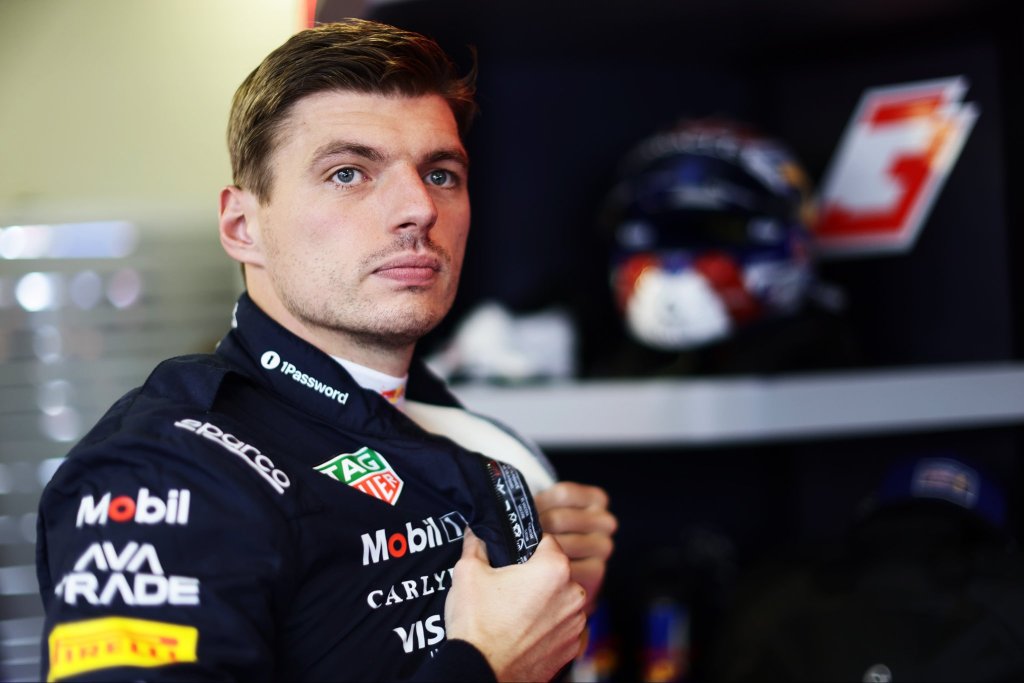
Max Verstappen would reshape Formula 1 around lighter engines, shorter weekends and a greater emphasis on the main race. Speaking on P1 with Matt and Tommy, the four-time world champion outlined changes to both the cars and the event format.
His engine preference remains a V8, potentially accompanied by a small battery providing an overtaking boost. He also favours reducing practice time and preserving more uncertainty before Sunday’s grand prix.
“Right now change the engine back to a V8. It fixes so many things,” Verstappen said.
A shorter weekend with fewer practice sessions
Verstappen’s preferred format would concentrate the driving into two days. Practice and qualifying would take place on Saturday, with the grand prix following on Sunday.
“You arrive Saturday morning, FP1, qualifying and then the race on Sunday,” he explained.
He acknowledged the commercial importance of providing attractive action on Friday, Saturday and Sunday. Nevertheless, his preference as a driver is to reduce the preparation available before the main event.
Why Verstappen would change the engines
Verstappen’s argument centres on how the current cars reward energy management. He believes the need to organise electrical deployment can reduce the benefit of attacking corners and applying the throttle early.
For him, a smaller battery should support an overtaking attempt rather than dominate the approach to a lap. His preferred outcome is a driver completing the move under braking.
The proposals are his vision for the championship, rather than an announced regulatory package. Formula 1’s existing technical framework remains the basis for the upcoming races.
What bothers him about Sprints?
Verstappen believes Sprints disclose much of the competitive picture before the grand prix. They also allow drivers to identify tyre-management errors and adjust their approach overnight.
His preference is to arrive at the main race with more unknowns. That would place greater weight on a driver’s ability to judge the conditions and manage the tyres correctly during the grand prix itself.
The debate follows Hamilton’s objections to a Sprint at Monaco. Both discussions concern what additional racing contributes to a weekend, although the drivers’ arguments address different aspects of the format.
Verstappen now heads to Sepang after finishing second to George Russell in Azerbaijan. The Bahrain Grand Prix in Malaysia takes place from October 2–4, marking Formula 1’s first visit to the circuit since 2017.

F1 today: FAQ
What time is Singapore GP sprint qualifying today?
Sprint qualifying starts at 20:30 Singapore time on Friday, October 9, equivalent to 13:30 BST in the UK, 08:30 ET in the United States and Canada, and 18:00 IST in India. The session determines the starting grid for Saturday’s sprint.
Who was fastest in Singapore GP FP1?
George Russell topped FP1 with a 1:32.274, driving Mercedes’ older W17 aerodynamic specification. Charles Leclerc finished second, 0.198s behind, followed by Lando Norris in third. Kimi Antonelli was seventh with the upgraded Mercedes, while Gabriel Bortoleto finished 16th.
Why is George Russell using the old Mercedes at the Singapore GP?
Mercedes is comparing its previous W17 specification with the aerodynamic upgrade introduced at Sepang. Russell is using the older package, while championship leader Kimi Antonelli retains the new version. Russell led FP1, but differences in tyre compounds and run programmes mean the result alone does not establish which specification is faster.
Which engine would Verstappen prefer?
A V8, potentially supplemented by a small battery for an overtaking boost.