News Summary
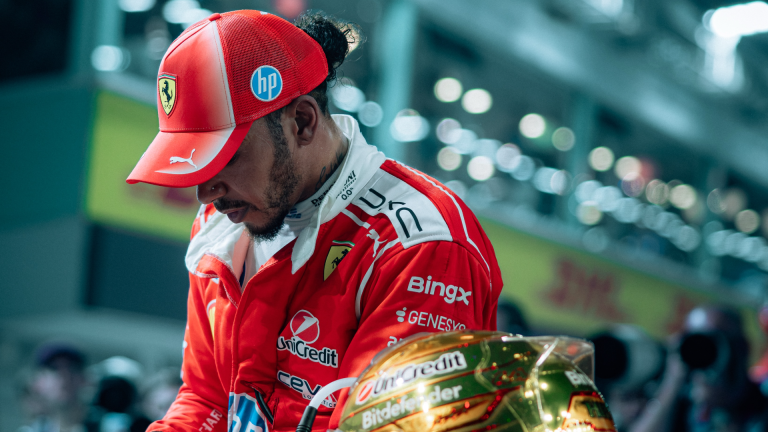
- Martin Brundle questioned Hamilton’s decision to ignore Ferrari’s pit-stop call during the Singapore Grand Prix.
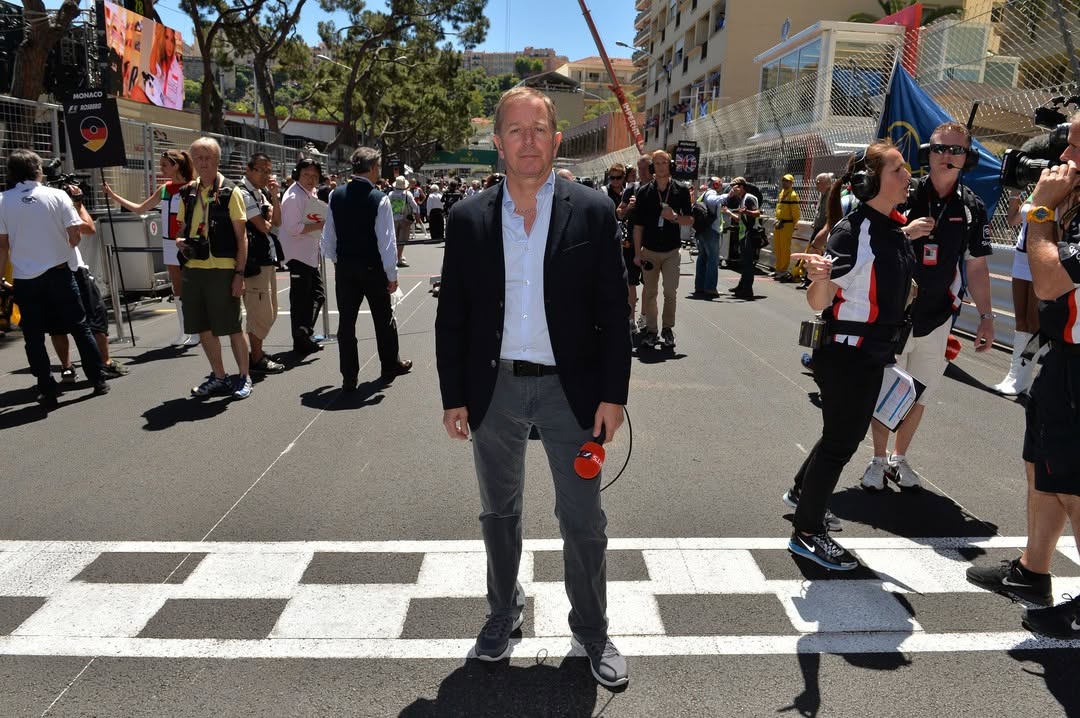
- The Sky Sports F1 commentator described the decision as bizarre and called the incident revealing of Ferrari’s difficulties.
- Hamilton fell from third to sixth, later apologising for a strategy choice that cost the team valuable championship points.
Martin Brundle has sharply criticised Lewis Hamilton’s decision to take control of Ferrari’s strategy during the Singapore Grand Prix, describing his refusal to make a second pit stop as bizarre and questioning the wisdom of a driver attempting to manage the team’s race from the cockpit.
The former Formula 1 driver and Sky Sports F1 commentator examined Hamilton’s difficult afternoon at Marina Bay in his post-race column, published on Tuesday, October 13.
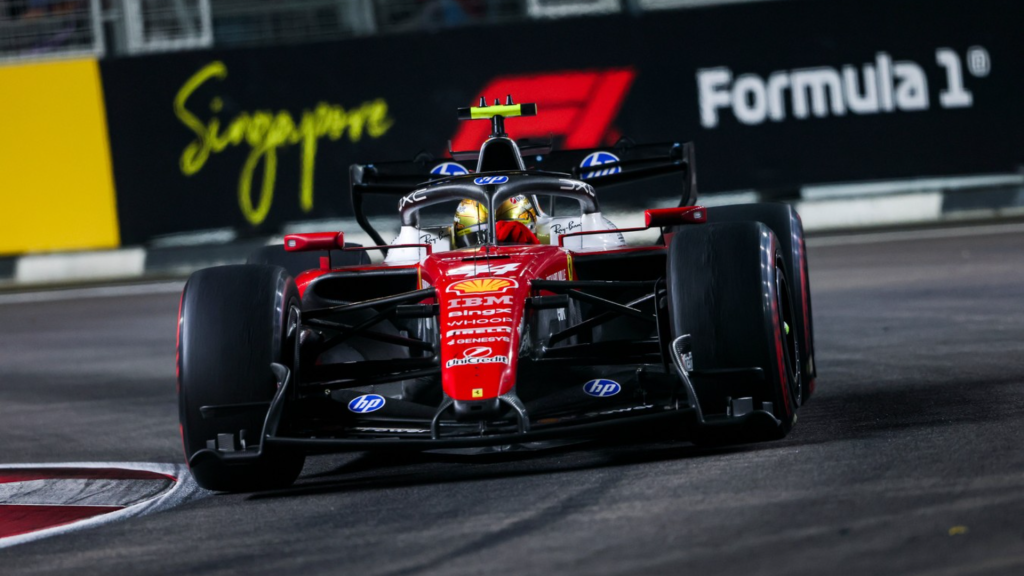
Hamilton had been running third behind Max Verstappen and Ferrari team-mate Charles Leclerc when a Virtual Safety Car offered the opportunity to make another pit stop. Ferrari instructed both drivers to come in, but Hamilton remained on track.
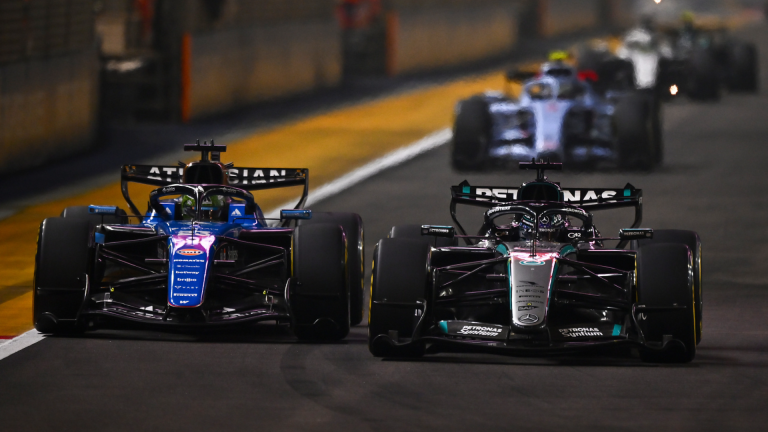
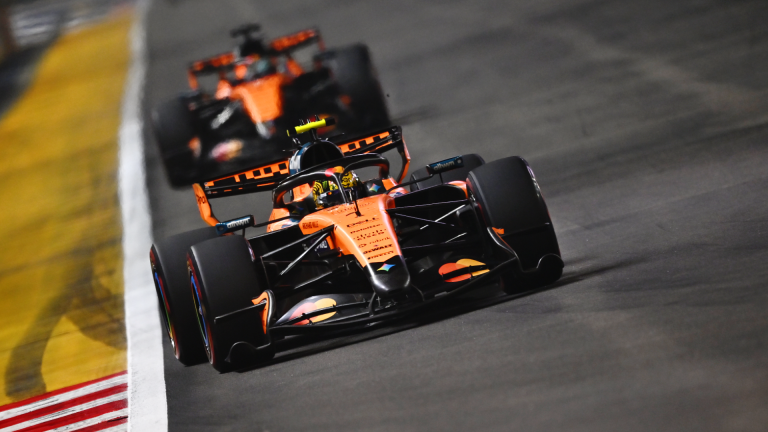
The decision left the seven-time world champion attempting to complete an exceptionally long stint on soft tyres, eventually losing positions to Kimi Antonelli, Lando Norris and Oscar Piastri.
Hamilton finished sixth, while Leclerc secured second place, denying Ferrari what team principal Frédéric Vasseur believed should have been a double podium.
Brundle questions Hamilton’s decision to overrule Ferrari
Brundle was particularly critical of Hamilton’s refusal to stop again after making his first tyre change as early as lap 18.
The Briton had started on medium tyres before switching to softs, but the strategy became increasingly difficult as the race progressed.
In his column for Sky Sports F1, Brundle wrote that Hamilton “Bizarrely” chose not to stop again, despite the opportunity presented by the Virtual Safety Car.
The commentator highlighted the consequences as Hamilton’s pace deteriorated and his rivals began overtaking him.
The situation became particularly damaging when Piastri passed the Ferrari driver despite having made an unscheduled pit stop because of a slow puncture.
Brundle also questioned the broader implications of Hamilton taking responsibility for strategic decisions that would normally be managed by the pit wall.
“It is difficult to run a modern F1 car and manage the team’s strategy from behind the wheel,” he wrote.
The former driver described the episode as “telling”, highlighting the apparent disconnect between Ferrari’s intended strategy and Hamilton’s decision to remain on track.
Ferrari had instructed Hamilton to pit
The criticism follows Vasseur’s confirmation that Ferrari had planned to bring both cars into the pits during the Virtual Safety Car.
The team had been running second and third when Lance Stroll’s retirement created an opportunity for a relatively inexpensive tyre change.
Leclerc followed the instruction and stopped, while Hamilton continued.
Vasseur subsequently explained that the team had made its intentions clear and that Hamilton’s decision prevented Ferrari from protecting both podium positions.
As previously reported by GRANDE PRÊMIO, Vasseur confirmed that Hamilton missed Ferrari’s pit call, rather than the team deliberately choosing to keep him on track.
The distinction is important because Ferrari has faced repeated criticism over its strategic decisions throughout the season.
In Singapore, however, the team principal maintained that the original instruction was correct. Hamilton also accepted responsibility after the race.
“My call, and I lost us valuable points,” he told the team over the radio.
The seven-time world champion apologised and promised to make up for the lost result at the next race.
Hamilton’s gamble turns Ferrari podium chance into sixth place
Hamilton’s difficulties began with the decision to start on medium tyres, while Leclerc selected the soft compound.
Ferrari had limited representative tyre data because of the unusual conditions during the weekend, including a wet sprint race.
The medium compound proved less competitive than expected, prompting Hamilton to stop earlier than planned.
Although his pace improved on soft tyres, the decision to extend the second stint left him vulnerable during the final laps.
Brundle noted that Hamilton attempted to complete 44 laps on the same set of tyres, an approach that became increasingly costly as degradation intensified.
Antonelli passed the Ferrari driver to take third place, followed by Norris and Piastri.
Hamilton’s sixth-place finish brought eight championship points, while Leclerc collected 18 for second.
Ferrari therefore left Singapore with 26 points, but the result fell short of what the team had appeared capable of achieving.
The seven-time champion subsequently acknowledged that his decision had not delivered the expected outcome.
Brundle’s criticism adds to Ferrari’s internal pressure
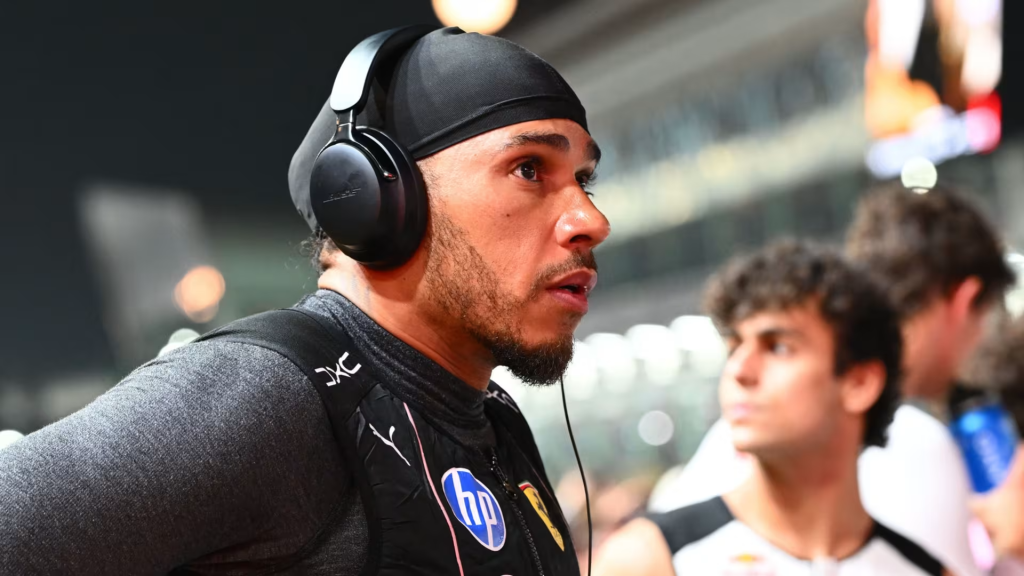
The comments arrive at a sensitive moment for Ferrari and Vasseur, whose management has faced increasing scrutiny despite the team’s improved position in the Constructors’ Championship.
Ferrari is second with 444 points, 134 behind Mercedes, following a season in which Hamilton and Leclerc have repeatedly questioned strategic decisions.
The Singapore incident differed from earlier disagreements because Hamilton himself acknowledged that he had made the wrong call.
Nevertheless, Brundle’s assessment raises another question about Ferrari’s operational structure: how much authority should a driver have to overrule the pit wall when a race strategy has already been established?
The situation follows previous disagreements involving Hamilton and Leclerc over tyre choices, race management and their positions on track.
The Scuderia will return to action at the United States Grand Prix in Austin on October 23–25, where Hamilton will attempt to recover from his disappointing Singapore result.
The full United States GP schedule and international start times are available on GRANDE PRÊMIO.