News Summary
- Bridgestone is reportedly preparing a new bid to become Formula 1’s tyre supplier from 2029, with senior representatives attending the Singapore and United States Grands Prix.
- Pirelli’s exclusive contract runs until the end of 2028, following an extension agreed in June 2026. The Japanese manufacturer previously challenged the Italian company during the 2023 selection process.
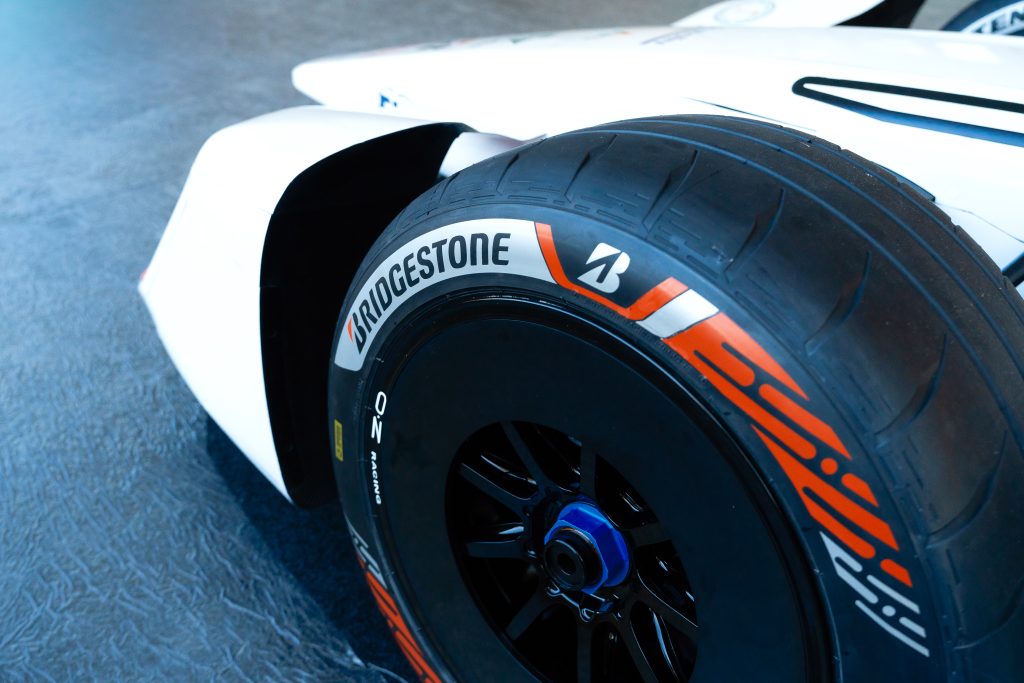
- Bridgestone is also returning to single-seater racing as Formula E’s exclusive tyre supplier for the 2026/27 Gen4 season, strengthening its international motorsport programme ahead of a possible F1 bid.
Bridgestone is reportedly preparing another attempt to become Formula 1’s exclusive tyre supplier from the 2029 season, potentially challenging Pirelli’s position after the Italian manufacturer’s current agreement expires. Senior representatives of the Japanese company attended the recent Singapore and United States Grands Prix, holding discussions about a possible return to the championship after an absence of more than 15 years.
According to RacingNews365, Bridgestone is developing a technical, financial and commercial proposal intended to be stronger than its unsuccessful bid in 2023. The company supplied Formula 1 tyres from 1997 until 2010, before Pirelli took over as the championship’s exclusive supplier in 2011. Although discussions are reportedly progressing, neither Bridgestone nor the FIA has publicly confirmed a formal new bid.
Bridgestone steps up preparations for possible Formula 1 return
Bridgestone’s interest in returning to Formula 1 has reportedly become more visible during the second half of the 2026 season.
The Japanese manufacturer has maintained a low profile while exploring its options, but a delegation of senior specialists attended the recent Grands Prix in Singapore and Austin.
The representatives held discussions about the possibility of Bridgestone participating in the next selection process for the championship’s tyre supplier.
The company is believed to be preparing a more comprehensive proposal than the one submitted during the previous tender, with improvements planned across technical development, business arrangements and commercial commitments.
No formal agreement has been announced, and the presence of Bridgestone representatives in the paddock does not mean the manufacturer has secured a Formula 1 contract.
Nevertheless, the reported preparations suggest that the Japanese company remains interested in returning to the highest level of international single-seater racing.
Bridgestone previously competed against Pirelli during the selection process launched in 2023 for the 2025–2027 seasons. The FIA ultimately selected the Italian manufacturer, extending its long-standing relationship with the championship.
At the time, questions surrounding the technical complexity and development costs of producing modern Formula 1 tyres formed part of the wider discussion about potentially changing suppliers.
A new manufacturer would have to prepare compounds capable of meeting demanding requirements for performance, durability, safety and sustainability, while adapting to the aerodynamic and mechanical characteristics of the cars.
The next tender could therefore become an important competition between manufacturers seeking access to Formula 1’s growing international audience and its technical development opportunities.
Pirelli remains Formula 1’s exclusive tyre supplier until 2028
Any potential Bridgestone return must wait until at least 2029 because Pirelli’s current agreement guarantees its exclusive position through the end of the 2028 season.
The Italian manufacturer secured a new contract in 2023 covering the 2025, 2026 and 2027 championships, with an option to extend the partnership by one additional year.
That option was formally exercised in June 2026 through an agreement involving the FIA, Formula 1 and Pirelli.
The extension also covers Formula 2, Formula 3 and F1 Academy, ensuring continuity across the championship’s main support categories.
FIA president Mohammed Ben Sulayem praised the partnership when the renewal was announced.
“Pirelli has been an important partner to the FIA Formula One World Championship for many years, providing a consistently high standard of performance, innovation, and safety at the highest level of our sport,” he said.
The governing body emphasised that continuity would give teams and championship organisers additional stability during the current technical regulations cycle.
Formula 1 president Stefano Domenicali also highlighted the importance of Pirelli’s development work and experience in meeting the demands of modern Grand Prix machinery.
Pirelli has supplied every Formula 1 team since 2011, giving it extensive knowledge of the sport’s technical requirements and the logistical demands of supporting a global championship.
That experience represents an advantage in any future bidding process, particularly because a tyre manufacturer must develop products before the cars that will use them have been fully finalised.
However, the extension does not guarantee that Pirelli will continue beyond 2028. Its participation in any subsequent contract remains subject to the applicable selection and negotiation process.
How Formula 1 chooses its tyre supplier
Formula 1 does not simply select its tyre manufacturer through a commercial sponsorship agreement.
The process involves the FIA, which establishes the technical requirements and oversees the tender, before the selected candidate enters the necessary commercial negotiations with Formula 1.
Manufacturers must demonstrate that they can produce tyres meeting the championship’s technical and safety standards while guaranteeing adequate supply for all participating teams.
The previous tender included requirements concerning tyre performance, development, logistics and sustainability.
It also covered tyres for the support championships, meaning candidates had to consider the needs of different categories rather than Formula 1 alone.
The commercial element is equally important. The chosen supplier receives extensive international exposure and the opportunity to associate its products with one of motorsport’s most technologically demanding competitions.
In return, the manufacturer must invest substantially in research, testing, production and worldwide distribution.
A tyre change can also affect the teams themselves.
Different constructions and compounds influence suspension behaviour, aerodynamic performance, tyre warm-up, degradation and race strategy. Even relatively small differences in tyre characteristics can alter the way engineers design and develop their cars.
A change from Pirelli to Bridgestone would therefore represent more than a new logo on Formula 1’s tyres. It could influence the technical direction of the championship from 2029.
For now, however, the FIA has not announced a winner for the next contract, and no supplier change has been confirmed.
Bridgestone already preparing Formula E comeback with Gen4 tyres
Bridgestone’s reported Formula 1 ambitions come as the manufacturer prepares a major return to international single-seater racing through Formula E.
The Japanese company will replace Hankook as Formula E’s exclusive tyre supplier from the 2026/27 season, coinciding with the introduction of the championship’s fourth-generation cars.
The partnership provides Bridgestone with an opportunity to demonstrate its development capabilities in a competition involving advanced electric powertrains, demanding tyre performance targets and new technical regulations.
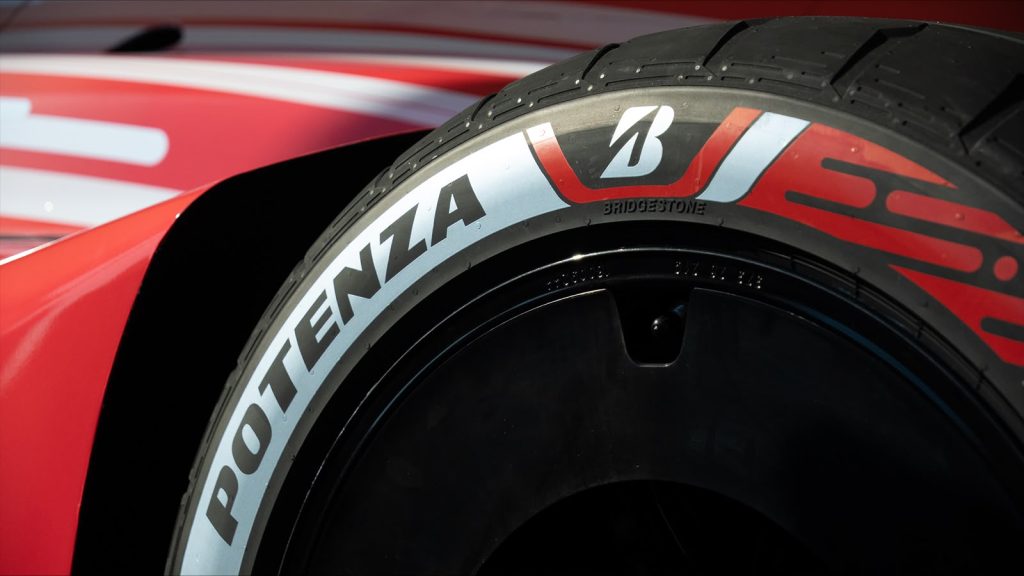
In September, GRANDE PRÊMIO attended Bridgestone’s official Gen4 tyre launch in Rome, where the manufacturer presented two products developed for the new championship era.
The Potenza Gen4 will serve as the principal competition tyre, with Bridgestone emphasising grip, durability and consistent performance across different conditions.
The company also introduced the Typhoon Tyre, a separate specification designed for heavy rain.
The wet-weather product represents a significant change for Formula E, which previously relied on an all-weather tyre capable of operating in different track conditions.
Bridgestone also outlined sustainability objectives connected to materials, production and transportation.
The Japanese manufacturer will additionally sponsor four Formula E rounds during the 2026/27 championship, including Mexico City, Berlin, Shanghai and Tokyo.
The Formula E programme provides Bridgestone with an established single-seater platform as it reportedly considers returning to Formula 1, although the two championships have considerably different tyre requirements.
Formula E’s cars use tyres developed around the demands of electric racing, while Formula 1 requires distinct dry-weather compounds and specialised intermediate and wet-weather products.
Participation in Formula E therefore does not automatically establish that Bridgestone is ready to supply F1, but it demonstrates the manufacturer’s renewed investment in top-level motorsport technology.
Bridgestone could face competition from Pirelli, Hankook and Michelin
A possible return to Formula 1 may not involve Bridgestone and Pirelli alone.
According to RacingNews365, Hankook has also been linked with interest in future tyre supply opportunities, while Michelin has been mentioned as another potential candidate.
Neither company has been confirmed as an official bidder for the next Formula 1 contract.
Pirelli could also attempt to extend its presence beyond 2028, although the Italian manufacturer has not publicly confirmed its participation in the next tender.
A competitive selection process would give the FIA and Formula 1 an opportunity to compare different technical approaches and commercial proposals.
Hankook has recent experience supplying Formula E during the Gen3 era, while Michelin has a long history in international motorsport, including its previous participation in Formula 1.
Bridgestone, meanwhile, can point to its previous success in Grand Prix racing and its renewed involvement in Formula E.
The possibility of several manufacturers seeking the contract should not be confused with a return to a multi-supplier tyre competition on the track.
Formula 1’s current arrangement is based on a single exclusive supplier, with the FIA selecting one manufacturer to provide tyres for every team.
Even if multiple companies compete in the bidding process, that does not mean two or more manufacturers would necessarily supply different teams during the championship.
Such a change would require a separate decision concerning Formula 1’s sporting and technical framework.
Bridgestone’s previous F1 era included famous battle with Michelin
Bridgestone entered Formula 1 in 1997, becoming one of the championship’s most important tyre manufacturers during a period of significant technical development.
The Japanese brand initially competed against Goodyear before becoming the exclusive supplier for the 1999 and 2000 seasons.
Michelin’s arrival in 2001 introduced another major period of tyre competition, with Bridgestone and the French manufacturer supplying different teams.
The rivalry became an important feature of Formula 1 during the early 2000s, particularly as Ferrari, McLaren, Renault and Williams fought for championships.
Bridgestone was closely associated with Ferrari’s success during Michael Schumacher’s dominant years, while Michelin supplied several rival teams.
The two manufacturers developed different constructions and compounds, meaning their tyres could perform differently depending on circuit characteristics, weather conditions and race distance.
That competition also influenced technical development, with teams designing their cars around the characteristics of their chosen supplier.
After Michelin withdrew at the end of 2006, Bridgestone became Formula 1’s exclusive supplier from 2007 until 2010.
The Japanese company then left the championship, with Pirelli taking over in 2011.
Formula 1 tyre supply history since 1997
| Period | Tyre manufacturers | Supply arrangement |
|---|---|---|
| 1997–1998 | Bridgestone, Goodyear | Competition between suppliers |
| 1999–2000 | Bridgestone | Exclusive supplier |
| 2001–2006 | Bridgestone, Michelin | Competition between suppliers |
| 2007–2010 | Bridgestone | Exclusive supplier |
| 2011–2028 | Pirelli | Exclusive supplier |
| 2029 onwards | To be determined | Future contract not awarded |
Bridgestone’s history gives the manufacturer an established reputation within Formula 1, but a return under the current regulations would require considerable preparation.
Modern cars generate different aerodynamic loads, use larger wheels and place different demands on tyre construction compared with the machinery used during the Japanese manufacturer’s previous involvement.
The next generation of tyres would also need to meet the championship’s evolving sustainability requirements.
Formula 1 tyre strategy remains under review for 2027
The possible bidding contest comes during an important period for the development of Formula 1 tyres.
Pirelli is already working on changes for 2027 intended to produce more varied race strategies, particularly after one-stop approaches proved effective at several Grands Prix during 2026.
As GRANDE PRÊMIO detailed in its analysis of the 2027 development programme, the manufacturer is studying compounds that lose performance more quickly during a stint.
The objective is to give teams greater strategic choices and reduce the frequency of races in which a single pit stop represents the overwhelmingly preferred approach.
That discussion became particularly relevant following the United States Grand Prix.
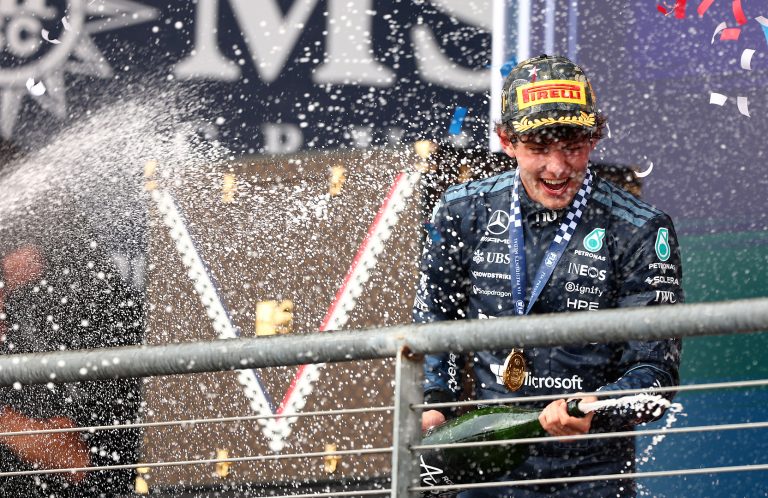
Andrea Kimi Antonelli won at Circuit of The Americas by completing just one pit stop, defeating rivals who committed to two-stop approaches.
Mercedes team principal Toto Wolff subsequently explained that the team’s calculations indicated a substantial theoretical advantage for the one-stop strategy.
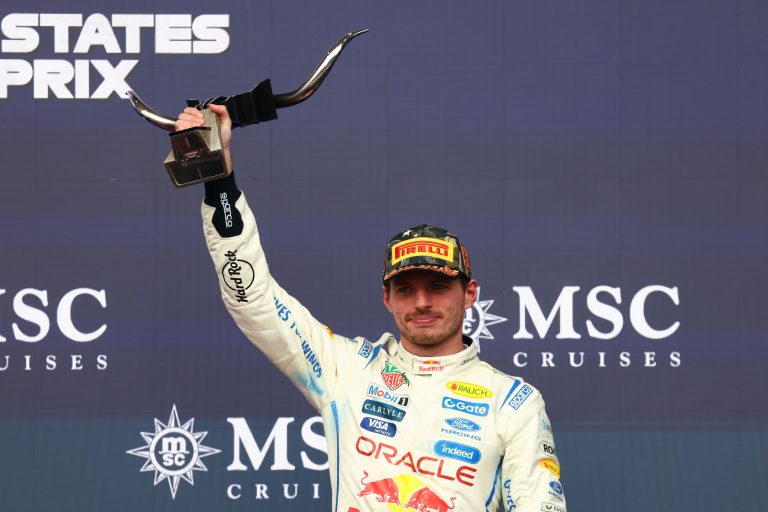
Red Bull, meanwhile, experienced difficulties with its tyre choices, with Max Verstappen admitting that the team had selected the wrong compounds and used them in an ineffective sequence.
The race provided another example of how tyre characteristics and degradation can determine competitive outcomes even when teams have similar levels of outright performance.
Pirelli had selected a revised compound allocation for Austin in 2026, choosing the C2, C3 and C4 compounds after a different approach in 2025.
Those decisions illustrate the influence the exclusive tyre supplier has over Formula 1’s racing spectacle.
Any manufacturer seeking to replace Pirelli from 2029 would therefore need to demonstrate not only its technical ability to develop safe and competitive tyres but also how its products could support the championship’s sporting objectives.
When could Bridgestone return to Formula 1?
The earliest possible season for Bridgestone to replace Pirelli is 2029, after the Italian manufacturer’s existing agreement expires.
Before then, the FIA would need to conduct the relevant selection process, assess the interested manufacturers and establish the necessary technical and commercial arrangements.
Bridgestone’s reported paddock meetings suggest that the company is preparing for that opportunity, but the process remains at an early stage.
No formal announcement has been made confirming its participation in the next tender, and neither the FIA nor Formula 1 has identified a replacement for Pirelli.
The Japanese manufacturer will meanwhile begin supplying tyres to Formula E in the 2026/27 season, providing another important programme within its international motorsport activities.
GRANDE PRÊMIO is following developments in Formula 1’s tyre regulations, manufacturer agreements and future technical changes, with breaking news and full coverage in its Formula 1 section.