News Summary
- Verstappen joked that V8 engines would not have produced the problems witnessed before the Sepang race.
- Several drivers reported power delivery difficulties during the initial formation procedure.
- The Dutchman subsequently recovered to win the first race for Red Bull Ford Powertrains.
Max Verstappen took another swipe at Formula 1’s engine regulations after the chaotic starting procedure at Sepang, joking that a V8 would not have caused the problems that left several cars struggling to accelerate before the Bahrain Grand Prix in Malaysia.
Verstappen described watching a sizeable group of cars moving slowly during the disrupted procedure. His response combined laughter with another endorsement of the engines he would prefer the championship to use.
“I just saw eight or nine cars going like 30kph,” Verstappen said, laughing. “Oh well, that happens with these engines. With a V8 you don’t have these problems.”
Verstappen’s remark followed difficulties that also affected his own car. The Red Bull driver reported that he could not accelerate during the initial formation procedure, while Lewis Hamilton stopped on the main straight after reporting that pressing the throttle was producing no response.
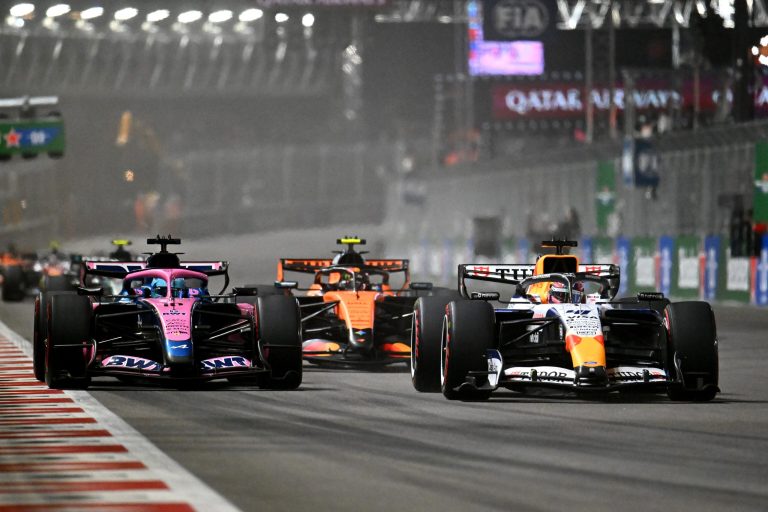
Other drivers also encountered technical difficulties. Race control suspended the starting procedure and sent the field back to the pits, adding another interruption after heavy rain had already delayed the race.
Engine criticism follows first Red Bull–Ford victory
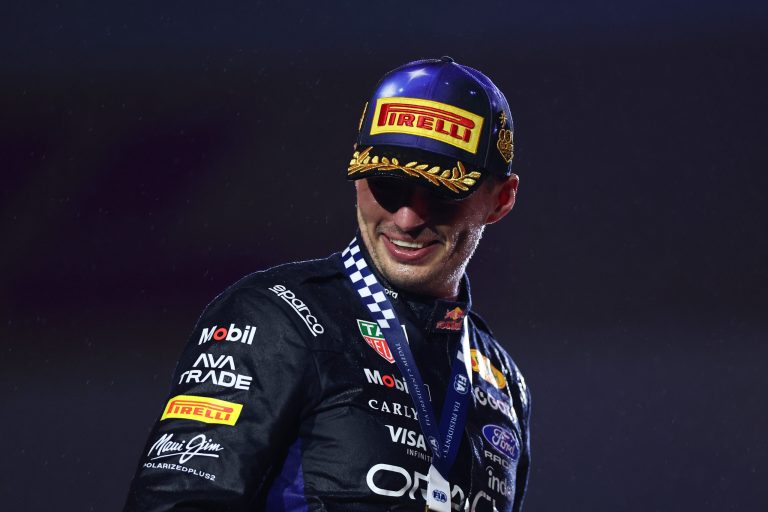
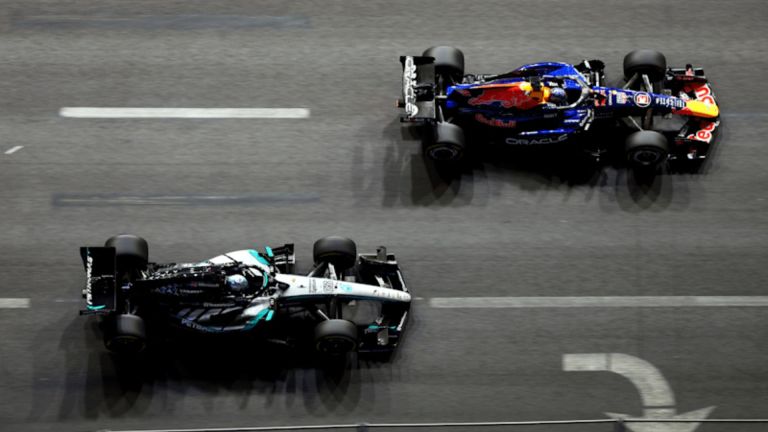
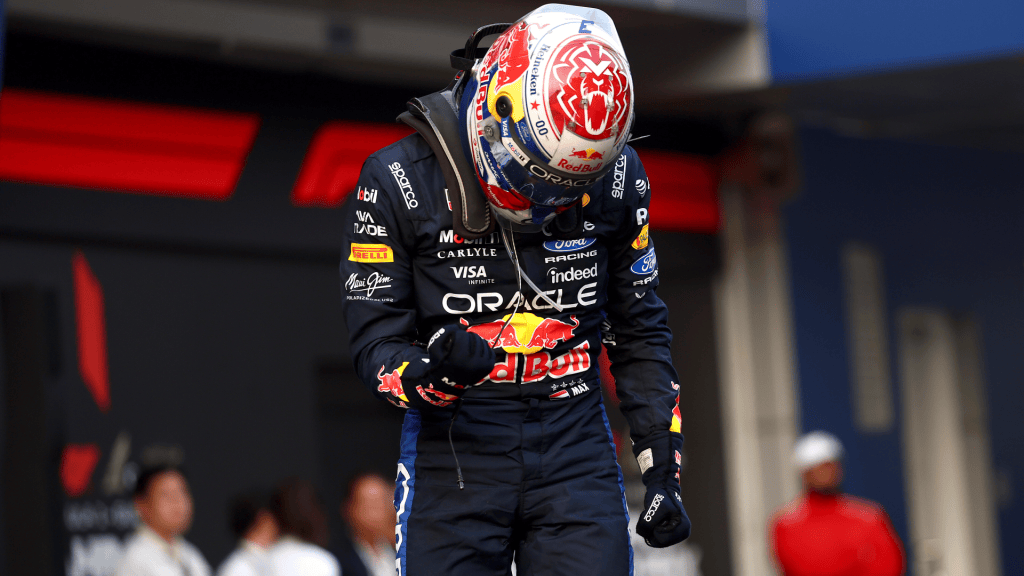
Verstappen’s criticism came on a day that ultimately delivered a milestone for his team. Once the race began, he recovered from losing positions to both Mercedes drivers and secured his first victory of 2026 and the first Grand Prix win for Red Bull Ford Powertrains.
The Dutchman finished ahead of Kimi Antonelli and Hamilton, controlling the final restart after a late Safety Car had removed his advantage. The full Sepang race report and results detail the interrupted start and subsequent battles.
His V8 comment expresses his assessment of the incident. It does not establish that every affected car suffered the same fault, or that an alternative engine configuration would necessarily have prevented every problem witnessed during the procedure.
Verstappen renews his preference for V8 engines
The remark also continues a position Verstappen had expressed before the Malaysian weekend. He has called for V8 engines with a smaller electrical contribution, alongside changes to the structure of race weekends.
His earlier explanation of the changes he wants in Formula 1 sets out that preference beyond the immediate circumstances of Sunday’s disrupted start.
At Sepang, the contrast was particularly striking: Verstappen celebrated a breakthrough for Red Bull’s new power unit project while continuing to challenge the direction of the championship’s engine rules.
Formula 1 returns from 9–11 October for the Singapore Grand Prix at Marina Bay. GRANDE PRÊMIO will cover all the action throughout the weekend.
F1 today: FAQ
What time is Singapore GP sprint qualifying today?
Sprint qualifying starts at 20:30 Singapore time on Friday, October 9, equivalent to 13:30 BST in the UK, 08:30 ET in the United States and Canada, and 18:00 IST in India. The session determines the starting grid for Saturday’s sprint.
Who was fastest in Singapore GP FP1?
George Russell topped FP1 with a 1:32.274, driving Mercedes’ older W17 aerodynamic specification. Charles Leclerc finished second, 0.198s behind, followed by Lando Norris in third. Kimi Antonelli was seventh with the upgraded Mercedes, while Gabriel Bortoleto finished 16th.
Why is George Russell using the old Mercedes at the Singapore GP?
Mercedes is comparing its previous W17 specification with the aerodynamic upgrade introduced at Sepang. Russell is using the older package, while championship leader Kimi Antonelli retains the new version. Russell led FP1, but differences in tyre compounds and run programmes mean the result alone does not establish which specification is faster.