News Summary
- McLaren plans to introduce new aerodynamic developments from Austin, with further updates expected during the final rounds.
- Red Bull trails McLaren by only seven points in the Constructors’ Championship after Verstappen’s victories in Malaysia and Singapore.
- Andrea Stella faces a double challenge: restoring the MCL40’s competitiveness while validating concepts for 2027.
McLaren faces a crucial test at the United States Grand Prix as new aerodynamic developments arrive with Red Bull just seven points behind in the fight for third place in the 2026 Formula 1 Constructors’ Championship.
The British team has lost ground to its leading rivals during the second half of the season, while Max Verstappen’s victories in Malaysia and Singapore have transformed Red Bull’s competitive position.
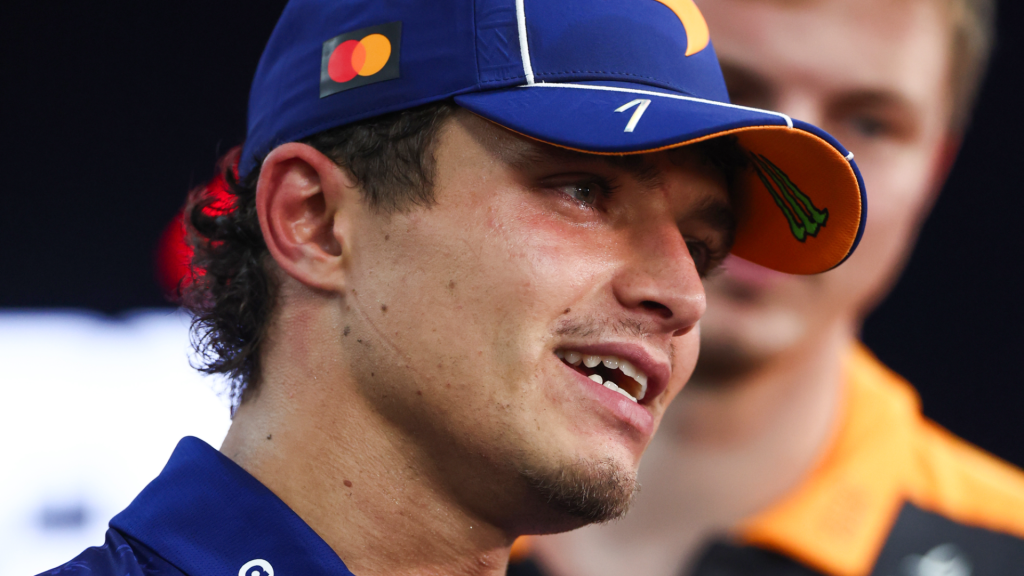
Lando Norris finished fourth at Marina Bay, with Oscar Piastri fifth, but the results disguised a significant performance deficit. Norris crossed the finish line approximately 40 seconds behind Verstappen, underlining the gap McLaren must address before Austin.
Team principal Andrea Stella has confirmed that developments completed over recent weeks will be introduced progressively, with the aim of returning the MCL40 to podium contention.
The upgrades will also provide information for McLaren’s 2027 challenger, creating an important link between its immediate championship objectives and next season’s development programme.
Why McLaren’s Austin upgrades are so important
McLaren entered 2026 attempting to defend the Constructors’ Championship it won the previous season, but the introduction of new technical regulations created a different competitive order.
The team initially struggled before recovering enough performance to challenge for victories during the middle part of the campaign.
However, the latest developments introduced by Red Bull and Mercedes have changed the balance again.
At Singapore, McLaren lacked the pace to challenge Verstappen, Ferrari’s Charles Leclerc or Mercedes’ Kimi Antonelli.
Norris described the MCL40 as effectively the fourth-fastest car, acknowledging that the team required additional performance to compete regularly at the front.
The problem has become particularly significant because Red Bull is no longer simply recovering lost ground. Its recent victories suggest that the RB22 has become one of the strongest cars on the grid.
As GRANDE PRÊMIO examined in its analysis of McLaren’s decline, the team’s challenge now involves both recovering aerodynamic performance and improving its ability to convert opportunities into points.
Red Bull has turned a comfortable gap into a seven-point fight
The contrast between Red Bull and McLaren has become increasingly clear.
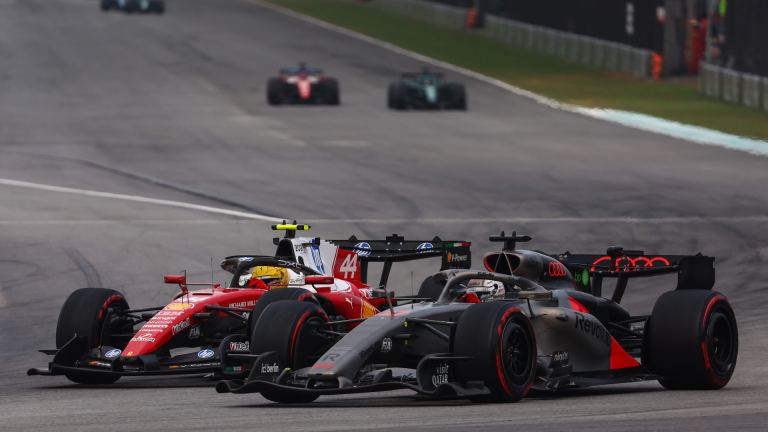
Verstappen won at Sepang before dominating the Singapore weekend, securing pole position, sprint victory and another grand prix win.
Those results have allowed Red Bull to close to within seven points of McLaren, making third place in the Constructors’ Championship a realistic immediate target.
The situation also places greater pressure on Norris and Piastri to score consistently.
McLaren has two competitive drivers, while Red Bull’s recent resurgence has been driven primarily by Verstappen. Nevertheless, the Dutchman’s ability to win races gives Red Bull an opportunity to overturn the remaining deficit.
A single weekend could therefore change the championship order.
The recovery of Red Bull and its implications for Verstappen’s 2027 title ambitions has also increased the importance of McLaren’s development response.
What Andrea Stella expects from the MCL40 developments
Stella has explained that McLaren’s updates will arrive in stages rather than as a single comprehensive package.
The team hopes the developments will improve aerodynamic performance and allow Norris and Piastri to compete for podiums on merit.
However, McLaren has not confirmed the exact components that will be introduced in Austin or whether both drivers will receive identical specifications immediately.
The team must also understand why some of its earlier developments have failed to deliver the expected competitive gains.
One concern involves the MCL40’s behaviour across different corner types, particularly when the car must combine high-speed stability with mechanical grip and traction.
The team has also continued investigating whether its existing aerodynamic package is operating consistently within the intended setup window.
Austin will therefore test both the effectiveness of the new components and McLaren’s understanding of its current car.
Norris and Piastri must avoid another Singapore setback
The team’s difficulties have not been limited to outright performance.
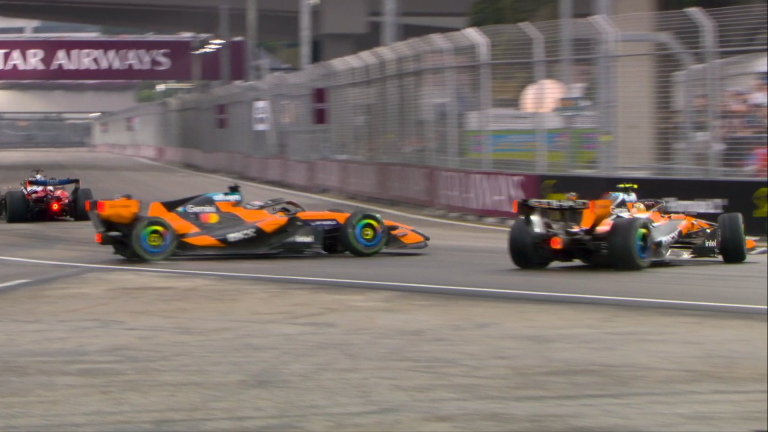
Norris and Piastri collided during the Singapore sprint, costing McLaren valuable championship points at a time when Red Bull was closing rapidly.
Stella described the incident as unacceptable and made clear that the team’s interests must take precedence over individual ambitions.
Sunday’s race produced a more productive result, with both drivers finishing inside the top five, but the points haul was insufficient to prevent Red Bull from reducing the gap.
Norris also acknowledged making an error while attempting to overtake Lewis Hamilton, costing him an opportunity to challenge for a podium position.
The combination of lost performance and avoidable incidents has increased the importance of execution during the final six rounds.
Austin offers McLaren a different technical test
The Circuit of The Americas combines high-speed direction changes, long straights, heavy braking zones and slower corners.
Its first sector places significant emphasis on front-end stability and aerodynamic downforce, while the long back straight rewards efficiency and power-unit performance.
The slower final sector tests traction and mechanical balance.
That combination should provide McLaren with useful information about whether its latest developments improve performance across a broad range of conditions.
The United States Grand Prix is also scheduled as a conventional weekend, giving the team more practice time than was available during the sprint event in Singapore.
The additional running could help McLaren evaluate the new components before committing to further developments later in the season.
Why McLaren’s 2027 programme also matters
The final six rounds present McLaren with a difficult development decision.
The team needs to defend third place in 2026 while ensuring that its current problems do not compromise the next championship.
Stella has indicated that some of the developments planned for the MCL40 will also help validate aerodynamic concepts for 2027.
That means the upgrades are not solely intended to deliver immediate lap-time improvements. They must also provide reliable information for the design of next year’s car.
Mercedes has faced a similar challenge with its latest package, although the team recently confirmed that Antonelli’s upgraded W17 was faster than the older specification tested by George Russell in Singapore.
McLaren will need to establish whether its own developments can produce measurable improvements without making the car more difficult to operate.
Can McLaren keep Red Bull behind?
McLaren’s immediate objective is to defend its seven-point advantage, but doing so will require more than simply finishing both cars in the points.
Red Bull’s recent form has raised the level of performance needed to remain ahead, particularly when Verstappen is capable of winning races.
McLaren must reduce its deficit, improve race execution and avoid losing points through incidents between its drivers.
The team’s development programme also needs to provide a foundation for 2027, when Mercedes, Red Bull and Ferrari are expected to continue improving their cars.
The United States Grand Prix takes place from October 23 to 25, with the full Austin F1 schedule and international start times available on GRANDE PRÊMIO.