News Summary
- Niki Lauda offered Christian Horner the Mercedes Formula 1 leadership role in late 2012, according to the former Red Bull boss.
- Horner rejected the lucrative proposal, citing loyalty to Red Bull co-founder Dietrich Mateschitz and the team.
- Mercedes subsequently recruited Toto Wolff in 2013, laying the foundations for its dominant hybrid-era championship run.
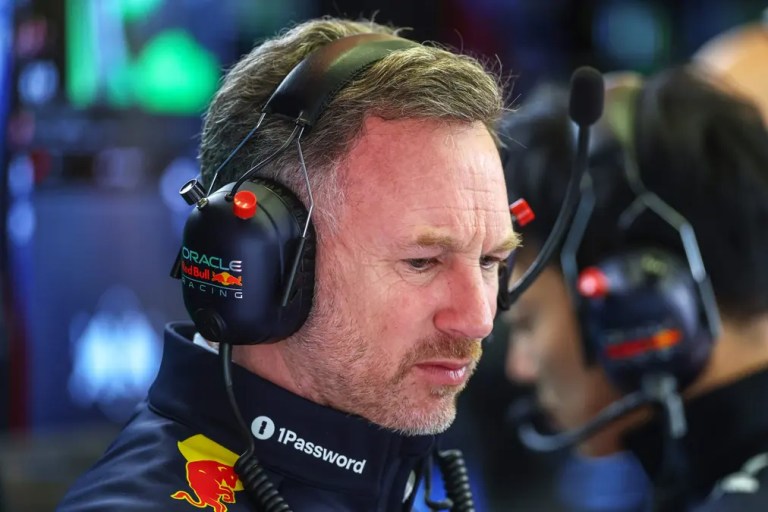
Christian Horner has revealed that he turned down an offer to become Mercedes’ Formula 1 team principal in 2013, claiming that Niki Lauda personally visited his home with a lucrative proposal before the German manufacturer eventually recruited Toto Wolff.
The former Red Bull boss described the approach in his autobiography, Drive, revealing that Lauda contacted him shortly before Christmas in 2012. At the time, Horner had just guided Red Bull and Sebastian Vettel to their third consecutive Drivers’ and Constructors’ Championship double, while Mercedes was preparing to rebuild its Formula 1 operation around the arrival of Lewis Hamilton.
According to Horner, Lauda arrived with an offer containing financial figures that immediately caught his attention, but the British executive decided against leaving the team he had led since its Formula 1 debut in 2005.
“I feel loyalty to Dietrich and to the team,” Horner recalled telling Lauda, referring to Red Bull co-founder Dietrich Mateschitz.
The rejection ultimately preceded one of the most successful leadership appointments in Formula 1 history, with Wolff joining Mercedes in 2013 before overseeing its championship dominance.

Lauda visited Horner’s home with lucrative Mercedes offer
Horner explained that the proposal came during a period when Mercedes was attempting to transform itself into a championship-winning organisation.
Lauda had become non-executive chairman of the team’s board and was closely involved in its efforts to recruit senior personnel and drivers.
The three-time world champion had already helped persuade Hamilton to leave McLaren for Mercedes, with the British driver scheduled to join the team for the 2013 season.
According to Horner’s account, Lauda arrived at his home carrying a proposal that included what the former Red Bull boss described as an extraordinary financial package.
Lauda argued that Mercedes could provide opportunities beyond those available at Red Bull.
“Red Bull will never pay you what Mercedes can,” Horner recalled the Austrian telling him.
Despite the offer, Horner rejected the approach because of his relationship with Mateschitz and his commitment to the organisation he had helped build.
The decision came at a time when Red Bull was already the dominant team in Formula 1, having won both championships in 2010, 2011 and 2012.
Horner and Vettel would subsequently secure a fourth consecutive championship double in 2013, completing one of the most successful periods in the team’s history.
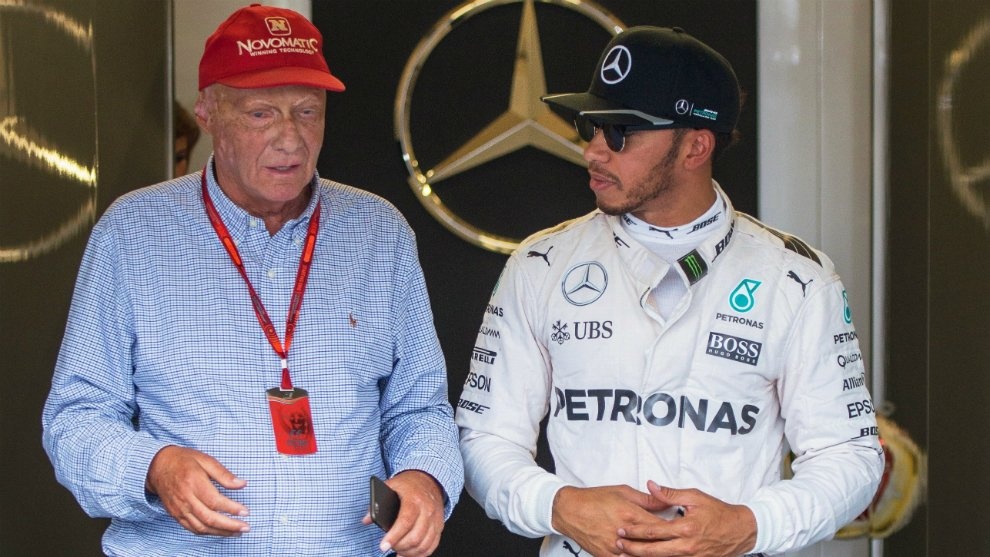
Horner had already rejected possibility of Hamilton joining Vettel
The Mercedes approach followed another important development involving Hamilton’s future.
During 2012, the British driver had explored alternatives to McLaren as negotiations over his contract continued.
Horner acknowledged that Red Bull had held discussions with Hamilton, but ultimately decided against pairing him with Vettel.
The German was already a multiple world champion and the team’s established leader, while Hamilton had won the 2008 title with McLaren.
Rather than pursue the partnership, Horner encouraged Lauda to consider Hamilton for Mercedes.
The move proved decisive for the German manufacturer, which announced Hamilton’s signing in September 2012.
The timing also makes the subsequent approach to Horner particularly interesting. Mercedes had already secured Hamilton’s services before Lauda attempted to recruit the Red Bull team principal.
Had Horner accepted the offer, he would have joined Mercedes alongside Hamilton during the manufacturer’s preparations for Formula 1’s new hybrid regulations.
However, there is no evidence that Horner’s appointment would necessarily have produced the same results Mercedes achieved under Wolff.
The actual outcome was that Horner remained at Red Bull while Mercedes continued restructuring its leadership.
Horner’s refusal opens door for Toto Wolff
Mercedes eventually recruited Toto Wolff from Williams in January 2013, bringing the Austrian into the organisation as executive director and shareholder.
Wolff initially worked alongside Ross Brawn, who remained team principal during Hamilton’s first season with Mercedes.
Following Brawn’s departure at the end of 2013, Mercedes reorganised its management structure, with Wolff and Paddy Lowe taking leading responsibilities as the team prepared for the introduction of turbo-hybrid power units.
The new regulations transformed Formula 1’s competitive order in 2014.
Mercedes established a substantial advantage over its rivals, winning consecutive Drivers’ and Constructors’ Championships and becoming the dominant manufacturer of the hybrid era.
Hamilton secured six world championships with Mercedes between 2014 and 2020, while Nico Rosberg won the Drivers’ Championship in 2016.
The team also claimed eight consecutive Constructors’ Championships from 2014 to 2021, establishing one of the longest periods of dominance in Formula 1 history.
Wolff’s arrival became central to that success, with the Austrian overseeing the team’s sporting and commercial development.
Horner, meanwhile, remained at Red Bull and became one of Mercedes’ most prominent rivals during the championship battles that followed.
Horner and Wolff became F1’s fiercest leadership rivals
The rivalry between Horner and Wolff intensified as Red Bull attempted to challenge Mercedes during the hybrid era.
Although Red Bull continued winning individual Grands Prix, the team struggled to compete consistently against Mercedes between 2014 and 2020.
The competitive balance changed in 2021, when Verstappen challenged Hamilton for the Drivers’ Championship.
The season produced several controversial incidents and increasingly tense exchanges between the two team principals.
Their public disagreements became one of the defining features of the championship, particularly during the final rounds.
Verstappen eventually secured his first world title at Abu Dhabi, ending Mercedes’ seven-year run of Drivers’ Championships.
Red Bull subsequently won the Constructors’ Championship in 2022 and 2023, while Verstappen added three more Drivers’ titles through 2024.
Horner remained in charge until July 2025, when Red Bull dismissed him after two decades leading the team.
His departure followed a period of internal tensions and changes within the organisation after Mateschitz’s death in October 2022.
As GRANDE PRÊMIO reported in its analysis of Red Bull’s leadership transition, Laurent Mekies subsequently assumed responsibility for the team and has overseen its recovery during the 2026 season.
Horner’s Mercedes revelation comes amid F1 comeback speculation
The revelation arrives as Horner continues discussing his future following his departure from Red Bull.
The 52-year-old has been linked with several possible Formula 1 projects, including Ferrari, although no agreement has been announced.
Horner has previously suggested that he would prefer a return involving an ownership stake, rather than simply accepting another conventional team principal position.
In an interview with The Guardian earlier this month, he also acknowledged the emotional impact of leaving Red Bull after spending 20 years building the organisation.
His comments about Ferrari have attracted particular attention because of the pressure surrounding team principal Frédéric Vasseur.
As GRANDE PRÊMIO examined in its analysis of Ferrari’s 2026 performance, the Italian manufacturer has improved its championship position but continues facing criticism over strategy and race execution.
Horner’s autobiography has also produced other revelations about Red Bull’s internal decisions.
He recently explained how Verstappen initially hated the team’s 2022 car, prompting his management to question the technical direction that appeared to favour Sergio Pérez.
The former team principal also claimed that Formula 1’s largest organisations continue spending far more than the regulated budget cap once excluded expenses are included.
His comments about annual spending reaching $600 million were published by GRANDE PRÊMIO on Monday.
Horner has not announced whether he intends to return to Formula 1 in 2027 or which team he might join.