News Summary
- Andrea Kimi Antonelli gained 6.757 seconds on Max Verstappen during a decisive six-lap sequence after his only pit stop at the 2026 United States Grand Prix, effectively neutralising Red Bull’s alternative strategy.
- The Mercedes driver recovered 5.277 seconds over the first five laps alone, with 3.426 seconds of that gain coming in Austin’s second sector. Verstappen’s pit-entry lap completed the six-lap comparison.
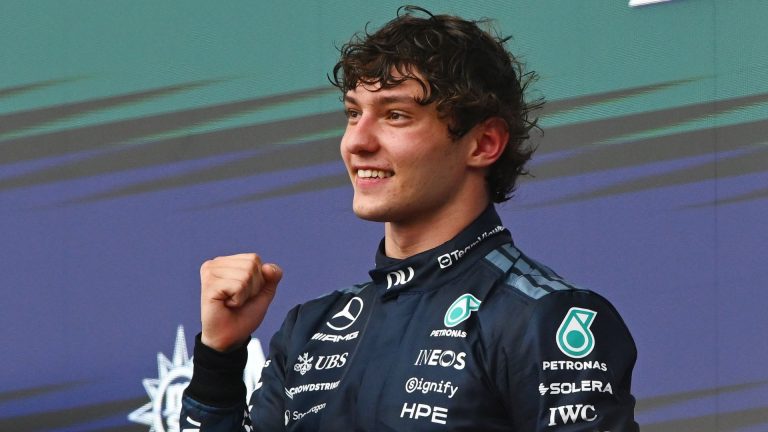
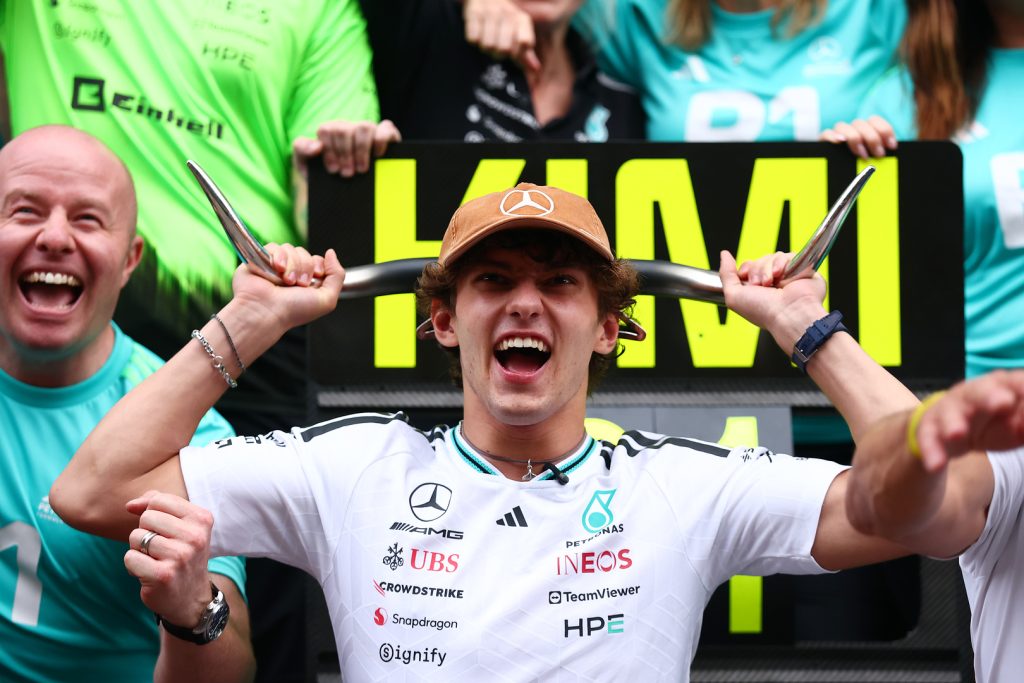
- Antonelli returned to the lead on lap 32 and eventually won by 13.078 seconds over Charles Leclerc, securing his ninth victory of 2026 and moving within reach of the Formula 1 World Championship.
Andrea Kimi Antonelli’s victory at the 2026 Formula 1 United States Grand Prix was effectively decided during six remarkable laps following his only pit stop, when the Mercedes driver recovered 6.757 seconds against Max Verstappen and exposed the limitations of Red Bull’s two-stop strategy. The Italian’s pace on fresh hard tyres allowed him to regain control of the race before his rivals could exploit the advantage of their additional tyre changes.
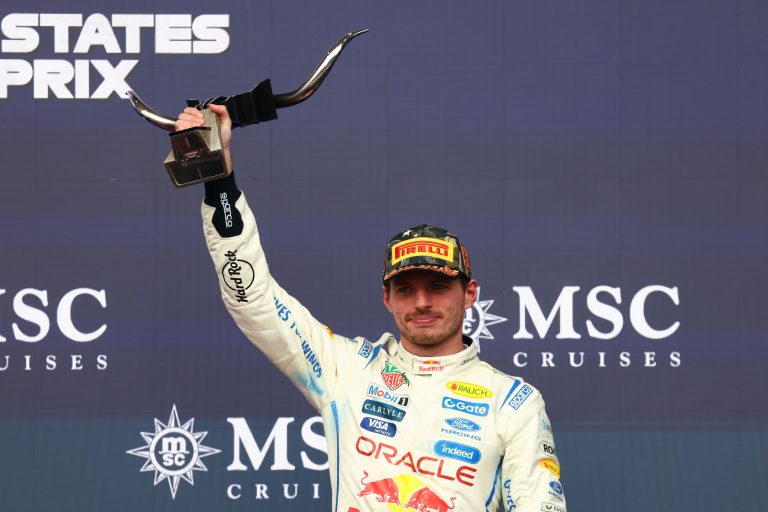
Antonelli won Sunday’s (October 25) race at Circuit of The Americas by 13.078 seconds over Charles Leclerc, with Verstappen completing the podium a further 4.407 seconds behind. However, an examination of the lap-by-lap timing reveals that the decisive difference emerged much earlier, during the period between Antonelli’s pit stop and Verstappen’s second visit to the pits.
How Antonelli built the advantage that made Mercedes’ strategy possible
The foundation of Antonelli’s victory was established before the decisive six-lap sequence.
Mercedes started the Italian on medium tyres, while Verstappen and Ferrari’s leading drivers opted for softs. The difference appeared to favour Red Bull at the start, where the softer compound offered stronger initial grip and the possibility of taking the lead into Turn 1.
However, Antonelli made a clean launch and maintained first place, while Verstappen struggled for traction and became involved in a battle with Leclerc.
The Ferrari briefly moved ahead before Verstappen recovered second, but the exchange gave the Mercedes driver valuable breathing room.
Antonelli completed the opening lap with a 2.365-second advantage, allowing him to manage the medium tyres without having to defend his position through every corner.
The importance of that early lead became clearer as the opening stint developed.
After ten laps, Antonelli remained 2.775 seconds ahead of Verstappen, despite the Red Bull driver starting on the theoretically faster compound.
Verstappen’s soft tyres had therefore failed to deliver the strategic advantage Red Bull had hoped for. The Dutchman was unable to take control of the race before the first pit-stop phase, leaving Mercedes free to extend Antonelli’s opening stint.
Red Bull made its first stop at the end of lap 13, fitting another set of soft tyres. Hamilton followed one lap later, while Leclerc stopped at the end of lap 15, with both Ferrari drivers switching to mediums.
Mercedes chose not to respond.
That decision exposed Antonelli to the possibility of losing time against cars running fresher rubber, but the team believed extending the medium stint would provide a more efficient route to the finish.
The gamble depended on how consistently Antonelli could maintain his pace while the others attacked.
Mercedes extends Antonelli’s first stint despite Red Bull undercut threat
The Italian continued on mediums while Verstappen and the Ferraris attempted to use their fresh tyres to recover time.
Mercedes faced a difficult decision because responding immediately to the early pit stops would have forced Antonelli into a longer final stint or potentially required a second stop.
Instead, the team relied on tyre management and the driver’s ability to maintain competitive lap times.
The strategy was not without risk. Antonelli needed to preserve the mediums while avoiding excessive time loss against rivals running newer tyres, a delicate balance on a circuit combining high-speed corners, heavy braking zones and demanding changes of direction.
But his performance remained consistent.
During his final three complete laps before entering the pits, Antonelli recorded times close to 1min41s1, demonstrating that the medium compound still had useful performance after more than 20 laps.
Mercedes subsequently called him in at the end of lap 24, recording the tyre change as the beginning of lap 25. The Italian switched to the C2 hard compound, which would have to complete the final 32 laps of the race.
Antonelli returned to the track in fourth, behind Verstappen, Leclerc and Isack Hadjar, with Hamilton immediately behind him.
At the end of lap 25, Verstappen was 8.130 seconds ahead, although the Red Bull driver had already committed to an additional pit stop.
That distinction was crucial.
The Mercedes driver had completed his mandatory tyre change. Verstappen, despite holding the lead, still needed to return to the pits and use another compound.
Mercedes therefore did not need Antonelli to overtake the Red Bull directly. It needed him to exploit his fresh hard tyres, recover enough time and prevent Verstappen from making the second stop without losing the effective lead.
The next six laps would determine whether that plan succeeded.
The six laps that decided the United States Grand Prix
Antonelli immediately began closing the gap after his stop.
The hard compound performed better than expected, allowing the Mercedes driver to attack while Verstappen continued on his second set of soft tyres.
Over the first five laps of the decisive period, from laps 26 to 30, Antonelli gained 5.277 seconds against Verstappen.
The gap fell from 8.130 seconds at the end of lap 25 to just 2.853 seconds at the end of lap 30.
That represented an average recovery of approximately 1.055 seconds per lap, a substantial difference between two drivers who had been separated by less than two-tenths of a second in qualifying.
The sixth lap completed the strategic swing. Verstappen headed towards the pits at the end of lap 31, and the comparison between the cars increased Antonelli’s total recovery to 6.757 seconds.
The six-lap sequence that changed the race
| Measurement | Gap / gain |
|---|---|
| Verstappen’s advantage after lap 25 | 8.130s |
| Antonelli’s gain, laps 26–30 | 5.277s |
| Verstappen’s advantage after lap 30 | 2.853s |
| Additional gain including lap 31 pit entry | 1.480s |
| Total recovery over the six-lap window | 6.757s |
| Gain in Sector 2 across laps 26–30 | 3.426s |
| Average gain per lap, laps 26–30 | 1.055s |
Timing analysis based on the lap-by-lap comparison published by Grandprix.com. The sixth lap includes Verstappen’s pit entry and should not be treated as a pure comparison of uninterrupted racing pace.
The numbers demonstrate the importance of separating the first five laps from the final lap of the sequence.
During laps 26–30, both drivers were circulating without stopping, allowing a cleaner comparison of their performance.
Antonelli was faster by more than a second per lap on average, a difference that substantially reduced the threat posed by Red Bull’s strategy.
The sixth lap included Verstappen’s return to the pits, adding another 1.480 seconds to the measured recovery before the actual time loss from the complete tyre change reshaped the running order.
Mercedes had successfully turned a temporary deficit into a decisive strategic advantage.
Sector 2 reveals where Antonelli gained the most time
The most revealing aspect of Antonelli’s performance was not simply the total time recovered, but where he gained it.
Across laps 26–30, 3.426 seconds of the 5.277-second recovery came from Sector 2, approximately 65% of the total advantage.
That means nearly two-thirds of the time Antonelli gained over Verstappen during the clean comparison came from one portion of Circuit of The Americas.
The second sector includes the end of the circuit’s fast sequence, the approach to Turn 11 and the long back straight, combining demands on aerodynamic efficiency, cornering stability and acceleration.
Antonelli was faster than Verstappen through this sector on every lap of the five-lap sample.
The consistency is particularly significant because it indicates that the advantage was not the result of one unusually fast lap.
Instead, the Mercedes driver repeatedly extracted more performance from the same section of the circuit, building the gap through sustained speed.
The fresh hard tyres gave Antonelli the grip needed to maintain a competitive rhythm, while Verstappen’s older softs were becoming increasingly difficult to manage.
The Dutchman also faced technical problems that complicated the comparison.
Verstappen subsequently revealed that inconsistent engine braking and gearshifts had affected his race, making it difficult to repeat braking points and corner-entry behaviour consistently.
Red Bull also reported that Verstappen had struck debris earlier in the race, causing damage and further affecting the car’s balance.
Those circumstances prevent the timing difference from being attributed exclusively to the superiority of Mercedes or its chosen tyre compound.
However, the strategic conclusion remains clear: Antonelli was able to maintain the pace Mercedes needed while Verstappen could not extract enough performance to protect his position before the second stop.
Verstappen’s second stop hands Antonelli control of the race
Red Bull eventually brought Verstappen back into the pits at the end of lap 31, fitting mediums for the final stint.
The stop removed the Dutchman from the direct fight for the lead, while Leclerc temporarily inherited first place.
Antonelli was already closing rapidly on the Ferrari.
At the end of lap 32, the Mercedes driver was back ahead, having overtaken Leclerc and completed the recovery that began after his only stop.
Antonelli was now leading with no further pit stops planned, while Ferrari still had another tyre change to complete.
The difference between the strategies had become decisive.
Mercedes had accepted a longer opening stint and then used its fresh hard tyres to recover time while Red Bull and Ferrari remained committed to two-stop approaches.
The Italian could now focus on managing the remainder of the race without sacrificing track position.
This was the moment when the six-lap burst became more than an impressive sequence of lap times.
It had enabled Mercedes to avoid an additional pit stop while still maintaining enough pace to defeat rivals using fresher tyres at different stages.
As Antonelli explained after the race, he had personally supported the decision to use a one-stop strategy, praising the team for trusting his assessment.
“It was an incredible team effort, especially from strategy, to believe in me and go for one stop,” Antonelli said.
The driver’s confidence was supported by Mercedes’ calculations.
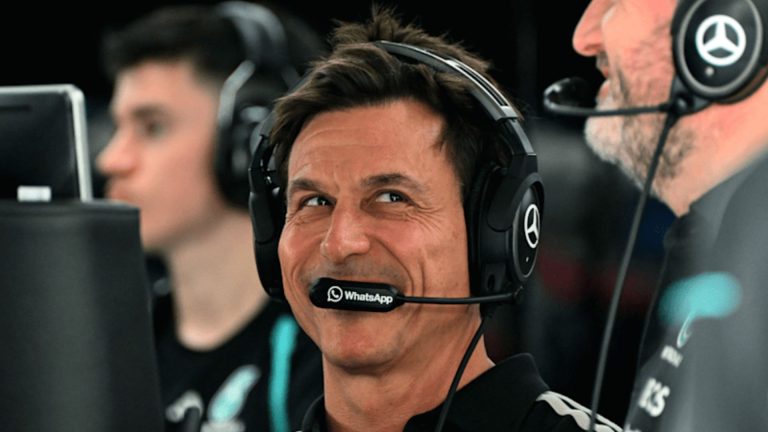
Toto Wolff subsequently revealed that the team expected the one-stop strategy to be approximately 8 seconds quicker, an advantage that ultimately proved greater in practice.
The gap recovered during the six decisive laps was therefore part of a broader strategic calculation, rather than an isolated burst of speed.
Hard tyres perform better than expected as Ferrari loses chance to attack
The next challenge for Antonelli was maintaining the advantage.
His hard tyres still had to survive a long final stint, and both Ferrari and Red Bull were positioned to attack with fresher rubber.
However, the C2 compound delivered stronger durability and performance than expected.
Pirelli motorsport director Dario Marrafuschi acknowledged after the race that the hard tyre had performed slightly better than anticipated, reinforcing the effectiveness of the one-stop strategy.
Antonelli also maintained a consistent pace as the stint developed, recording laps around 1min39s8 during the following phase.
That prevented Leclerc from remaining close enough to challenge for the lead.
The Ferrari driver was just 0.629 seconds behind at the end of lap 32, but the gap had increased to 3.049 seconds by lap 37.
Leclerc subsequently made his second stop at the end of lap 39, returning on fresh hard tyres.
The Monegasque used the compound effectively and recorded the fastest lap of the race, 1min37s976 on lap 42.
But the additional stop had created a substantial time deficit.
Even though Leclerc could produce faster individual laps, he also needed to recover the time spent in the pits and overtake the cars between himself and Antonelli.
The Ferrari driver eventually passed Verstappen for second, but the Mercedes was already too far ahead.
The contrasting approaches demonstrated how a strategy can be faster over individual laps without necessarily producing the best overall race time.
Antonelli had sacrificed the advantage of fresher tyres late in the race but avoided the additional pit-stop loss that his rivals needed to recover.
The calculations worked because the hard compound maintained enough performance to prevent that theoretical disadvantage from becoming decisive.
Norris’ role in the strategy battle also helped Mercedes
McLaren became an unexpected factor in the contest between Mercedes, Red Bull and Ferrari.
Lando Norris also attempted a one-stop strategy, switching to hard tyres earlier than Antonelli and extending his final stint towards the finish.
The approach initially allowed the British driver to move into second place after the Ferrari drivers completed their final stops.
However, Norris’ older tyres gradually lost performance, leaving him vulnerable to the recovering Verstappen and Leclerc.
The two drivers eventually overtook the McLaren, with Leclerc subsequently passing Verstappen to secure second.
Those battles cost valuable time.
Every lap spent behind Norris reduced the opportunity for Red Bull and Ferrari to close the gap to Antonelli.
The Mercedes driver, meanwhile, remained in clean air and could focus on maintaining a consistent rhythm without becoming involved in the fighting behind.
The strategy also underlined the difference between the performances of Mercedes and McLaren.
Both teams attempted to complete the race with one pit stop, but Antonelli had the pace and tyre durability required to make the approach work at the front.
Norris, by contrast, struggled with degradation and ultimately finished fifth.
As GRANDE PRÊMIO examined in its five main lessons from Austin, McLaren’s declining competitiveness has become increasingly visible as Mercedes, Ferrari and Red Bull have improved during the second half of the season.
The United States Grand Prix offered another example of that difference.
Antonelli turns six crucial laps into a 13-second victory
Antonelli completed the 56-lap United States Grand Prix in 1h35min16s650, finishing 13.078 seconds ahead of Leclerc.
Verstappen crossed the line 17.485 seconds behind, with Hamilton fourth and Norris fifth.
The final margin was affected by a late Virtual Safety Car, triggered after Valtteri Bottas stopped his Cadillac on track, but the intervention did not threaten Antonelli’s victory.
Mercedes had already established an advantage large enough to protect the lead against its closest rivals.
United States Grand Prix — Leading finishers
| Pos. | Driver | Team | Gap |
|---|---|---|---|
| 1 | K. ANTONELLI | Mercedes | 1:35:16.650 |
| 2 | C. LECLERC | Ferrari | +13.078 |
| 3 | M. VERSTAPPEN | Red Bull | +17.485 |
| 4 | L. HAMILTON | Ferrari | +18.515 |
| 5 | L. NORRIS | McLaren | +30.521 |
| 6 | I. HADJAR | Red Bull | +34.373 |
| 7 | O. PIASTRI | McLaren | +52.674 |
| 8 | G. RUSSELL | Mercedes | +54.303 |
| 9 | L. LAWSON | Racing Bulls | +1:19.183 |
| 10 | P. GASLY | Alpine | +1:27.516 |
| 11 | N. HÜLKENBERG | Audi | +1:34.945 |
| 12 | A. LINDBLAD | Racing Bulls | +1 lap |
| 13 | G. BORTOLETO | Audi | +1 lap |
| 14 | E. OCON | Haas | +1 lap |
| 15 | L. STROLL | Aston Martin | +1 lap |
| 16 | F. ALONSO | Aston Martin | +1 lap |
| 17 | A. ALBON | Williams | +1 lap |
| 18 | C. SAINZ | Williams | +1 lap |
| 19 | S. PÉREZ | Cadillac | +1 lap |
| DNF | V. BOTTAS | Cadillac | 48 laps |
| DNF | F. COLAPINTO | Alpine | 35 laps |
| DNF | O. BEARMAN | Haas | 24 laps |
Source: FIA race classification. All 22 drivers included.
The result reinforced the significance of Antonelli’s strategic performance.
He did not simply start from pole and protect a faster car. He successfully extended the first stint, demonstrated strong pace immediately after switching to hard tyres and then maintained enough consistency to prevent Ferrari’s fresher rubber from becoming a threat.
The six-lap recovery was the decisive part of that sequence because it proved Mercedes could overcome the temporary track-position disadvantage without abandoning the one-stop plan.
Austin victory leaves Antonelli one step from 2026 F1 title
Antonelli’s ninth victory of the season increased his championship total to 365 points, giving him a 123-point advantage over Russell and 124 over Hamilton.
Russell’s eighth-place finish and Hamilton’s fourth kept the World Championship mathematically undecided, although both remain only marginally within reach.
Five races remain, with a maximum of 125 points available.
The next round takes place in Mexico City on November 1, where Antonelli needs only a ninth-place finish to become World Champion, regardless of the results achieved by his closest rivals.
The complete calculations are available in GRANDE PRÊMIO’s guide to what Andrea Kimi Antonelli needs to win the 2026 Formula 1 title in Mexico.
The updated Drivers’ and Constructors’ Championship standings after Austin also show that only Russell and Hamilton remain mathematical title contenders.
For Mercedes, Austin represented more than another race victory. It provided evidence that the team can still make decisive strategic gains against Red Bull and Ferrari, even as the competitive margins have narrowed.
For Antonelli, the race demonstrated the importance of combining tyre management with the ability to deliver performance at exactly the right moment.
GRANDE PRÊMIO is following the aftermath of the United States Grand Prix and the build-up to the Mexican Grand Prix, with technical analysis, race results, championship updates and full coverage in its Formula 1 section.